
‘All that breathes’: Why raptors matter
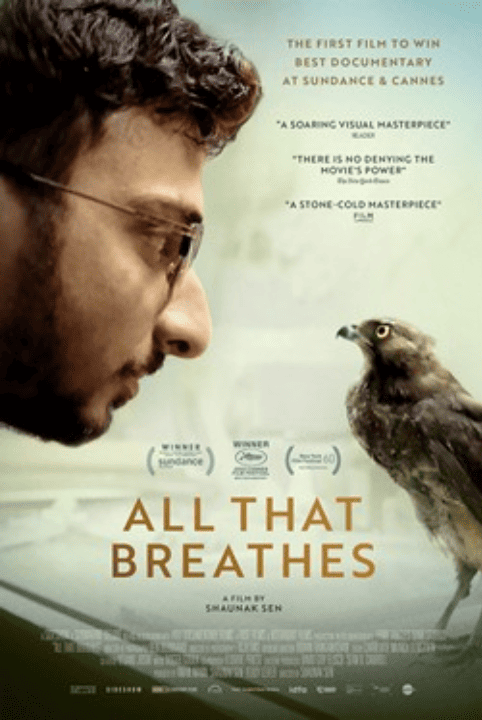
“Time flows differently in this basement. Sometimes I feel that my heart will burst open one day while working here, and kites would fly out of it.” Saud’s wistful expression is a mixture of grief, love, and perseverance as his eyes meet the piercing gaze of a kite with a bandaged wing (see Fig. 1). For the past twenty years, Mohammad Saud and his brother Nadeem Shehzad have been nursing sick and injured birds of prey, mainly black kites, in a makeshift clinic at their home in Delhi, one of the most polluted metropolitan cities in the world. The Oscar-nominated documentary ‘All that breathes’ by Indian filmmaker Shaunak Sen is a powerful yet sensitive portrayal of their rescue efforts (see Fig. 2).
The film follows the seemingly ordinary activities of the brothers and their endearing assistant Salik Rehman as they traverse the choked arteries of the metropolis to find and rescue ailing birds (see Box 1). As it does so, we catch glimpses of the many animals that inhabit the city. Pigs wading through sewage canals. A tortoise navigating through the trash. Cows negotiating a path through flooded streets. Rats rummaging through garbage. Monkeys making their way through a maze of cables, wires, and construction sites.

Box 1. Connections to the curriculum:
This resource can offer many ways of connecting what students learn about the living world in textbooks for Environmental Studies (EVS) in the preparatory stage (Grades III-V) and science in the middle-stage (Grades VI-VIII) with their real worlds (see Activity Sheet I: Kites in your Skies, Activity Sheet II: Meeting Other Raptors, and Teachers Guide: Activity Sheet I & II). It can also offer a gentle and non-prescriptive way of meeting what the National Education Policy (NEP) 2020 describes as the aim of school education: “The purpose of the education system is to develop good human beings capable of rational thought and action, possessing compassion and empathy, courage and resilience, scientific temper and creative imagination, with sound ethical moorings and values”.1 It could also be used to build what the National Curriculum Framework for School Education (NCF-SE) 2023 describes as a capacity for social engagement that includes affective aspects: “Empathy and compassion are not only values or dispositions; these are capacities that are developed through deliberate practice”.1 Lastly, teachers could plan activities around this story that align with the following curricular goals listed in the NCF-SE 2023 for:
- The preparatory stage:
- CG-2: (The student) understands the interdependence in their environment through observation and experiences, developing the basis for appreciation of the idea of ‘Vasudhaiva Kutumbakam’. Specifically, it can help students develop the competency to: “Connect changes in the environment and the lives of their family and community, as communicated by elders and through local stories (changes in occupation, food habits, resources, celebrations, communication)”.
- CG-4: (The student) develops sensitivity towards the social and natural environment. Specifically, it can help students develop the competency to: “Identify needs of plants, birds, and animals, and how they can be supported (water, soil, food, care)”.1
- The middle-stage: CG-3: Explores the living world in scientific terms. It can help students develop and exercise the following competencies:
- “Describe the diversity of living things observed in the natural surroundings (insects, earthworms, snails, birds, mammals, reptiles, spiders, diverse plants, and fungi)”.
- “Analyse patterns of relationships between living organisms and their environments in terms of dependence on and response to each other”.1
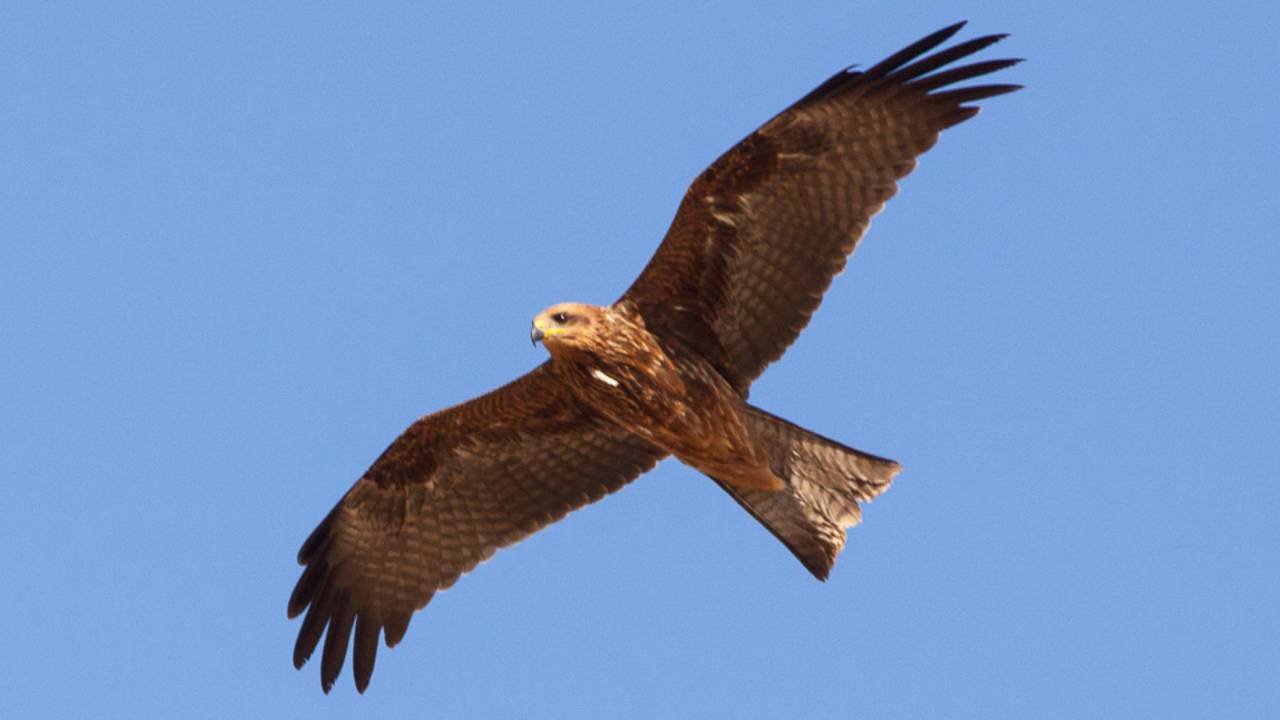
The drone of flies is a constant part of the background sound. And we see kites hover prominently over landfills with massive piles of the city’s waste (see Fig. 3). At one point in the film, Salik estimates that a kite eats about 10-15 grams of food daily. So, he continues, the 10,000 or so kites circling the landfill must be consuming roughly 100-150 kilograms of waste per day. Saud then compares the city to a stomach and creatures like the kites to the “…bacteria that help in digestion”.
The entangled lives of these different species are a vivid reminder that no place is apart from Nature, no matter how indifferent cities are to these interrelationships. Seeing the city’s marginalised (both the human and the ‘more-than-human’) and recognising the precariousness of their lives, one is reminded of the poem ‘How to be a poet’:
“There are no unsacred places;
there are only sacred places
and desecrated places.”
—Wendell Berry.2

Saud and Nadeem recall childhood stories told to them by their mother, who lost her life to cancer. Animals and other creatures were the main protagonists of these stories and interconnections between species were woven into them like a fundamental fact of life. However, these manifest forms of interdependence are not why the brothers engage in the largely thankless work of rescuing kites. Their relentless and restless efforts draw on something much more personal and powerful. Saud and Nadeem describe how they grew up watching kites. They found their first injured kite when they were in their teens and took it to a bird hospital nearby for treatment. But the hospital refused to admit a carnivorous bird. In the Muslim faith, it is believed that feeding kites can ease your worries as the raptor ‘devours your anxieties’. The injured kite became the brothers’ first patient. Other birds followed. Saud and Nadeem have treated around 20,000 kites in the last 15-20 years.
Dedication to this task does not come easy, however. Short of funds to support their work, we watch the brothers ask their main meat seller to reduce the price of the meat they buy for the birds. The meat seller refuses. Later, while mincing meat for the kites to feed on, Salik asks Saud if the kites will eat him too if he pretended to be dead. Saud jokingly asks him to try, while Nadeem pithily comments, “Humans forget that they are also a piece of meat…”.
The documentary unfolds against the backdrop of growing unrest and anti-CAA (Citizenship Amendment Act) protests in the city.3 Nadeem muses upon the fact that a misspelling of their father’s name in government identification certifications could cost them their citizenship. Can such arbitrary criteria make the process of ‘othering’ so easy? Outside, the protests spark the fires of sectarian violence. Suppressed dread looms in the city. The air quality deteriorates to such alarming levels that birds plummet from the sky (see Fig. 4).

Yet the brothers continue their work as if pulled by mysterious forces stretching out from kite-filled skies. Speaking of Saud’s relationship with kites, Nadeem says: “It is said that while performing classical music, if one truly sings a raga well, one experiences a kind of fleeting bliss. This bliss cannot be possessed or captured. For a brief moment, you just touch it… Saud can touch a similar relief when he is with kites”. Sharing how he views their work, Nadeem compares it to applying a band-aid to the huge gaping wound that is the city.
He also confesses to wanting more from his life. One feels vicarious relief when the brothers get formal approval to seek foreign funding to support their work and partake in the deep grief Saud feels when surrounded by the bodies of the birds they could not save. Showing how the brothers’ spirits soar with hopes of expanding their work while wading through the murky waters of communal violence, pollution, and increasing bird mortality, the documentary does not search for a grand narrative or final judgement. Instead, it simply affirms the truth we can feel deep in our bones: “Cheezon ki parvah isliye nahi kee jati kyunki unka desh, ya mazhab, ya politics aap jaisi hai. Zindagi khud ek tarah ki rishtedaari hai. Hum sab hawaa ke biraadari hain. Isliye hum pakshiyon ko chhod nahi sakte. (We don’t care for things because they share our nation, religion, or politics. Life itself is a kind of kinship. We are all a community of air. That is why we cannot abandon the birds)”.
Key takeaways
- Through the story of three men rescuing and treating ailing and injured raptors in Delhi, the film ‘All that Breathes’ invites us to explore our interconnection with these carnivorous birds.
- It can be used to offer students at the preparatory stage a sensitive and empathetic introduction to the raptors in their own neighbourhood.
- By drawing attention to the role of raptors at landfills, the film can help students in the middle-stage relate to the importance of these birds in maintaining healthy ecosystems.
- The film can also help students and teachers appreciate the diversity and interdependence of species.
Acknowledgements
The editors thank Vijeta Raghuram from Azim Premji University for recommending this article to us and for facilitating the process of obtaining permission to publish it.
Notes
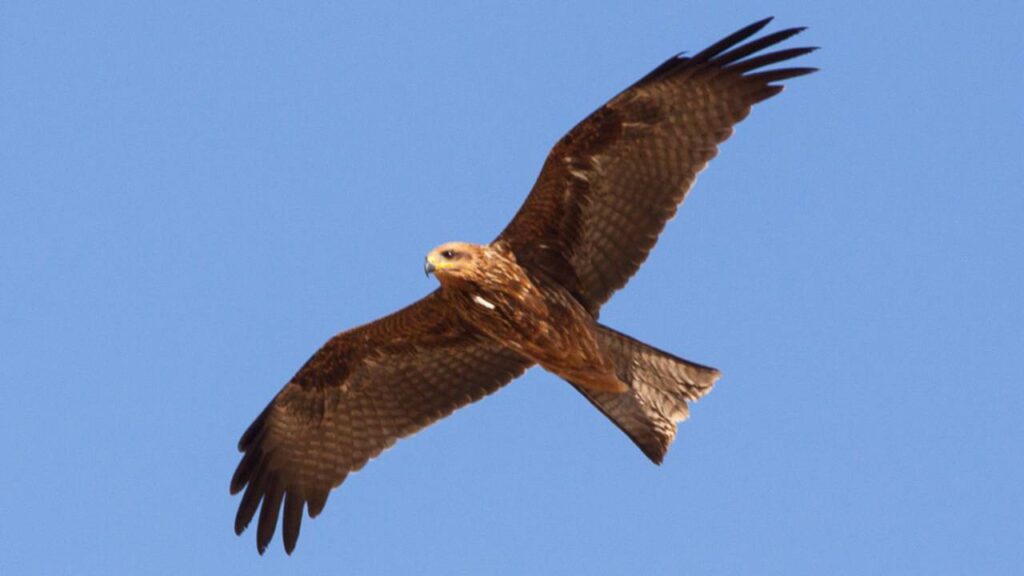
- Credits for the image used in the background of the article title: Black kite, Ron Knight, Wikimedia Commons. URL: https://commons.wikimedia.org/wiki/ File:Black_Kite_%28Milvus_migrans%29_%288079585185%29.jpg. License: CC-BY 2.0 Generic Deed.
- This film review was first published in Ecological Matters (https://www.ecologicalcitizen.net/): https://www.ecologicalcitizen.net/pdfs/epub-092.pdf. The wording and structure of the version published here has been modified to align with our readership of middle school science and elementary school EVS teachers. These changes have been made with the author’s permission.
- To learn more about Saud, Nadeem, and Salik’s work and contribute to it, visit: https://www.raptorrescue.org/
- To read more of Deborah Dutta’s literary rambles, visit: https://linktr.ee/deborahdutta.
- This article includes three detachable Activity Sheet I: Kites in Your Skies, Activity Sheet II: Meet Other Raptors, and Teacher’s Guide: Activity Sheets I & II. The kites featured in Activity Sheet I are: (a) Black Kite, (b) Black-eared Kite, (c) Black-winged Kite, and (d) Brahminy Kite.
References
- National Steering Committee for National Curriculum Frameworks. ‘National Curriculum Framework for School Education 2023’. National Council of Educational Research and Training. URL: https://ncert.nic.in/pdf/NCFSE-2023-August_2023.pdf.
- Berry W (2001). ‘How to be a poet (to remind myself)’. Poetry Foundation. URL: https://www.poetryfoundation.org/poetrymagazine/poems/41087/how-to-be- a-poet.
- Bhatia KV & Gajjala R (2020). ‘Examining anti-CAA protests at Shaheen Bagh: Muslim women and politics of the Hindu India’. International Journal of Communication (14): 18.