
Introducing an Indian scientist: Janaki Ammal


Middle-stage science textbooks (NCERT, 2024-2025) include short introductions to the scientific achievements of many scientists, one of whom is Janaki Ammal. Chapter 2 (‘Diversity in the Living World’) of the Grade VI science textbook (NCERT, 2024-2025) describes Ammal as an “Indian botanist dedicated to environmental work and helped to document and preserve India’s rich plant biodiversity. She played a key role in the ‘Save Silent Valley’ movement. As the head of the Botanical Survey of India, she initiated programmes to document the plant diversity of India”.1 But what was Ammal like as a child? What early experiences shaped her life and work as a scientist?
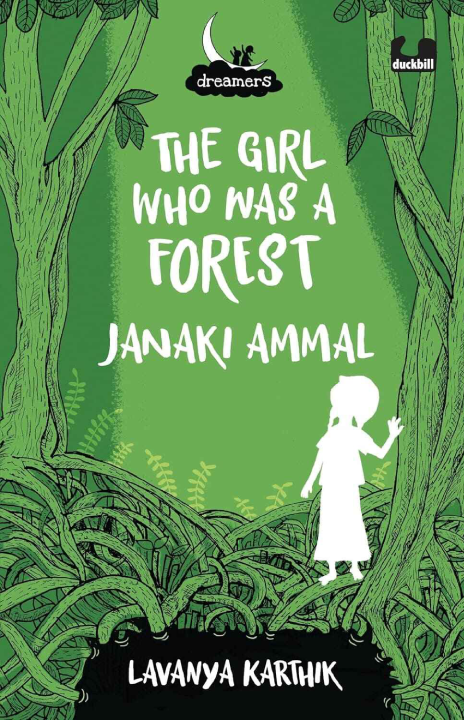
It is these questions that author and illustrator Lavanya Karthik explores in ‘The Girl Who Was a Forest: Janaki Ammal’ (see Fig. 1). This book introduces young readers to Ammal through her childhood experiences and her dreams of exploring the world of plants. It allows them to see the determination and tenacity with which Ammal followed her passion to overcome societal barriers of gender and caste and pursue a life in science. It also describes the role her father’s support and encouragement played in shaping Ammal’s life and work. We discuss the book with its author.
Q1. This book is written for 6–9-year-olds. Why this age group? How has this decision shaped the text, language, and design of the book?
Lavanya: It is at this age that children start to read on their own. They become receptive to new ideas and new kinds of stories. They show an increasing understanding of complexity in the interplay of text and illustrations. It is also at this age that their peer groups begin to matter more. When they start to experience feelings of anxiety, loneliness, and failure more keenly. I wanted to write a series of biographies about people who inspired me as a child. Of people who the present generation of children has barely heard of. I also wanted to make the subjects of these books relatable to young readers. Conventional biographies focus on the achievements of grown-ups in various fields. I do not think many kids connect with that. After all, to a child, every adult seems powerful and capable of achieving anything. Children want to read about other children. They want to see themselves in the stories they read. The ‘Dreamers’ series does just that. Each book in the series focuses on the childhood experiences of its subject, identifying one pivotal experience that shapes the person they go on to be (see Box 1). Young readers can see that the feelings they often struggle with also affected the subjects of these books. For example, RK Narayan, the author of ‘Malgudi Days’ was convinced he would never be a successful writer. JRD Tata, the businessman and philanthropist, was bullied in school for being different from the other kids. PC Sorcar, the magician, folded under pressure just when he needed to prove his skill. In her first race, PT Usha, the athlete, ran against a girl she did not think she could defeat.
I also wanted to explore art in each book. The illustration style of each book relates in some way to the subject of the book. For example, the art in the book on Salim Ali is inspired by Mughal miniatures because he was very fond of them. This art form also holds birds in high regard. The book on Bachendri Pal, the mountaineer, is inspired by thangka art from the Himalayan region. And the book on PC Sorcar draws on the Babu Bibi style of kalighat painting, commonly used to express social satire. Each book has a limited colour palette. This adds another challenging layer that I enjoyed playing with.
None of the books try to offer a complete picture of their subjects or art forms. They are intended to act as windows that encourage children to learn more about the people and art I have introduced in the book.
Box 1. About the ‘Dreamers’ series:
This is a set of 12 books for young readers (age six years and above), written and illustrated by Lavanya Karthik. These books are inspired by the real-life stories of people like Satyajit Ray, Teejan Bai, JRD Tata, Janaki Ammal, Mahasweta Devi, Bachendri Pal, Salim Ali, PT Usha, RK Laxman, RK Narayan, PC Sorcar, Nek Chand, and Shakuntala Devi. They draw on the childhood experiences of these people, introducing them to readers as young dreamers—children who not only dreamt of changing the world, but persevered to realise their dreams in their adult lives.
Q2. To many 6-9-year-olds, a ‘scientist’ may be a very abstract term. Why did you choose to write about one?
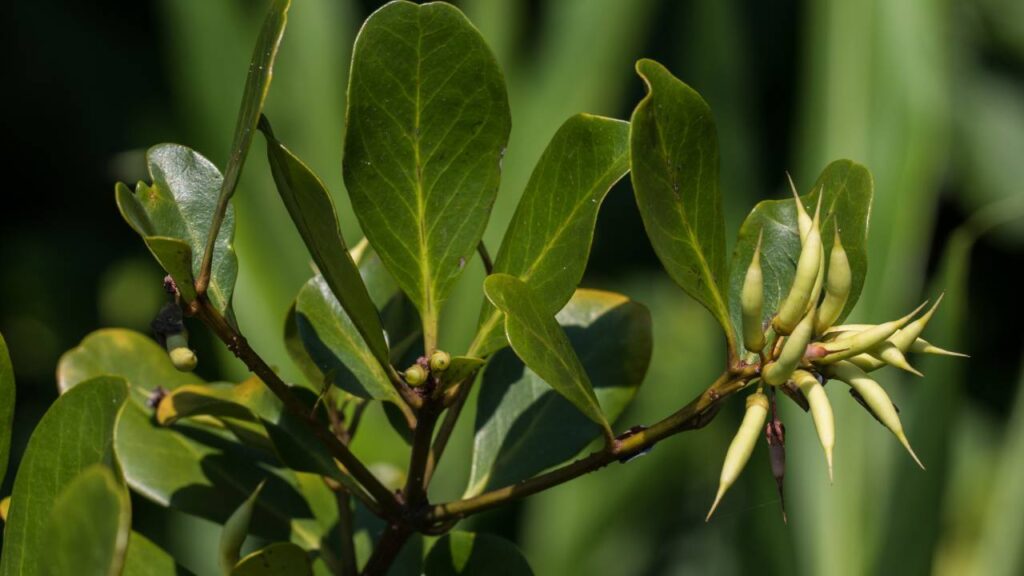
Lavanya: Not just scientists, most professional roles seem abstract to children of this age. I wrote this book because I wanted to tell Ammal’s story. She was one of the earliest women in the world to get a PhD. This was at a time when a minuscule percentage of women finished high school. My book uses the mangrove seed as a powerful metaphor for Ammal’s growth in the face of these daunting odds. At a time when women in her community were allowed to be only mothers and wives, she charted a life of independence for herself.
She held her own as a woman of colour in a field dominated by white men. She was a feminist, a Gandhian, a scientist—I just had to write about her! Her story is not just about science, it is also about finding your calling. About focusing your life on a passion or interest that shapes your life, becomes your path, and allows you to control your destiny. The book is also the story of her father, whose support was critical in Ammal’s success, and whose own lifelong interest in ornithology showed her the possibilities of a life devoted to science. I was also drawn to a story about the natural environment as I love making botanical illustrations and drawing birds. This story gave me a chance to draw the mangroves, waterways, and birds of the region Ammal grew up in.
Q3. How important is it for children to know more about ‘women’ scientists from ‘India’?
Lavanya: Very important! Despite all the progress our country has made, we are still not free from the colonial mindset that makes us feel inferior to the West or the patriarchal prejudices that restrict women to limited roles in society. Books are some of the most important windows for children to imagine possible futures they could build for themselves. Reading about Indian women thriving and growing in fields they were traditionally kept from is critical for the growth of both young girls and boys. Science is also about curiosity, method, patience, and observation—qualities that are often devalued in an educational system driven by marks, rote learning, and fear of failure. The impact of social media is a greater pressure, with its focus on instant gratification and peer approval. Stories like Ammal’s tell a young reader that it is possible to chart your own path despite the world telling you otherwise. About the quiet joys and triumphs of a life spent observing the mysteries of the natural environment.
Q4. How did you go about researching Ammal’s life? What was your experience of doing this?
Lavanya: Despite Ammal’s many contributions to botany, so little was known about her when I started writing this book. There were no published biographies. My research was entirely online, based on articles written by two women. Interestingly, both happen to be her descendants. These essays offered great insights into her life. They led me to her childhood in Thalassery, the region’s beautiful natural environment, and her father’s own interest in birds. All these threads came together in my story. Serendipitously, a detailed biography of Ammal was published a few months after my book. This book focused on her work as a scientist.
Box 2. Curricular connections:
- Middle-stage science: This resource can be used to develop what the National Curriculum Framework for School Education (NCF-SE) 2023 describes as the basis of the curricular goals for middle-stage science: “… help students engage with the nature and processes of science and develop scientific values and dispositions (including through examining the lives and works of scientists, and the development of scientific knowledge) that will enable them to take decisions in their daily lives as well as participate in the larger society”.2 Specifically, it can be used to meet the following curricular goals:
- CG-3: [The student] explores the living world in scientific terms. Specifically, it can be used to inspire students to practice the following competency: C-3.1: “Describe the diversity of living things observed in the natural surroundings (insects, earthworms, snails, birds, mammals, reptiles, spiders, diverse plants, and fungi), including at a smaller scale (microscopic organisms)”.2
- CG-6: [The student] explores the nature and processes of science through engaging with the evolution of scientific knowledge and conducting scientific inquiry. Specifically, it can be used to build the following competency: C-6.1: “…identify the scientific values that are inherent and common across the evolution of scientific knowledge (scientific temper, science as a collective endeavour, conserving biodiversity and ecosystems)”.2
- CG-8: [The student] understands and appreciates the contribution of India through history and the present times to the overall field of science, including the disciplines that constitute it. Specifically, it can be used to build the related competency: C-8.1: “Know and explain the significant contributions of India to all matters (concepts, explanations, methods) that are studied within the curriculum in an integrated manner”.2
- It is also related to the following learning outcome for Grades VI-VIII science: [The student] “exhibits values of honesty, objectivity, cooperation, freedom from fear and prejudices.”3
- Preparatory-stage Environmental Studies (EVS): This resource can also be used to meet the following curricular goals:
- CG-1: [The student] explores and engages with the natural and socio-cultural environment in their surroundings. Specifically, it can support the development of the following competencies: (a) C-1.1: “Observe and identify the natural (insects, plants, birds, animals, geographical features, sun and moon, stars, planets, natural resources) and social (houses, relationships) components in their immediate environment” and (b) C-1.2: “Describe relationships (including between humans and animals/nature) and traditions (art forms, celebrations, festivals) in the family and community”.2
- CG-4: [The student] develops sensitivity towards their social and natural environment. Specifically, it can be used to support the development of the following competencies: (a) C-4.1: “Observe and describe diversity among plants, and birds and animals in their immediate environment (shape, sounds, food habits, growth, habitat)” and (b) C-4.6: “Identify the needs of people in different situations—in terms of access to resources, equal opportunities, work distribution, and shelter”.2
Q5. Many of our readers may want to use this book in their science classrooms. Any suggestions on ways in which they can do this?
Lavanya: Several schools across India have introduced the whole ‘Dreamers’ series to their students. They have held discussions about its themes, and even encouraged their students to work on small projects around them. The book on Ammal does seem to resonate with young readers, predominantly girls (see Box 2). It is less about science itself, and more about Ammal’s route to a life of her choosing. But the joy Ammal and her father found in their individual pursuits was in the details—the unique features of plants or birds that they discovered through patient observation. This led Ammal to develop sugarcane species that were significantly sweeter than older varieties. Her father authored two books on the birds of Kerala. I bring up some of these details when I discuss the book in schools. For example, when I tell students that Ammal’s research on sugarcane directly contributes to the sweetness of the toffees and chocolates they love, it sparks a lot of interest. Science ceases to be a distant thing happening in labs; it directly touches their lives each time they eat a sweet treat. I have also included a short endnote in the book that lists additional details about Ammal. I hope this will encourage children to read more about her.
My research about Ammal sent me down a rabbit hole, learning about, among other things, mangroves. I think children would enjoy similar activities—finding out more about a plant, bird, or animal species and observing the features that make them unique (see Activity Sheets I-III and the Teacher’s Guide). In the book, I talk about the idea of a secret garden—an interest that lets you be your authentic self, that you pursue for no other gain than the sheer pleasure it offers. Encouraging children to quietly observe an animal, plant, or natural phenomenon can be a good way to get them thinking about themselves and discovering their own secret gardens!
Key takeaways
- ‘The Girl Who Was a Forest: Janaki Ammal’ is a biography that introduces the Indian botanist Janaki Ammal to children through the childhood experiences that shaped her life and work.
- Children may struggle to relate to conventional biographies that focus on the achievements of adults and abstract-sounding professions. By focusing on the childhood experiences that shaped Ammal, this book offers children a window to her life that they can more naturally relate to.
- By giving young boys and girls an opportunity to learn about Indian women thriving and growing in fields they were traditionally kept from, this story can inspire children to dream and imagine possible futures they could build for themselves.
- Through Ammal’s story, children may learn how science is about curiosity, method, patience, and observation—qualities that are often devalued in an educational system driven by marks, rote learning, and fear of failure.
- Ammal’s love for the natural world may inspire children to observe a plant, bird, or other animal species in their neighbourhood to discover features that make them unique.
Notes
- Credits for the image (Black Mangrove) used in the background of the article title: portioid, iNaturalist. URL: https://www.inaturalist.org/ photos/27435593. License: CC BY-SA 4.0 International Deed.
- Questions for this interview were put together by Vijeta Raghuram, Radha Gopalan, and Chitra Ravi.
- To know more about the ‘Dreamers’ series, please see: https://www.penguin.co.in/book/dreamers-delightfully-illustrated-short-biographies- to-inspire-young-readers-boxset-of-ten-inspirational-indian-men-and-women-who-changed-the-world-perfect-for-7-years/.
- This article includes four detachable classroom resources: Activity Sheet I: Explore Life on a Wall, Activity Sheet II: Find Hidden Nature, Activity Sheet III: Observe Uses of Human-made structures, and Teacher’s Guide: Nature-based Outdoor Activities.
- Biographies of scientists can be an effective and engaging way to introduce students to the process of scientific discovery. But what pedagogical approaches can we use to meet this aim? Read how Naresh Kumar Sen, a government school science teacher, explored this question in ‘A Project-centred Approach to Biographies of Scientists’ from the Dec 2024 issue of i wonder… URL: https://publications. azimpremjiuniversity.edu.in/5902/.
- Many Indian women have played important roles in science. Some of their contributions have direct connections to concepts and applications that students learn about in the middle-stage science curriculum. Introduce your students to six such women with the ‘Activity Sheet: Who are these Scientists?’. Authored by Vijeta Raghuram, this classroom resource was published in the Dec 2024 issue of i wonder… URL: https://publications.azimpremjiuniversity.edu.in/5896/.
References
- National Council of Educational Research and Training (2024). ‘Chapter 2: Diversity in the Living World’. Science Textbook for Grade VI: 9-34. URL: https://ncert.nic.in/textbook.php?fecu1=2-12.
- National Steering Committee for National Curriculum Frameworks (2023). ‘National Curriculum Framework for School Education 2023’. National Council of Educational Research and Training. URL: https://ncert.nic.in/pdf/NCFSE-2023-August_2023.pdf.
- National Council of Educational Research and Training (2017). ‘Learning Outcomes at the Elementary Stage’. First Edition. National Council of Educational Research and Training. URL: https://ncert.nic.in/pdf/publication/otherpublications/tilops101.pdf.