

The importance of asking for questions in different ways

“The question is a central aspect of both learning and knowledge creation. Yet students often seem to value more the answer than the question… I think quite the opposite. The quest to answer a question is where the learning takes place, not the answer itself.”—Richard Zare, Professor of Chemistry at Stanford University, USA.1
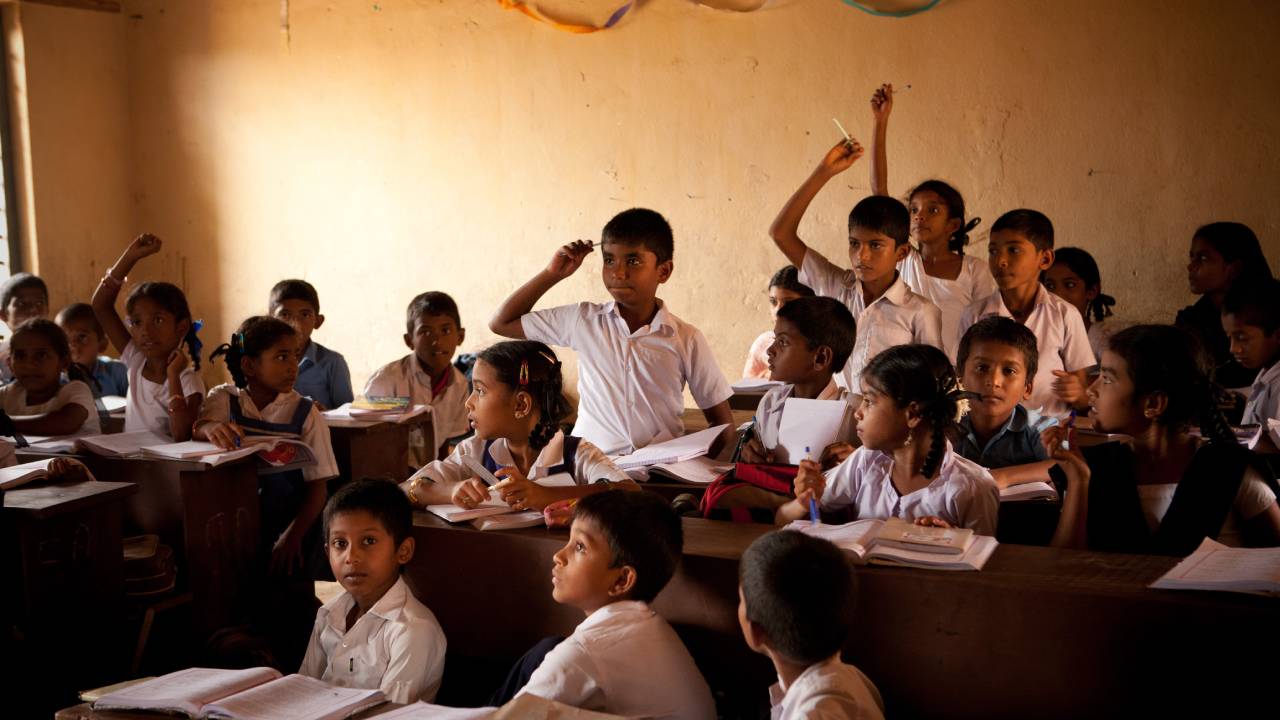
Our students spend a large fraction of their study time preparing to answer questions that appear in examinations. Does this time-consuming exercise lead to a better understanding of science? The simple answer is no! While it is almost obligatory to do well in examinations, it is more important for students to develop a good understanding of the subject. This does not happen by just learning to answer examination questions. In fact, students should have opportunities to ask more questions than they answer.
The American physicist Isidor Isaac Rabi once shared: “My mother made me a scientist without ever intending to. Every other Jewish mother in Brooklyn would ask her child after school: So? Did you learn anything today? But not my mother. “Izzy,” she would say, “did you ask a good question today?” “That difference—asking good questions—made me become a scientist”.2 Rabi received the Nobel Prize in Physics in 1944 for his discovery of nuclear magnetic resonance (NMR). This non-invasive analytical technique has important applications in many fields, including chemistry, biology, and medicine.
The role of the science teacher
The National Curriculum Framework for School Education (NCF-SE) 2023 states: “The role of the Teacher in aligning pedagogy and assessment with how students learn Science is critical. Teachers must build an environment that promotes natural curiosity, encourages questions, gives maximum possible opportunities for hands-on activities, and gives ample space to discuss ideas”.4 It recommends that teachers use pedagogical processes that simulate “the process of science, such as asking questions” and assess students for their ability to “ask questions” about the phenomena they observe.
I share three strategies that teachers can use at any level of science education. I use them in the course I teach at the Indian Institute of Science (IISc), Bengaluru, to encourage students to ask questions. They have also allowed me to assess my students’ creative abilities.
I do not give routine homework to my students. Instead, every 2-3 weeks, I ask them to submit a single page of writing that includes a science question and a plausible answer. Plausible, because a definitive answer may not even be known. My conditions are that the question cannot be taken from any textbook or examination. Also, ideally, the answer should not be obvious from simply reading their textbook. Over the years, many students have told me they enjoyed this type of homework, since it made them read and, most importantly, think. From a teacher’s perspective, this approach has an additional advantage. Every student tends to come up with a different question, since this task offers little scope for copying homework from one another.
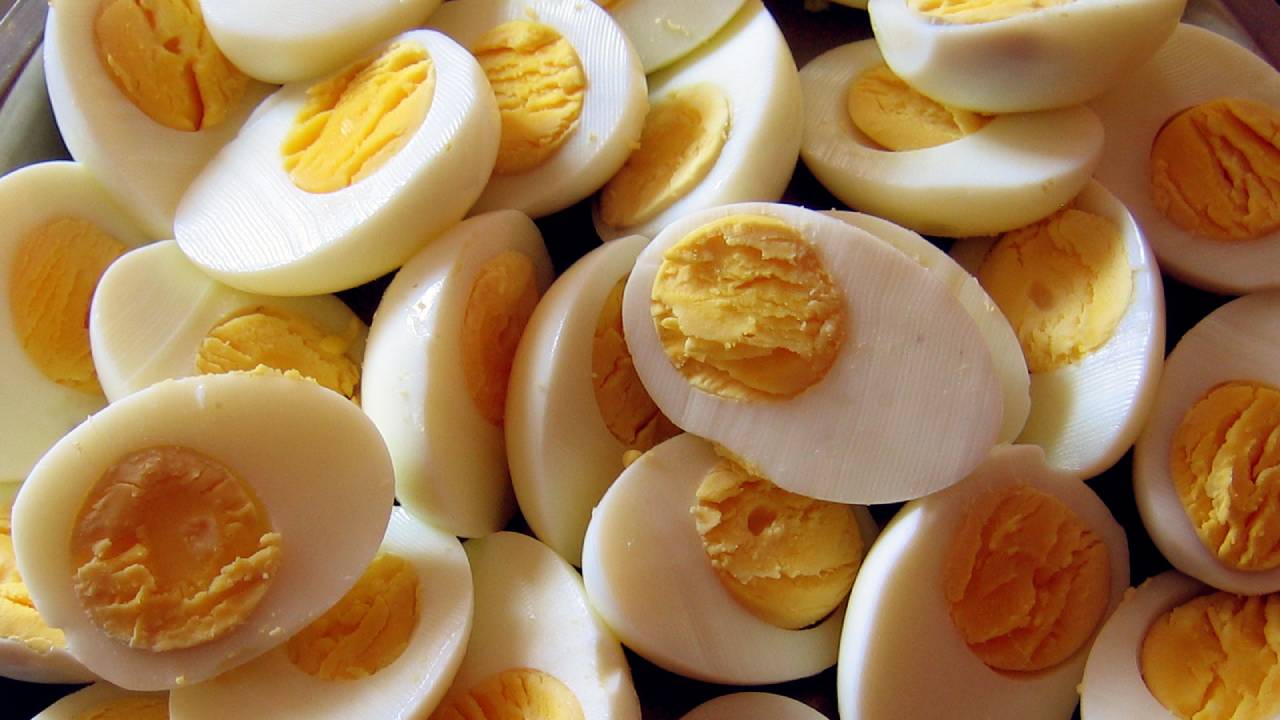
I have attempted a variation of this in my assessments. In addition to standard questions, I include one with an image relevant to the topics covered in the assessment. The image can be a plot or a photograph. I ask students to write any two science questions one would ask on looking at the image (see Activity Sheet: Asking Scientific Questions and the related Teacher’s Guide).
A third strategy that I frequently employ is to provide students with a question and its answer. I tell them that the answer may be correct, partially correct, or completely wrong. The students’ task is to ‘evaluate’ the accuracy of the answer and assign marks to it. I also ask them to share reasons to support their evaluation. I assign marks to them by assessing the accuracy of their evaluation and reasoning. My students liked this form of assessment too, since it allowed them to exercise their judgment and explain their reasoning.
Key takeaways

- Many of our assessments test students’ ability to answer our questions rather than ask their own questions.
- Learning to ask scientific questions about the natural world is an important aspect of thinking like a scientist. It allows students to go beyond the information in their textbooks and exercise their creativity.
- This article shares three tried-and-tested ways in which teachers can use assessments to help students develop and practise the skill of asking scientific questions.
Acknowledgements
This article was first published in ‘Accelerating Science’, Eds Dharanidhar Das and Surajit Choudhury, published by the Principal, Jamuguri Higher Secondary School, Shonitpur 784180, ©2013. A reprint appeared in ‘Resonance’, Issue 20, 2015 (URL: https://www.ias.ac.in/article/fulltext/ reso/020/01/0073-0075). The version published here: (a) Retains parts of the original that are relevant to middle school science teachers, (b) Includes new details that connect the main ideas in the article with the middle grade science curriculum, and (c) Does not include parts of the original that referred to concepts or teaching practices appropriate for higher grades. We thank the author Uday Maitra and the copyright owner Surajit Choudhury for giving us their permission to publish this version. The editors also thank Vijeta Raghuram from Azim Premji University, Bengaluru, for facilitating the process of obtaining these permissions.
Notes
- Credits for the image used in the background of the article title: Questions, Pexels. URL: https://www.pexels.com/photo/question-mark-on-chalkboard- 356079/. License: CC0.
- This article includes two detachable classroom resources: ‘Activity Sheet: Asking Scientific Questions’ and a related ‘Teacher’s Guide’.
- This digital version was last updated on Aug 10, 2026.
References
- Richard N Zare. ‘The Power of the Question’. Resonance (Aug 2009): 818-819. URL: https://www.ias.ac.in/article/fulltext/reso/014/08/0818-0819.
- Donald Sheff. ‘Izzy, Did You Ask a Good Question Today?’. New York Times (Jan 1988): 26. URL: https://www.nytimes.com/1988/01/19/opinion/l-izzy-did-you- ask-a-good-question-today-712388.html.
- Nobel Prize Outreach. ‘The Nobel Prize in Physics 1944’. Nobel Prize Foundation. URL: https://www.nobelprize.org/prizes/physics/1944/summary/.
- National Steering Committee for National Curriculum Frameworks. ‘National Curriculum Framework for School Education 2023’. National Council of Educational Research and Training. URL: https://ncert.nic.in/pdf/NCFSE-2023-August_2023.pdf.

The author writes from his experience of guiding PhD students but school teachers can definitely take a leaf out of his book. A few workshops guiding teachers in this would be useful.
Thanks for your feedback. We will work out the details and get back to you.