
Connecting policy & practice in the science classroom


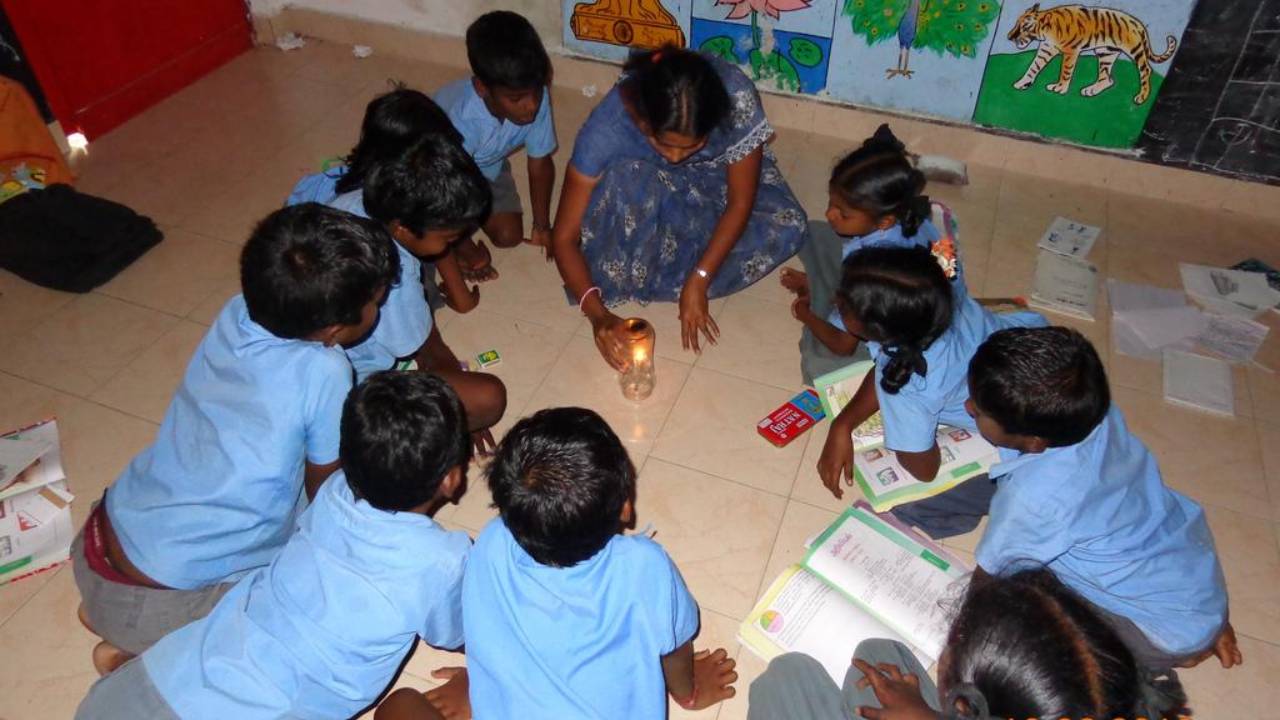
Good science education must help children learn concepts through hands-on experiences and see the relevance of these concepts in their everyday lives. Both these aspects are emphasized in the National Curriculum Framework for School Education (NCF-SE) 2023 (see Box 1).
The role of ‘doing’ in science learning is widely recognised. But here are three practical ways in which my colleagues from the science team at Azim Premji Foundation in Damoh, Madhya Pradesh (MP), and I have seen it support more effective classroom practice:
- Starting a topic with an activity can engage interest. We have seen this not only with students in a classroom, but also with teachers in a workshop. We start a session, for example, by asking a question that students or teachers can answer only by doing an activity and recording what they observe. This sparks their curiosity and provokes more questions and explorations.
- Many of us have memorised illustrations of experiments and activities from our textbook. But it is only when we try doing an activity by ourselves that we begin to question and learn. For example, in a recent workshop, we invited teachers to use a concave mirror to study the reflection of a candle flame. They had seen an illustration of the set-up for this activity in Chapter 11 (‘Light’) of the Grade VII science textbook (NCERT, 2024-2025), but had not had the chance to try it by themselves (see Fig. 1).5 It took some trials before they could figure out where the mirror, screen, and object needed to be placed in relation to each other.
- The process of doing an activity and sharing observations from it can encourage creativity. Rather than looking for ready-made answers, students and teachers begin to express different ways of thinking and understanding. Discussion around their understanding can help both to develop the ability to reason and a scientific attitude.

Box 1. School science in policy:
In the section on aims of school science education, the NCF-SE (2023) highlights the need to enable students to: “..develop an understanding of the natural and physical world through systematic inquiry. Learning science also builds important capacities such as observation, analysis, and inference. This in turn enables the meaningful participation of individuals in society and the world of work with scientific temper, critical and evidence-based thinking, asking relevant questions, analysing practices and norms, and acting for necessary change”.1 Similarly, speaking of science-related curricular goals and competencies, the NCF-SE (2023) underlines the need for teachers to ensure that: “… along with conceptual understanding, the capacities of scientific inquiry are developed as age appropriate. These concepts and capacities are chosen both from a disciplinary perspective and in terms of what is useful and necessary in their everyday lives. Students thereby understand the world around them with increasing depth, explore scientific questions at different levels through discussion and experimentation, and learn to communicate this understanding in different ways.”1
Both these aspects are particularly important at the middle-stage. According to the position paper on teaching science by the National Council of Educational Research and Training’s (NCERT) Focus Group (2006), students at this stage: “… should be engaged in learning principles of science through familiar experiences, working with hands to design simple technological units and modules (like designing and making a working model of a windmill to lift weights) and continuing to learn more on environment and health through activities and surveys. Scientific concepts are to be arrived at mainly from activities and experiments. Science content at this stage is not to be regarded as a diluted version of secondary school science. Group activity, discussions with peers and teachers, surveys, organization of data and their display through exhibitions, etc., in schools and neighbourhood are to be an important component of pedagogy…”2
I think these aims and goals are influenced by both Gandhi Ji’s head-heart-hands framework and Bloom’s taxonomy’s cognitive-affective-psychomotor skills (cognitive skills relate to the head, affective skills to the heart, and psychomotor skills to the hand) framework.3,4
‘Doing’ is particularly important in science teaching and learning in government schools. One example of this can be seen in MP. Due to a shortage of teachers, Grade VI-VIII students are grouped into multi-grade classes for every subject, including science. Teachers know which grade-level each student is at, but it is not necessary that a student’s understanding of a topic matches their grade-level. To address this, we suggest that teachers begin each topic with an activity. For example, Chapter 4 (‘Acids, Bases, and Salts’) of the Grade VII science textbook (NCERT, 2024-2025) introduces students to acids and bases.6 Teachers can begin this chapter by assessing student’s ability to identify and group everyday substances as acidic, basic, or neutral. Observing students do this activity can help teachers group them according to their current level of understanding of the topic. Each such group can, therefore, have a mix of students from Grades VI-VIII. The teacher can now introduce the class as a whole to neutralisation reactions with acid-base combinations. But each group can be assigned an activity with a level of complexity that is appropriate to their current level of understanding.
Another example is related to the pandemic and lockdowns. During this period, students suffered significant learning losses in literacy and numeracy. This had a significant impact on science learning too. Let me give you an example. Chapter 13 (‘Light’) of the Grade VIII science textbook (NCERT, 2024-2025) introduces children to reflection through activities that require them to measure distances and angles (see Fig. 2).7
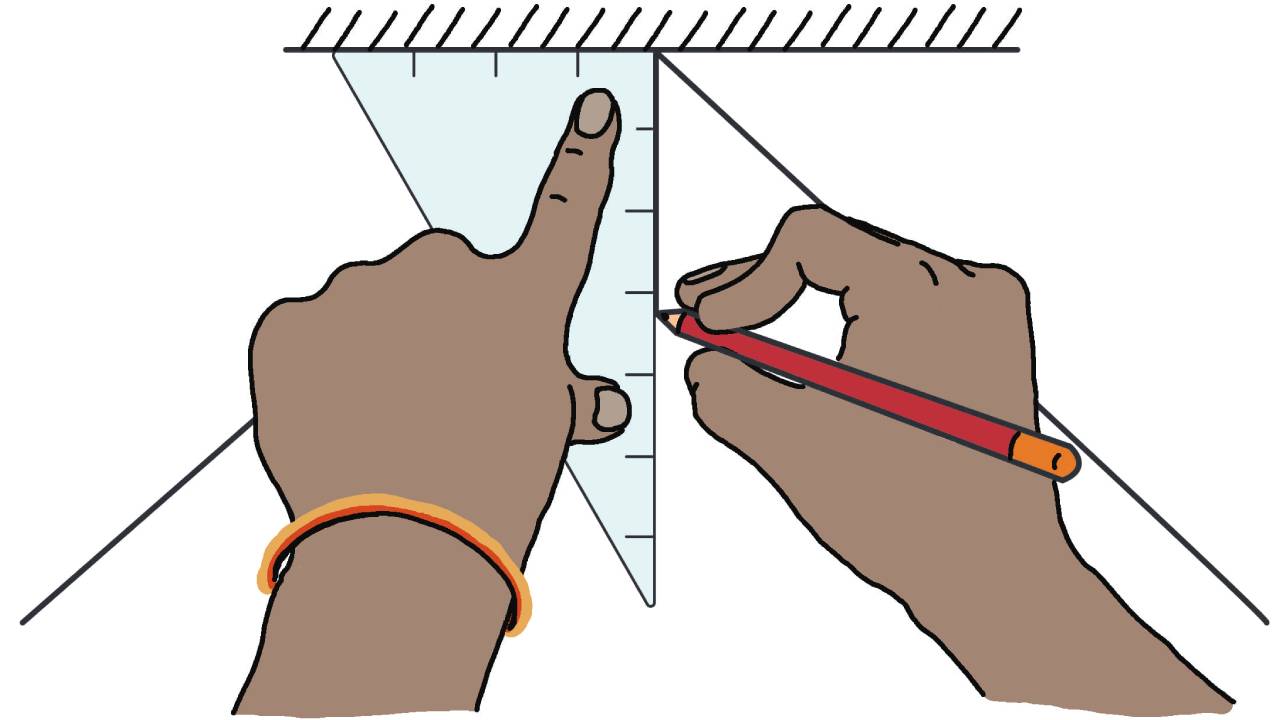
Children are expected to learn to measure length and distances in Grade II-IV mathematics. They are introduced to angles in Grade V mathematics. But Grade VII science teachers found that to introduce concepts around reflection, they had to first teach children how to measure angles. Similarly, many children were able to do an activity, but literacy losses meant that they were unable to record their observations or communicate their understanding verbally or in writing. Despite these challenges, science learning did not stop. Government school teachers worked with groups of 8-10 children in mohalla classes in the villages. Here too, an activity-based approach was useful. For example, Chapter 7 (‘Experiments with Water’) of the Grade V Environmental Studies (EVS) textbook (NCERT, 2024-2025) invites children to group different household objects based on their tendency to sink or float in water.8
Teachers extended this understanding by asking students to compare what would happen to lemon and eggs dropped in plain water versus water with some salt added to it. We designed activity sheets that allowed students to record their observations by checking boxes with a tick or cross. This allowed them to express what they had observed despite their reading and writing losses. Teachers then discussed the explanations for these observations. Even after schools reopened, literacy and numeracy losses continued to affect science learning. For example, Chapter 10 (‘Electric Current and its Effects’) of the Grade VII science textbook (NCERT, 2024-2025) invites students to set up an electrical circuit (see Fig. 3).9 When this was demonstrated through an activity, students were able to accurately set up their own working circuits. But they were unable to communicate their understanding in grade-appropriate terms in more formal assessments. To address this, we designed activity sheets that helped teachers assess their student’s conceptual understanding of topics from the middle-stage science curriculum (like solubility, acids and bases, and physical and chemical changes), while also building their Foundational Literacy and Numeracy (FLN) skills.

It is also important that children see science not just as a subject, but as a way to understand the world around us. Many of the children we work with drop out from school after Grade VIII, IX, or X. If we teach science in a way that can help build and develop their skills to pursue a vocation and earn a livelihood, then science becomes relevant even for children who are not able to pursue higher education. It also gives them a sense of identity and dignity in society. Gandhi Ji highlights this in his ideas on education: “Literacy in itself is no education. I would therefore begin the child’s education by teaching them a useful handicraft and enabling them to produce from the moment they begin their training… I hold that the highest development of the mind and the soul is possible under such a system of education. Only, every handicraft has to be taught not merely mechanically as is done today, but scientifically, i.e., the child should know the why and the wherefore of every process.”10
For example, Chapter 11 (‘Chemical Effects of Electric Current’) of the Grade VIII science textbook (NCERT, 2024-2025) introduces students to one application of the chemical effects of electric currents: “Electroplating is a very useful process. It is widely used in industry for coating metal objects with a thin layer of a different metal. The layer of metal deposited has some desired property, which the metal of the object lacks.”11 It shares many real-world applications of this process (see Fig. 4). Students learn that tin and zinc are used to electroplate iron. We started a discussion on why iron containers needed this coating. Since students had observed rusting in their everyday world, they were able to appreciate the role tin plays in protecting iron vessels against rusting by sealing it off from the atmosphere. Then we drew their attention to the age-old handicraft of kalai. In this process, tin is used to coat the surface of copper and brass vessels. Many students had seen this process in their everyday world and were able to connect it with what they were learning about electroplating in the textbook. They were now able to appreciate how tin could protect these metals against oxidation. This kind of science learning has relevance for them.

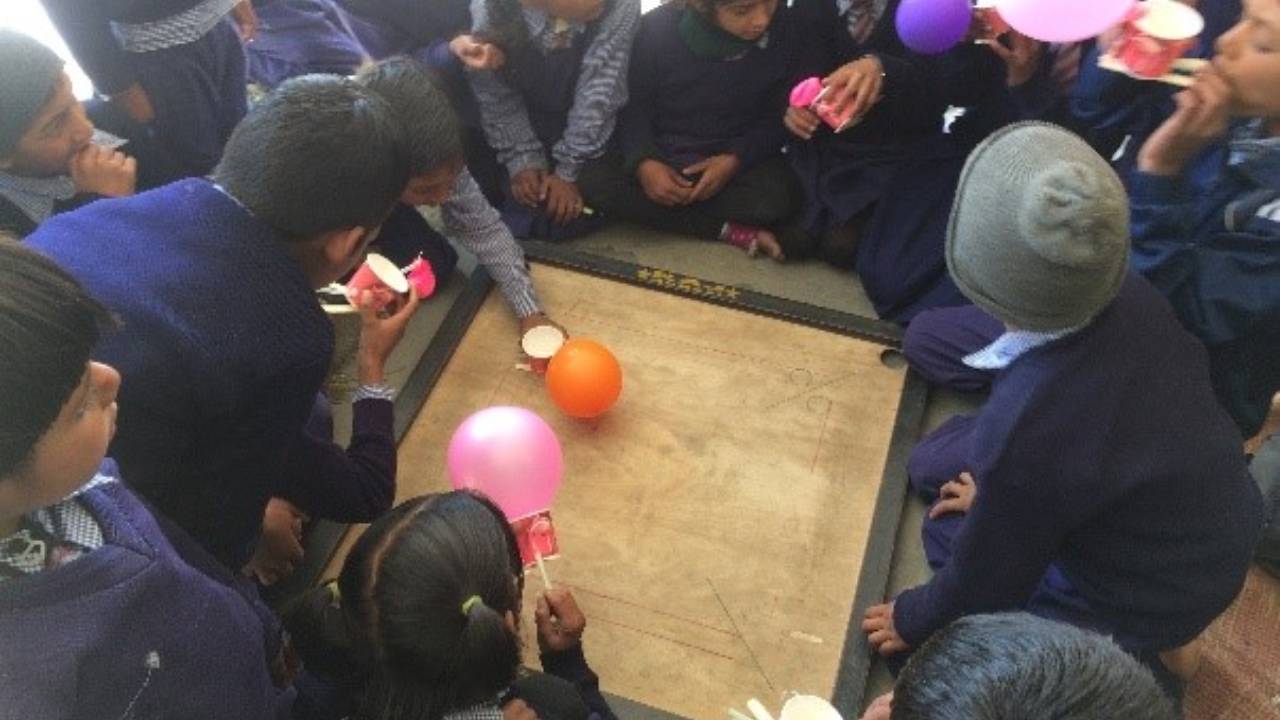
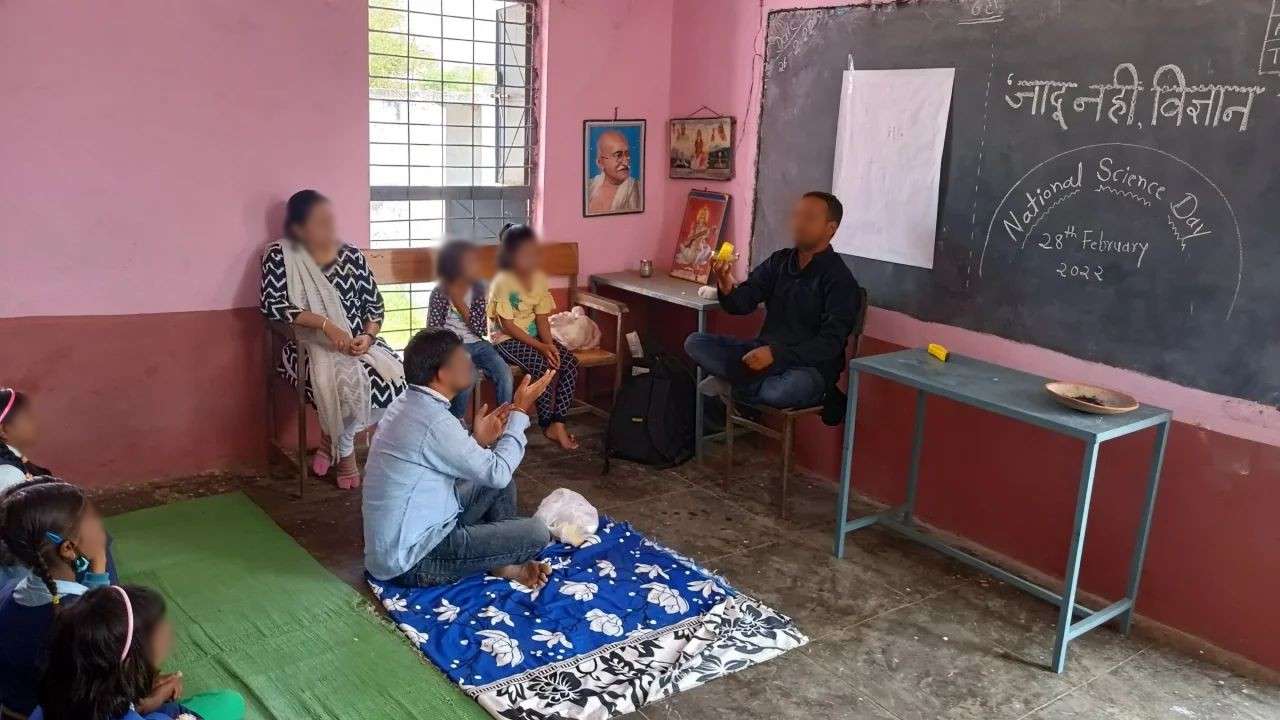
Using this approach to science teaching can contribute to students’ feeling more motivated to attend school. It can also help build parents’ trust in the teachers and school. Let me provide some context here. Some parents send their children to government schools because they cannot afford to send them to private ones. They may, however, believe that children do not learn anything of value in school. So, whenever there is an opportunity, parents may send their children to work (harvesting crops in the field, helping at a local bakery, or working in a local industry) rather than to school. To change this, building a relationship of trust between parents and the teacher is important. How do we do this? In a parent-teacher meeting about midday meals, we invited children to share what they had learnt about food and nutrition in school. The children were able to share some simple facts that had relevance for the discussion. For example, some of them explained why nuts are a good source of nutrition (especially proteins) and energy (calories). But they were also aware that their families and school may not be able to afford a regular supply of many kinds of nuts. So they suggested including peanuts in midday meals, explaining to their parents why this could be a good nutritional alternative to more expensive nuts (like almonds). Parents expressed appreciation that their children were learning things at school that were of practical importance. Organising fairs or melas with the help of the Gram Sabha is another way of creating awareness about what children learn in school. For example, our ‘Jadu Nahi, Vigyan Hai’ programme aimed to create awareness about science and how children can use it to separate myths from facts in their real world (see Fig. 5).
Such instances can help change common perceptions about education in government schools. It may even motivate parents to send their children to school rather than engage them in work outside school. We see how this has created small shifts in our Damoh block.
Key takeaways
- Many policies on science education recommend that teachers allow students to ‘learn by doing’ and connect the textbook with students’ real world.
- Learning science concepts by doing an activity can help engage student interest, encourage them to question and learn from their observations and experience, and strengthen their reasoning skills.
- In multi-grade classrooms, starting class with an activity can help teachers assess and group students based on their current level of understanding. Teachers can then plan activities for each group at a level of complexity that is best suited to help them learn more advanced concepts.
- With students who struggle with foundational literacy and numeracy skills, hands-on learning experiences in science allow teachers to demonstrate concepts, assess learning, and build scientific skills in more inclusive and less challenging ways.
- For science to become a way that students understand the world, it needs to help them separate myth from fact, be better informed about issues that affect their health and well-being, pursue a vocation, or earn a livelihood. Making such connections can help students see the relevance of science in their real world and its role in developing a sense of identity and dignity in society.
- Parent-teacher meetings and science melas can give students the opportunity to demonstrate their skills and the relevance of what they learn in science classes to their parents. This can help build parents’ trust in teachers and ensure their support in sending children to school.
Acknowledgements
The editors thank Aditya Prakash for agreeing to our request for an interview and for sharing these reflections from his practice.
Notes
- Credits for the image (A Science Experiment) used in the background of the article title: GPE/Deepa Srikantaiah (Flickr.com). URL: https://www.flickr.com/photos/gpforeducation/8644430776. License: CC BY-NC-ND 2.0.
- This article is based on an interview with Aditya Prakash. The questions for the interview were put together by Vijeta Raghuram, Radha Gopalan, and Chitra Ravi. The interview was conducted by Vijeta Raghuram and Radha Gopalan. It was transcribed by Vijeta Raghuram using DESCRIPT. The transcript was cleaned up and translated from Hindi into English by Rajesh Utsahi. The English transcript was reviewed and cleaned up by Radha Gopalan. The excerpts presented in this piece were selected, edited, and structured by Chitra Ravi.
References
- National Steering Committee for National Curriculum Frameworks (2023). ‘National Curriculum Framework for School Education 2023’. National Council of Educational Research and Training. URL: https://ncert.nic.in/pdf/NCFSE-2023-August_2023.pdf.
- National Council of Educational Research and Training (2006). ‘Position Paper National Focus Group on Teaching of Science’. URL: https://ncert.nic.in/pdf/focus-group/science.pdf.
- Tandon, Shruti (2019). ‘Gandhi’s Educational Thoughts’. URL: https://www.mkgandhi.org/articles/Gandhis-educational-thoughts.php. Accessed on February 7, 2025.
- Clark, Donald R. (1999). ‘Bloom’s Taxonomy of Learning Domains’. URL: http://www.nwlink.com/~donclark/hrd/bloom.html.
- National Council of Educational Research and Training (2024). ‘Chapter 11: Light’. Science Textbook for Grade VII: 123-141. URL: https://ncert.nic.in/textbook.php?gesc1=11-13.
- National Council of Educational Research and Training (2024). ‘Chapter 4: Acids, Bases, and Salts’. Science Textbook for Grade VII: 38-46. URL: https://ncert.nic.in/textbook.php?gesc1=4-13.
- National Council of Educational Research and Training (2024). ‘Chapter 13: Light’. Science Textbook for Grade VIII: 165-180. URL: https://ncert.nic.in/textbook.php?hesc1=13-13.
- National Council of Educational Research and Training (2024). ‘Chapter 7: Experiments with Water’. EVS Textbook for Grade V: 60-66. URL: https://ncert.nic.in/textbook.php?eeap1=7-22.
- National Council of Educational Research and Training (2024). ‘Chapter 10: Electric Current and its Effects’. Science Textbook for Grade VII: 109-122. URL: https://ncert.nic.in/textbook.php?gesc1=10-13.
- Gandhi, M. K (1969). ‘The Selected Works of Mahatma Gandhi, Vol. 5: The Voice of Truth’. Navijan Publishing House. URL: https://www.mkgandhi.org/ebks/the-voice-of-truth.pdf.
- National Council of Educational Research and Training (2024). ‘Chapter 11: Chemical Effects of Electric Current’. Science Textbook for Grade VIII: 138-149. URL: https://ncert.nic.in/textbook.php?hesc1=11-13.