
Teaching soil: Listening to students’ voices


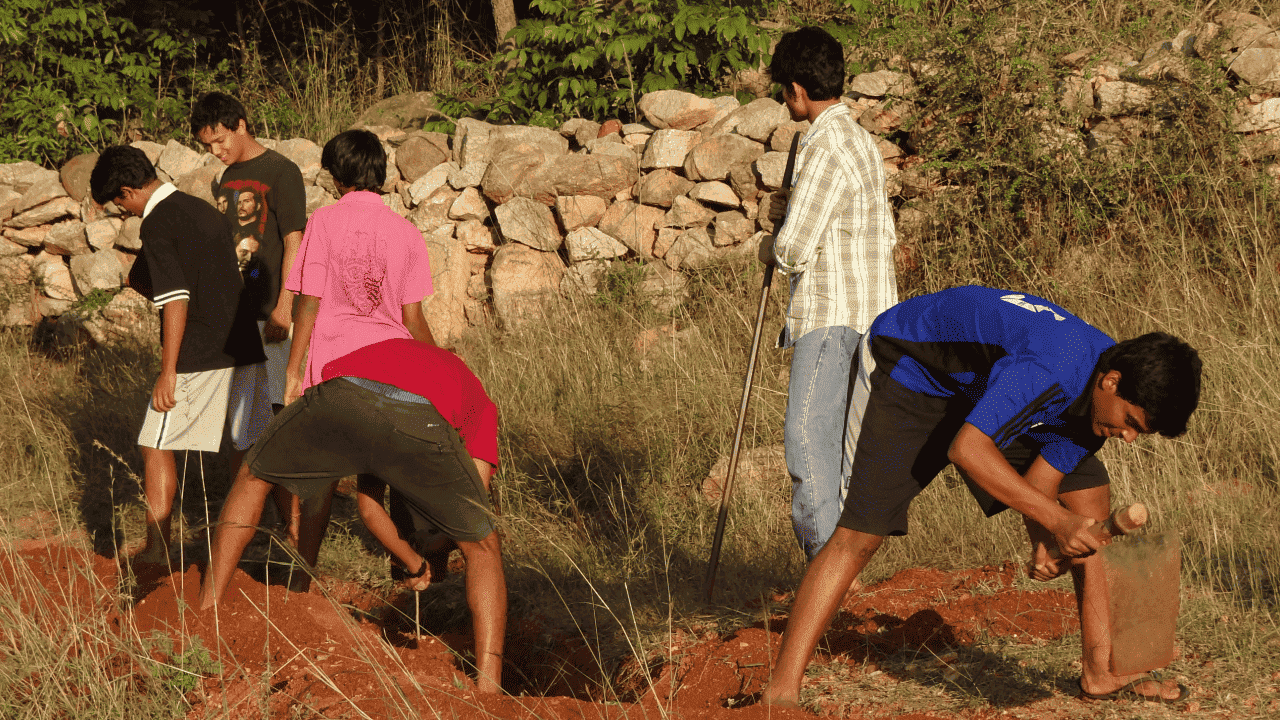
According to the National Curriculum Framework for School Education (NCF- SE) 2023, “Concepts by themselves are abstract. They need to be presented to students through content that helps them connect the concept with their previous knowledge as well as with their observations and experiences in the real world.“1 One example of this is seen in Chapter 13 (‘Our Home: Earth, a Unique Life-Sustaining Planet’) of the Grade VIII science textbook (NCERT, 2026-2027), where students learn that “soil may look like simple dirt, but it is rich in nutrients like nitrogen and potassium that plants need to grow.“2 While these lines introduce soil in terms of its importance in supporting plant life, they may not connect to how students understand or relate to soil. For example, for many of us, one of the earliest memories of soil is a sensory one—that of playing with mud as children, where touch, smell, and even taste (yes, definitely) was involved. With increasing urbanisation, this experience may have changed, and there may be a growing alienation of children from nature. Many children from both urban and rural backgrounds may, therefore, find it harder to relate to soil as an entity that supports a range of life forms, including humans. How do we draw out their experiences and knowledge in the classroom? The NCF-SE 2023 highlights the importance of this process by suggesting that the pedagogy used in the middle stage should: “Build on prior knowledge…” and that content should be: “connected to the students’ lives and surroundings to the maximum possible extent. A student in Andaman and Nicobar Islands and a student in Jharkhand will observe different kinds of plants and animals around them.“1 To probe students’ prior understanding, I decided to initiate a dialogue on soil.
A dialogue with students
I invited two groups of Grade VII–VIII students to this dialogue. One group consisted of students from a predominantly urban background, studying in a residential school located in a rural area. The other group consisted of students from a rural background (a community of small farmers, pastoralists, potters, blacksmiths, and landless labourers), who were day scholars in a local private school. These were the questions I asked them:
- What feelings do you associate with soil? Here are some of their sensory experiences in their own words: “Playing with soil brings a lot of joy…”, “Seeing crops grow is an enjoyable experience…”, “It is fun to make idols of gods and other toys with clay and mud and to play with them…”, and, “Farming and working with soil” is “soothing’, “satisfying”, and “fulfilling…“.
- What is your first impression of soil? Students from urban communities mainly associated soil with textbook concepts such as fertility, earthworms, crops, agricultural fields, minerals, the water table, and pollution. Some students were unexpectedly lyrical. One of them was reminded of a Kabir composition, “Maati kahe kumhar ko…” Another student thought of a Hindi film song, “Mere desh ki dharti sona ugle…“.
For students from rural communities, the word soil conjured up the idea of diversity. They described the different kinds of soil in the area using the local Telugu dialect: black cotton soil (nalla regada matti), red soil (yerra matti), and so on. Soil, to them, also meant microorganisms, earthworms, insects, farmyard manure, dry leaves, cow dung, sheep droppings, etc. Many of them were reminded of the “sweet smell” of soil that accompanies the first spell of rain (known as tulakari in Telugu), during or at the end of the hot summer months. For most of them, their mental associations with soil were dominated by a wide range of issues related to fertility and crop production. - What do you know about soil? What experiences shape this knowledge? Rural students seemed to have a very natural relationship with soil. Their understanding and knowledge came mainly from observing and participating in farming- related activities at home. For example, in Chapter 11 (‘Nature’s Treasures’) of the Grade VI science textbook (NCERT, Reprint 2026-2027), students read that they are different types of soils, some of which “…are good for growing certain types of plants while some are good for making bricks for buildings.“3 Rural students knew which types of soil supported the growth of specific locally cultivated crops (for example, groundnut, tomato, red gram, and field bean). They were also able to describe how the soil near water bodies was different from that on the hills where they took their cattle to graze. They could identify the kinds of soil used for pottery (two of the children are from a village with many potters), building houses, or making bricks. Some also spoke about what they had learnt from conversations with their parents, grandparents, and other family members. At school, they said they had mainly learnt about soil through experiments. Some of them were also involved in a little bit of gardening. This included growing vegetables using wastewater from the school kitchen. However, it was clear that a significant part of their learning came from personal and practical experiences at home. In fact, this understanding of soil seemed to support their classroom learning.
In contrast, children from urban communities learnt most of what they knew about soil in school. Only two of these students mentioned having some exposure to soil at home as well. One of these students mentioned that their grandparents lived on an agricultural university campus. The other student indicated that they came from Uttarakhand, where they had some exposure to soil through their home environment. Most of what they knew about soil came from science and social science classes, which provided several opportunities to learn about it both in theory and through outdoor experiences. These included activities such as gardening, fieldwork, planting trees, creating bunds to store water, and conversations with farmers during school visits. Many of the students were familiar with the concept of soil ecosystems and differences in soil types, such as alluvial, black, loamy, and sandy soils. Some of them were capable of strongly articulating the importance of soil—referring to its capacity to support diverse flora and fauna, or correlating soil health with human health. These students recognised that an area’s agroclimatic conditions could support only certain kinds of agriculture and were able to discuss the impact of human activities on soil quality. Some of them were able to discuss the adverse impacts of monocropping on soil quality. Clearly, their theoretical understanding of soil was quite sound. However, it was difficult to assess the extent to which these students connected this understanding to their own lives, including what they ate and their own health. - What do you want to learn about soil? The discussion on what they knew about soil spilt over into students expressing a desire to learn more about it. In terms of what they would like to learn about soil, there were many similarities between the two groups of students. For example, all of them wanted to learn about sustainable methods to grow food and improve soil fertility. Many students expressed strong interest in creating a ‘soil atlas’ that would illustrate the various kinds of soils found across the country, while also providing details like which soils are suitable for which crops. Another area that was of interest to many students was learning about the use of chemical fertilisers and pesticides and their impacts on soil ecology, groundwater aquifers, and human health. Specifically, students wanted to know the impacts of soil erosion and degradation on human society and the measures that could be taken to reduce this.
Some students from urban communities were interested in the history of agriculture, traditional cropping practices, and the impacts of the Green Revolution. They were also keen to learn more about the festivals, songs, and dances associated with sowing, cultivation, harvesting, etc. In contrast, students from the rural community were eager to learn more about microirrigation systems and crops that could be used by both humans and animals. This may have been because they lived in a drought-prone, semi-arid landscape and were constantly facing water scarcity. Another area of special interest to them was learning about the different kinds of mud that could be used in construction techniques and pottery. Although many of these students celebrated local harvest festivals themselves, they were as keen as students from urban communities to know more about them, especially since many of these practices were rapidly disappearing from their own communities.
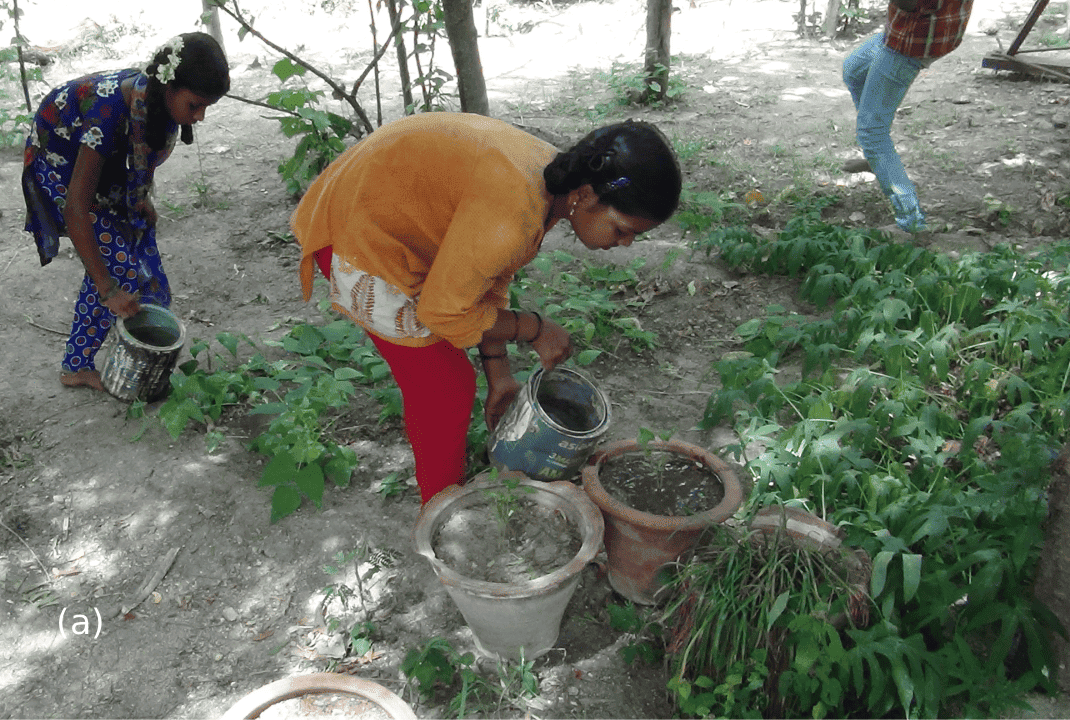

Credits: Santosh Kumar. License: CC BY-NC-ND 4.0 International Deed.
Parting thoughts
This interaction with students turned out to be an enriching learning opportunity for me. I was touched by the enthusiasm with which they expressed their ideas. Their responses underlined the importance of context—revealing differences not only in students’ exposure to soil, but also in how they connected school knowledge with their everyday lives (see the Activity Sheet). The dialogue also made me reconsider how soil is typically presented in textbooks—largely only as an abiotic component of ecosystems that plays a role in growing food. However, the dialogue with my students—from both urban and rural communities—showed that they viewed soil as a versatile, vibrant, and multifunctional system that supports life (see Box 1). Students also expressed eagerness to learn about multiple dimensions of soil—especially those related to traditional and community practices. This suggested a need to expand how soil is approached in the classroom— both in terms of what is taught and how.
Box 1. Curricular connections:
Such discussions with students and the pedagogical approaches they inform can help meet the following:
- Curricular goal for middle-stage science: CG-3: [The student] explores the living world in scientific terms. Specifically, it can help students develop the competency (C-3.3) to: “Analyse patterns of relationships between living organisms and their environments in terms of dependence on and response to each other.“1
- Learning outcomes (LO) for:
- Grade VII science: [The student] makes efforts to protect the environment. For example, …by planting trees to avoid soil erosion; sensitising others with the consequences of excessive consumption of natural resources, etc.
- Grade VIII social science: [The student] justifies judicious use of natural resources such as water, soil, forest, etc. to maintain development in all areas.4
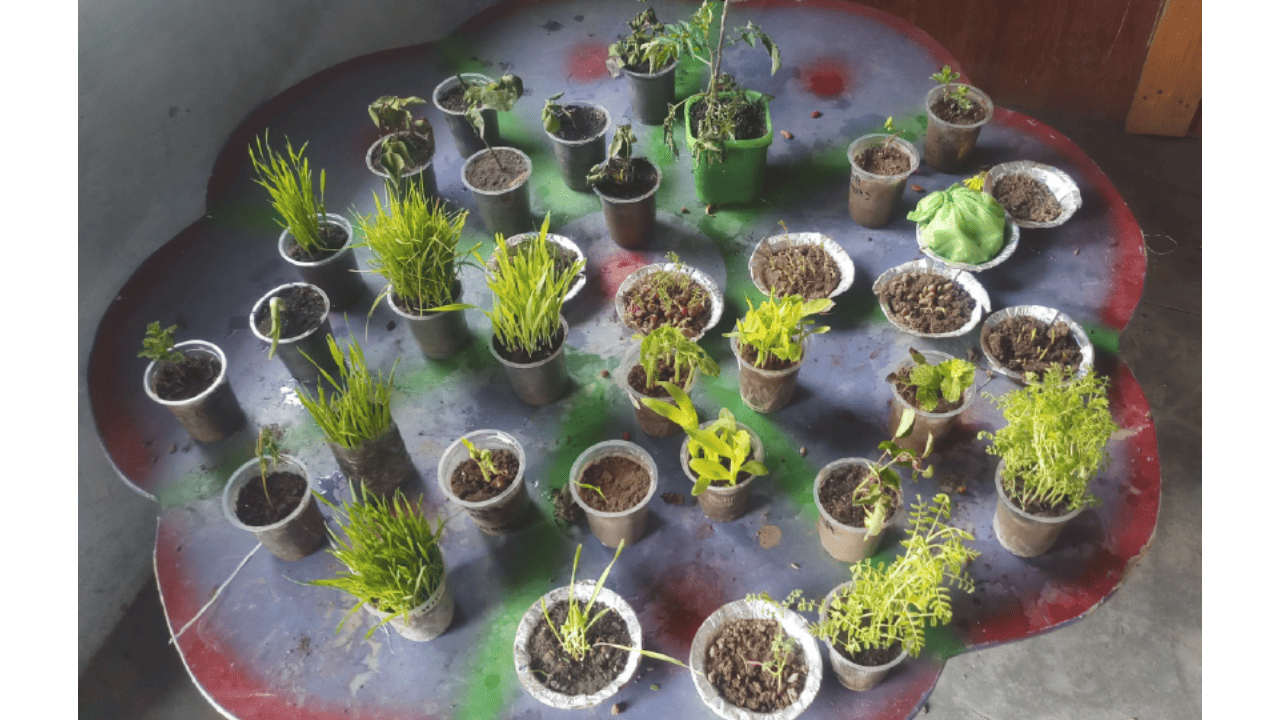
Based on how I used this dialogue to design classroom instruction, here are some suggestions for other teachers: Instead of beginning with definitions, students could be encouraged to identify local poems and songs about soil, mud, and earth in various languages, taking the help of elders in their family or community, and sharing these in class. Teachers could also ask children, “Where does your food come from?” and work with them to trace the journey of food from seed, soil, manure or compost, and field or farm to their table to answer this question. Visits to a neighbouring farm can provide opportunities for students to interact with farmers and learn from their experiential knowledge of soil. Visiting a soil-testing lab or inviting technicians or scientists from such labs to school can help students consider how scientific techniques can support experiential knowledge. Their understanding can then be strengthened through hands-on activities like the cultivation of vegetables or gardening, pottery, and composting (see Fig. 1). Not only do such activities make classroom learning livelier and more interactive, but they can also help inculcate a sense of respect for hands-on work and for farming as a way of life. By powerfully engaging students’ senses, they can also support the building of stronger connections to the theoretical concepts covered in the science or social science curriculum. This led me to reflect more seriously, and with renewed vigour, on our connection with soil, and reminded me, yet again, that the teacher is a learner too.
Key takeaways

- Students come to the classroom with diverse experiences of soil—sensory, cultural, and livelihood-related. Open dialogue can help draw out their prior learning in class.
- Students may differ not only in what they know about soil, but in whether this knowledge comes from lived experience or from formal instruction. Recognising this can help teachers respond more effectively to their learning needs.
- Activities such as farming/gardening and composting as well as interactions with farmers and soil technicians allow students to engage with the different dimensions of soil. Rather than being treated as add-ons, these activities can help teachers build stronger connections between experiential and theoretical understanding.
Acknowledgements
The author would like to convey their thanks to Radha Gopalan, a friend and former colleague, without whose guidance and support this article would not have been possible.
Notes
- Credits for the image (Working with soil) used in the background of the article title: Santosh Kumar. License: CC BY-NC-ND 4.0 International Deed.
- This article includes one classroom resource: Activity Sheet: Probing Soil Through Your Senses.
- This article was first published in i wonder…, August 2018, pp. 54-57. The original version is available at: https://publications. azimpremjiuniversity.edu.in/2831/. The version published in this issue has been revised by Chitra Ravi to include direct connections to the NCF-SE (2023) and the middle-stage science curriculum.
- For more details on Santosh Kumar’s approach to teaching soil, see this video: Azim Premji University (2024). ‘i wonder… webinar: Soil in the Science Classroom’. YouTube. URL: https://www.youtube.com/watch?v=gnTDGaWWcJg&t=11s. Accessed on March 30, 2026.
References
- National Steering Committee for National Curriculum Frameworks (2023). ‘National Curriculum Framework for School Education 2023’. National Council of Educational Research and Training. URL: https://ncert.nic.in/pdf/NCFSE-2023-August_2023.pdf.
- National Council of Educational Research and Training (Reprint 2026-2027). ‘Chapter 13: Our Home: Earth, A Unique Life Sustaining Planet’. Curiosity, Textbook of Science for Grade VIII: 210–228. URL: https://ncert.nic.in/textbook.php?hecu1=13-13.
- National Council of Educational Research and Training (Reprint 2026-2027). ‘Chapter 11: Nature’s Treasures’. Curiosity, Textbook of Science for Grade VI: 207-230. URL: https://ncert.nic.in/textbook.php?fecu1=11-12.
- National Council of Educational Research and Training (2017). ‘Learning Outcomes at the Elementary Stage’. National Council of Educational Research and Training. URL: https://ncert.nic.in/pdf/publication/otherpublications/tilops101.pdf.