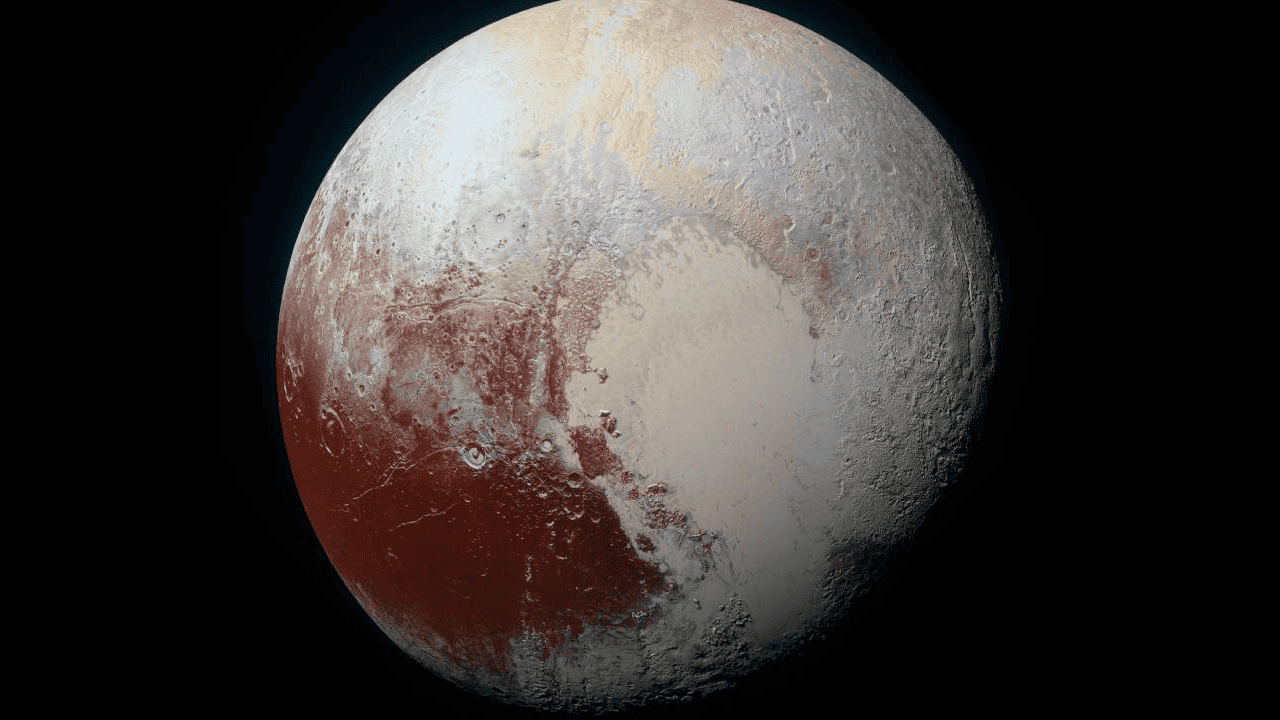
The Earth is the only planet we know that has true soil

When we dig our hands into soil on Earth, it may feel ordinary. However, from a planetary perspective, soil as it exists on Earth is rare. Based on current evidence, Earth is the only known planet with soil that contains a combination of organic matter, living organisms, and long-term water-driven processes.
Why do scientists consider other planets unlikely to have soil? Space missions to the Moon, Mars, and asteroids have allowed detailed study of their surfaces. Samples returned from the Moon, along with images and chemical data from Mars rovers, show that these bodies are covered with regolith —a layer of loose rock fragments and dust formed by meteor impacts, temperature changes, and wind. Scientists do not classify regolith as soil because it generally lacks organic matter, active organisms that mix materials and recycle nutrients, and sustained evidence of liquid water modifying the material over long periods. These conclusions come from analysing samples, rover measurements, and comparisons with Earth’s soils. Interestingly, Earth itself did not always have soil. For the first several hundred million years, its surface was largely bare rock. Weathering and erosion created early loose materials, but soil as we define it—including organic contributions from life—developed later. Scientists infer that soil formation became more extensive as liquid water stabilized on the surface, the atmosphere became suitable for sustaining life, and microorganisms and plants colonized the land. Evidence includes chemical patterns in ancient rocks, fossilized roots, and ancient river deposits. Over hundreds of millions of years, soils have become deeper and more complex through ongoing interactions between rock, water, air, and life. Other planets lack some of these conditions. For example, Mars is cold, dry, and exposed to strong radiation at the surface. Rover and orbital data indicate no evidence of active life and only limited periods when liquid water may have existed.
Do we need soil to grow plants on another planet? Experiments on the International Space Station show that plants can grow without soil using hydroponic or nutrient-rich artificial systems. This demonstrates that short-term plant cultivation is possible without natural soil. However, soil naturally performs multiple functions—retaining water, supplying nutrients, supporting roots, and hosting microorganisms—that otherwise require energy-intensive technology. Transporting soil from Earth is impractical because its microbial community would not survive space conditions. Scientists are therefore exploring whether soil-like systems could be created elsewhere. Based on Earth’s history, developing such systems would require liquid water, a stable surface, microorganisms, and long periods of time. Experiments with Martian soil simulants show that plant growth is poor unless organic matter and microbial communities are added, highlighting that soil is not just crushed rock but a product of long-term interactions among rock, water, air, and life. What does this tell us about Earth? Soil results from the planet’s unique combination of surface water, atmosphere, and biological activity over geological time. These same conditions also support life itself. This is why scientists searching for life elsewhere focus on water, stable surfaces, and signs of biological processes.
Question for students
Look around your home or school. Where do you see soil being formed, protected, or damaged? If scientists discovered a planet with water and rocks but no life, what would you predict about its soil? What evidence would you look for to support your prediction?
Notes
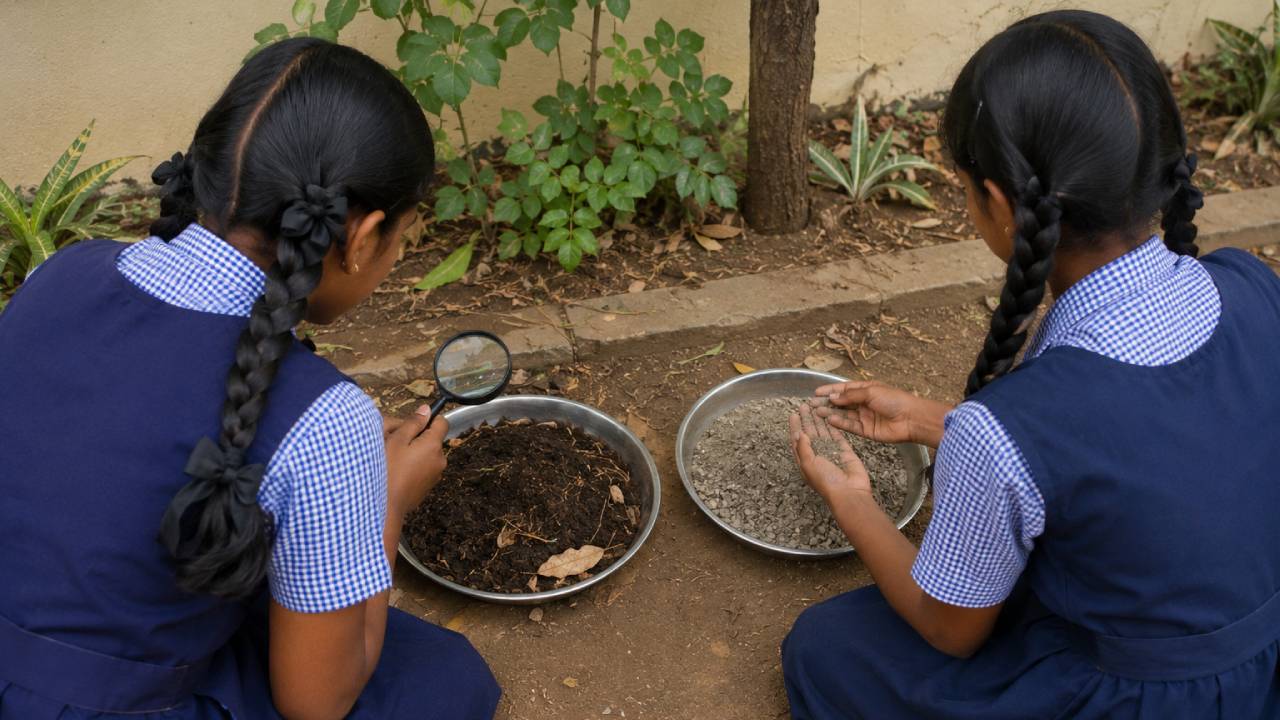
- Credits for the image (Examining soil samples) used in the background of the article title: Created for i wonder… using ChatGPT under prompting by Chitra Ravi (June 2026). License: CC BY-NC-ND 4.0.
- This article was originally published as a ‘Did You Know?’ piece that appeared at the end of the article titled ‘Exploring soil: The foundation of life.‘ in the print edition of the Dec 2025 issue.