
Using science to support students in navigating adolescence


In Chapter 6 (‘Adolescence: A Stage of Growth and Change’) of the Grade VII science textbook (NCERT, 2025), students read that adolescence: “…is a period of rapid growth and development, typically occurring between the ages of 10–19. During adolescence, the body prepares for adulthood.“1 This chapter explains that “Humans, like most other living beings, cannot reproduce immediately after their birth. Their bodies need to grow and reach a stage of maturity to be able to reproduce. As humans grow and develop, they experience significant physical, emotional, and behavioural changes, along with the ability to reproduce. Some such changes may be quite clearly observable, while others occur internally and may go unnoticed.“1 Students at this stage of development may already have observed many such changes in themselves and their peers (see Box 1).2 Often, these observations raise questions and concerns that students may hesitate to share with family members. The textbook chapter suggests some simple classroom activities that give students the opportunity to discuss these with peers and teachers (see Box 2).1 I tried some of these activities with my students. I found the textbook and supporting resources from the Internet helpful in addressing several concerns and fears common to all adolescents. But they were not adequate in addressing questions that were closely tied to my students’ specific social and cultural contexts and life experiences. In this article, I share some of these issues and describe the approach I used to respond to them.
Box 1. Stages in adolescence:
This stage of development is divided into three stages:
- Early adolescence: Typically, between 10–14 years of age. Marks the onset of puberty. Hormonal changes lead to a growth spurt. Students mainly demonstrate concrete operational thinking and increased self-consciousness.
- Middle adolescence: Typically, between the ages of 15 and 17. Puberty reaches its peak. During this period, students show rapid sexual maturation, develop abstract and hypothetical thinking, and strengthen their problem-solving skills. They begin to form an individual identity, experience greater peer influence, and show increased curiosity about the opposite sex.
- Late adolescence: Physical development is complete. Students show stronger formal operational thinking, better decision-making, a more stable sense of identity, and greater self-control.2
Guided self-reflection on personal changes
I started the class with an activity (Activity 6.1 from Chapter 6 of the Grade VII science textbook) that encourages students to identify and reflect on the changes they observe in themselves: “Take a jar and some paper slips. Write down the changes you can notice among students as they go from Grades 5 to 8. These could be related to height, strength, behaviour, or any other aspect. Please avoid writing names on the slips. Fold the slips and place them in the jar…“1 These are the responses I received:
- All students reported an increase in height and weight.
- Many students reported differences in physical build. These included the broadening of shoulders and chest in boys, and the broadening of hips and appearance of breasts in girls.
- Many reported that their voice had become heavier.
- Some students mentioned having acne.
- Many students mentioned seeing hair grow from certain parts of their bodies. For example, boys mentioned the appearance of moustaches.
- Girls mentioned the onset of menstruation.
- Some girls mentioned seeing white discharge from their vagina (called leucorrhoea).
I used the textbook and short, student-friendly video resources to discuss these physical changes with students.3 Specifically, I drew their attention to this passage in their textbook: “Many changes in adolescence, including menstruation and other signs of puberty, are mainly due to hormones—certain chemicals produced in our bodies. Hormones play a crucial role in regulating various aspects of growth and development, contributing to the proper functioning of the body. They are produced in different parts of the body and are released at an appropriate time in response to signals from the brain.“1 By discussing how reproductive hormones act differently in male and female bodies, I emphasised that the changes students were noticing in themselves were a normal part of development. I also highlighted that some changes during adolescence are internal and may not be immediately visible.
Box 2. My analysis of the key learning outcomes of the textbook chapter:
The period between 13–17 years appears to be particularly sensitive. During this period, adolescents grapple with many rapid physical changes and an upheaval of emotional and social changes. Often, they desperately need good guidance, but are hesitant to ask for it. Including a chapter in the science textbook on this theme in middle school allows teachers to discuss these changes just before or soon after students reach this period.
Keeping this in mind, I analysed the textbook chapter to identify its key learning outcomes:
- Understand what adolescence refers to and its age range.
- Identify physical, biological, and emotional changes associated with this period.
- Explain reasons for these changes, such as the occurrence of menstruation.
- Show sensitivity towards the other gender and the experiences of others.
- Differentiate between myths and facts related to adolescence.
- Understand suggestions for a healthy lifestyle and the need for nutritious food.1
Based on the cultural values of the community that my students belong to and the prevalent social norms, I included the following learning outcomes:
- Adolescent girls understand and adopt steps to maintain hygiene during menstruation.
- Adolescent girls scientifically examine social and cultural beliefs related to menstruation and decide their correctness or incorrectness for themselves.
- Adolescent girls develop the confidence to tell their family members and teachers about their menstrual problems without hesitation.
- Adolescent boys develop sensitivity to the problems faced by menstruating female members of their family and can talk to them about this subject if needed.
- Adolescent boys and girls gain the confidence to share their thoughts and concerns with trusted adults who can offer guidance.
- Adolescent boys and girls develop an understanding of the responsibilities they will take on in their future lives.
Questionnaire to explore beliefs on menstruation
The textbook tells students that the menstrual cycle is an: “…important internal change associated with adolescent girls… It recurs generally every 28–30 days and is more commonly known as ‘the period’. Many healthy girls may have longer or shorter menstrual cycles, ranging from 21–35 days. The menstrual cycle is an important natural process and is one of the signs of good reproductive health.“1 But students can often hold misconceptions about menstruation (see the Activity Sheet and Student Handout I). To identify these, I designed a questionnaire to assess adolescents’ knowledge and sensitivity regarding the challenges faced by menstruating girls and women. The questions focused on physical and emotional discomfort, personal hygiene practices, and related social concerns. Students were encouraged to respond based on their own experiences. An analysis of their responses revealed the following:
- Over half the girls reported using reusable cloth pads during menstruation.
- Most of the girls reported experiencing physical discomfort (such as abdominal and back pain, pain in the hands and feet, fatigue, etc.) and feelings of sadness during menstruation.
- Many of the girls shared that family members restricted them from touching certain food items (such as pickles and the dried lentil dumplings called badi), eating sour foods, drinking cold water, and participating in running-intensive sports during menstruation. Two of the girls reported that they were restricted from bathing during this period.
- All the girls described menstruation as a source of shame, with most expressing anxiety about having blood stains on their clothes that would be seen by others.
- Responses from the boys clearly indicated that they had limited awareness of the physical and emotional challenges faced by menstruating girls and women.
- Nearly 80% of the boys reported that they had never discussed menstruation with female family members or classmates (see Student Handout II).
I began the next class by asking the students to consider the challenges faced by adolescent girls and adult women during menstruation. Seeing that the boys contributed little to the discussion, I read aloud the girls’ responses and discussed them in detail. My aim during this discussion was to build an understanding of the following:
- Menstruation is a natural process. Menstruating every month is a sign of good reproductive health.
- It is important to pay attention to personal hygiene during menstruation. Hygiene is not only about maintaining the cleanliness of the body, but also of the undergarments and the cloth/sanitary pads used during this period. If adolescent girls use cloth pads during menstruation, it is important that the cloth be washed thoroughly before use.
- Clothes may sometimes get stained during menstruation. This is not a serious problem. There is no need to feel shame. To maintain hygiene, students should change out of the stained clothes as soon as they get a chance. Undergarments should be washed well and dried thoroughly in direct sunlight to ensure that they are germ-free. This can reduce the risk of infection.
- Common food-related restrictions during menstruation need critical examination. In Chapter 3 (‘The Mystery of Food’) of the Grade V EVS textbook (NCERT, 2025), students read about the role of microbes in food spoilage.4 Students were encouraged to draw on this understanding to question whether foods like pickles or badi spoil because of menstruation, or due to factors such as poor handling or storage.
- Menstruating girls need not stop playing sports unless they experience discomfort or pain due to the physical activity.
- If menstruating girls experience severe menstrual pain that disrupts daily activities, they need medical attention. Under the Rashtriya Kishor Swasthya Karyakram (National Adolescent Health Programme), all 11–19 year olds can access free tests and treatment at government hospitals. This service is available in the government hospital nearest our school. Students were informed that their Aadhaar card is required as proof of age.
Highlighting the pain, discomfort, and social restrictions many girls and women experience during menstruation, I emphasized the need for boys to be sensitive in how they relate to menstruating girls and women. We also discussed some ways in which boys could support menstruating classmates and family members without causing them discomfort or embarrassment.
Box 3. Curricular connections:
These activities and the supporting discussion can help meet the following:
- Curricular goal for middle-stage science: CG-4: [The student] understands the components of health, hygiene, and well-being. Specifically, it can help students develop the competency (C-4.3) to: “Describe biological changes (growth, hormonal) during adolescence, and measures to ensure overall well-being.“6
- Learning outcomes (LO) for Grade VIII science:
- [The student] enumerates different variations that take place in the body at puberty to explain the effect of adolescence on the changing human body.
- [The student] defines adolescence and adolescent age in order to explain changes at puberty.
- [The student] enumerates different variations that take place in the body at puberty to explain the effect of adolescence on the changing human body.
- [The student] applies learning of scientific concepts in daily life /real-life situations in order to solve problems /give solutions /take preventive measures /etc. For example, challenge myths and taboos regarding adolescence, etc.7
Open discussion to understand emotional changes
I began this exercise by using the board to list the emotional changes that the students had shared in their responses to the questionnaire:
- Feeling more comfortable sharing problems with friends than with parents.
- Becoming easily irritated by minor issues.
- Wanting to talk more than usual.
- Wanting to make new friends.
- Experiencing romantic attraction (like falling in love with someone, then cheating on them with someone else).
- Taking minor issues very seriously.
- Feeling more stressed than usual.
- Wanting to hide oneself, such as by keeping the body covered.
- Becoming more aware of and sensitive to others’ problems.
Through open discussion, I sought to prepare students for these emotional changes by raising the following points:
- Irritability, stress, and tension over small matters are common during adolescence and often stem from the challenge of adjusting to rapid physical and emotional changes.
- Feelings of attraction and closeness during adolescence are natural and important experiences. At the same time, this is a period when students are still learning about themselves and what they value. Giving attention to studies, friendships, interests, and personal goals during this phase can help build a strong foundation for future relationships.
- When students share problems only with friends—who are of similar age and experience— do they find meaningful solutions? If not, whom else might they approach for guidance?
- Adolescent girls may feel socially inhibited as they experience physical changes, particularly in the early stages of adolescence. These feelings are natural and often temporary, as the body gradually adjusts and the pace of change slows over time. It may be important for girls to keep this in mind and not let their hesitation limit their confidence or hinder the development of their personality.
‘Anonymous’ question box to share social challenges
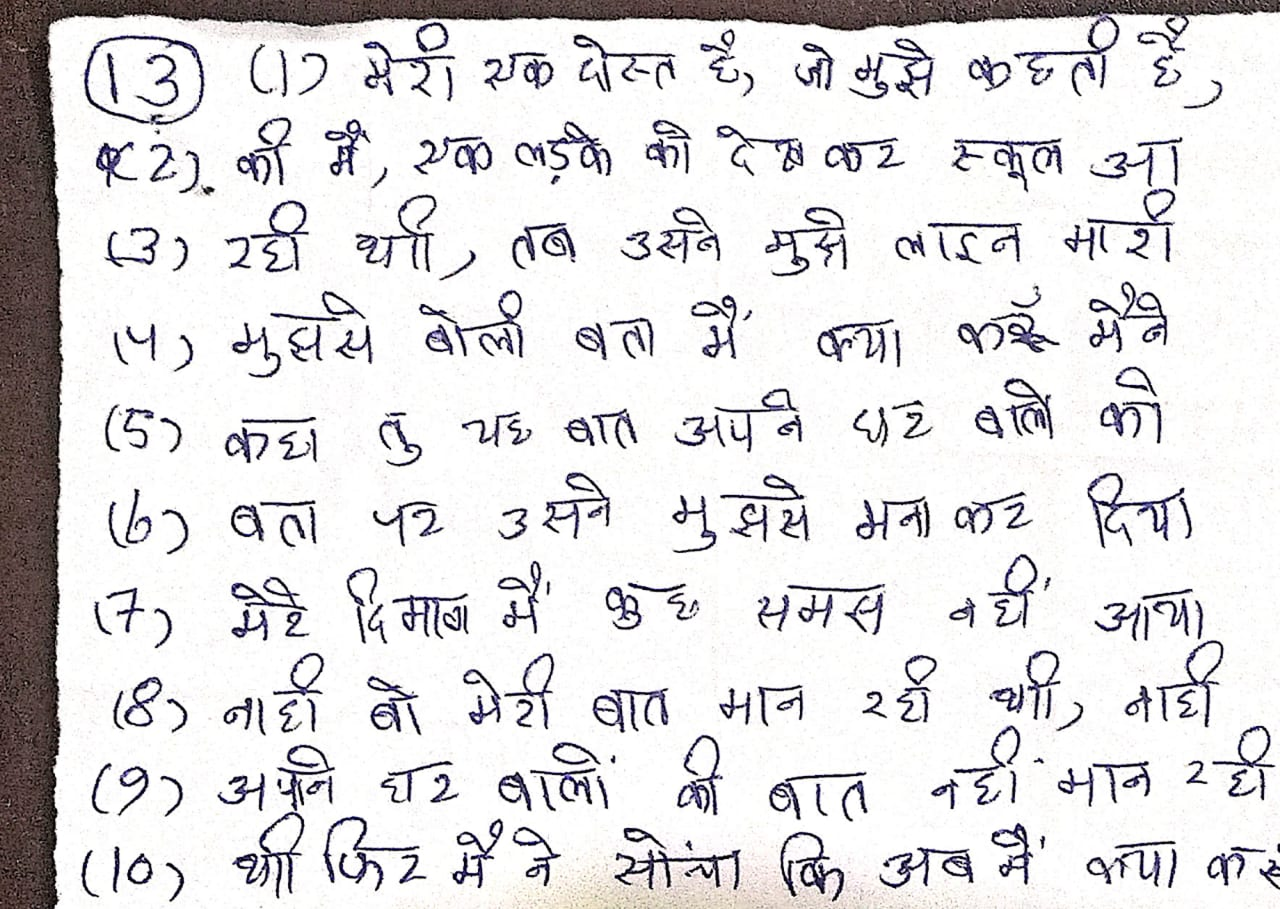
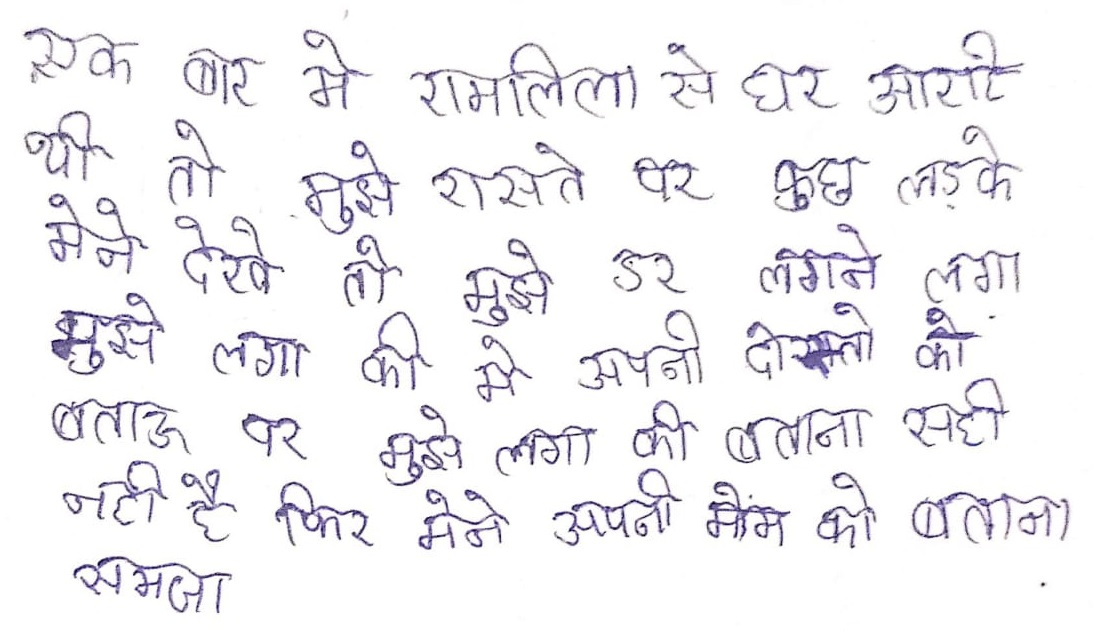
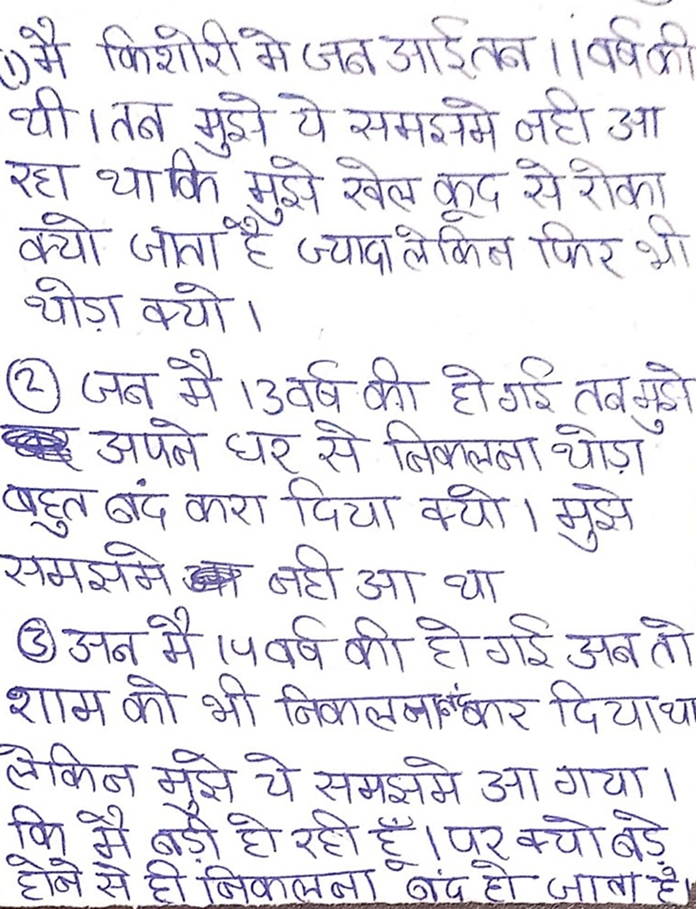
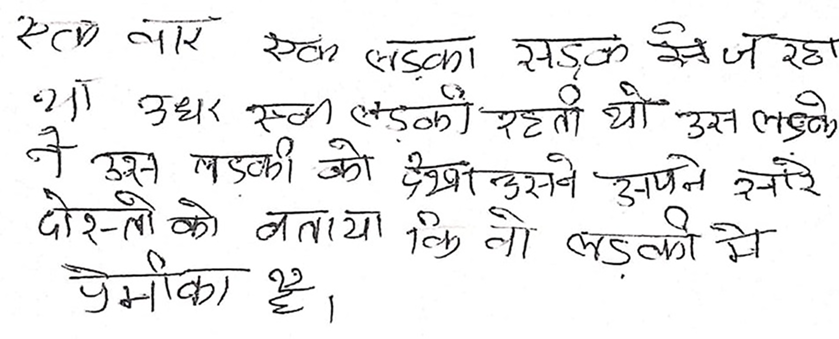
One of the most challenging aspects of adolescence is adjusting to social changes. To explore this, I distributed blank slips of paper and invited students to write down any questions or concerns related to this aspect of their lives. I assured them that their responses would remain completely anonymous, allowing them to share issues they might otherwise feel hesitant or shy to speak about. At the end of the class, students put their slips into a box provided for this purpose (see Fig. 1). Here are some examples of the concerns that the students shared:
- “Once, while walking on the road, I was teased by some boys. I did not feel comfortable telling my friend. Should I tell my mother?”
- “Since I turned 11, I have been stopped from playing sports. Why?”
- “When I turned 13, there were some restrictions on my going out. Now that I am 14, I am not allowed to go out at all. But my brother is not stopped from going out. Why does this happen to girls? Is this right or wrong?”
- “I once had to return home alone at night after watching a Ramlila performance. I felt very scared when I saw a group of boys on the way.”
- “If a boy stares at me, teases me, and calls me strange names to harass me, what should I do?”
- “If I have made a very bad mistake, how should I correct it?”
- “Should we share what is on our minds with others or keep it to ourselves?”
- “I am afraid that if I share my problem with a friend, they may tell someone else.”
- “A boy I know told his friends that a girl, who lived in a house they had just walked past, was his girlfriend. I felt that he was defaming that girl.”
- “I used to believe that ghosts exist. Is this true?”
- “One of my friends says that everyone gets bad thoughts during adolescence. Is this right or wrong?”
- “Everyone says that education is not useful for girls. They say that girls should be taught to manage the house, and boys should be taught to work outside. Why are such decisions made?”
- “While returning home from school, two boys from school started harassing my friend and me. I told my friend, “Come, let us run away from here.” We ran as fast as we could. Later, my friend and I decided that we would complain about the boys to a teacher in our school. Sir listened to our complaint and scolded the boys. What should we do if we run into those boys again?”
|
|

|
|
| |

|

|
Credits: Photos taken and shared by Shiv Pandey. License: CC BY-NC-ND 4.0
I read each slip and framed responses with care. In the next class, I shared and discussed these concerns with students. Here are some of my responses:
- If someone misbehaves with you on the road or elsewhere, protest loudly. If your friends are with you, protest together. Loud voices attract attention and discourage the person harassing you, making them less likely to repeat such behaviour. It is also important that you tell your parents about such incidents.
- If you have made a mistake that you can correct on your own, make the effort to do so. If it is beyond your capacity, speak to a teacher or your parents.
- In many families, girls are not allowed to go out in the evenings, often because parents and elders are concerned about their safety. While this can feel restrictive, it is important for girls to gradually build physical and mental strength so that family members develop greater confidence in their ability to take care of themselves. One way to do this is by participating in the ‘Rani Laxmi Bai Self-Defence Training Programme’ conducted in schools. This programme is designed to equip adolescent girls with simple skills and techniques to handle common situations related to self-protection.
Credits: Created for i wonder… using ChatGPT, under prompting by Chitra Ravi (Nov 2025). License: CC BY-NC-ND 4.0.
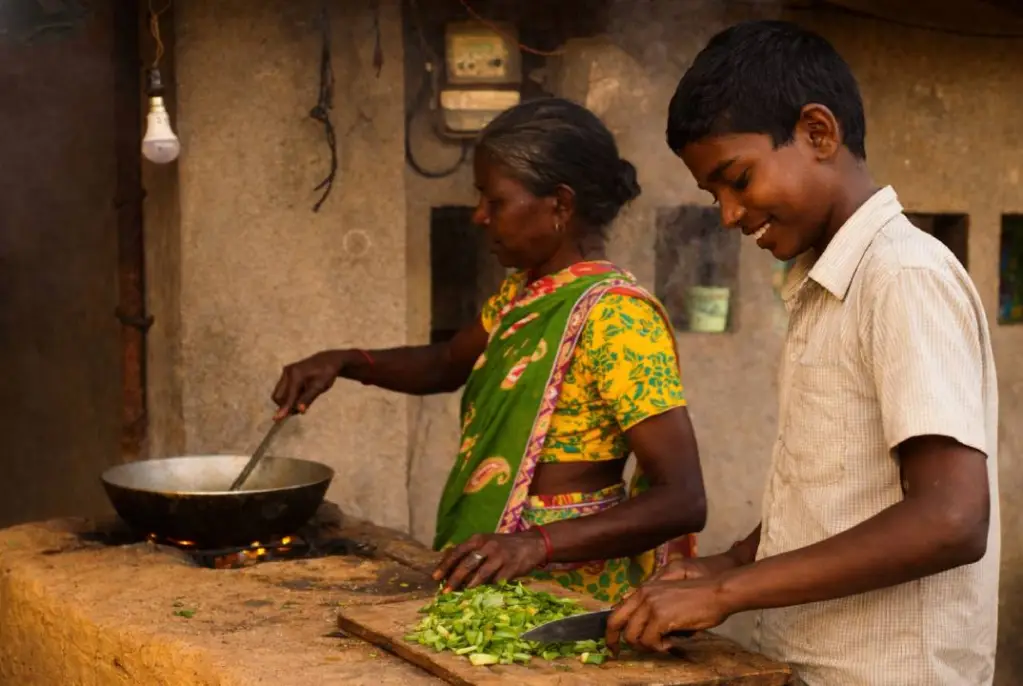
- Studies are important, but so is participation in household work. Both boys and girls should share responsibilities at home (see Fig. 2). Engaging in housework helps students prepare for future responsibilities and provides opportunities for parents and other family members to guide them in becoming responsible and caring family members and citizens.
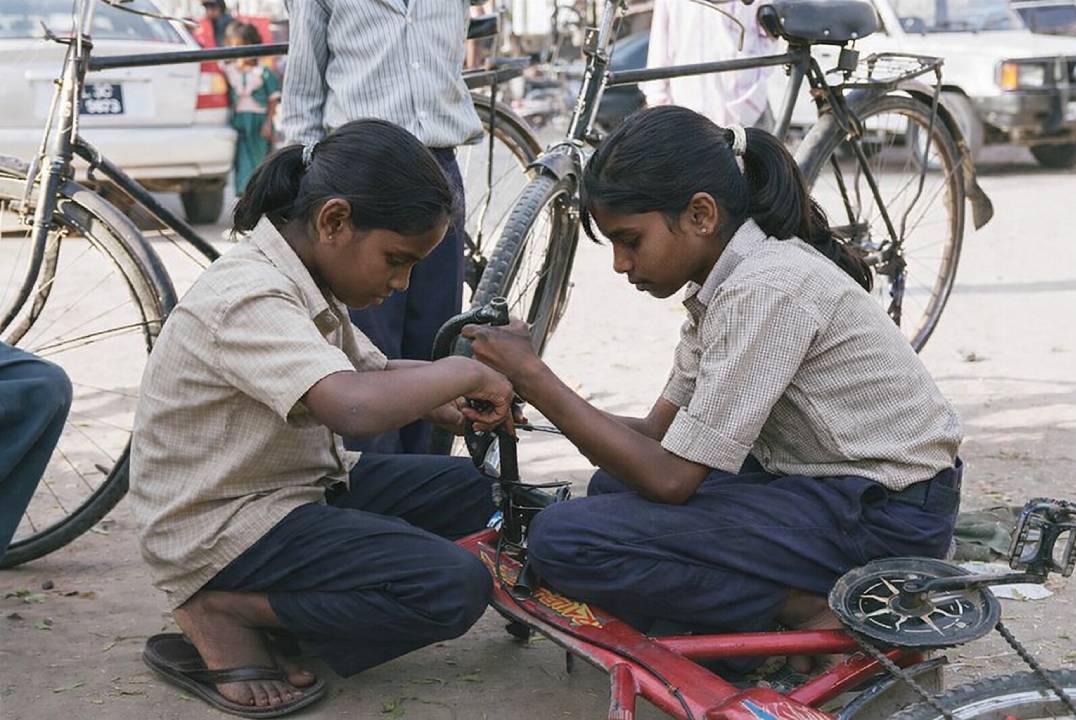
- Along with schoolwork, some students may have the chance to learn skills that could help them earn a livelihood in the future (see Fig. 3). These opportunities should be taken seriously, as they can provide practical experience and open doors for future independence. The National Education Policy (NEP) 2020 also highlights the importance of vocational education, encouraging students to explore and develop such skills alongside their regular studies.5
Credits: Created for i wonder… using ChatGPT, under prompting by Chitra Ravi (Dec 2025). License: CC BY-NC-ND 4.0.
Parting thoughts
The questions, opinions, and concerns shared by my adolescent students reminded me of some of the confusion and conflict I experienced as an adolescent. The physical and emotional changes students go through, along with social attitudes toward them, can strongly influence their personality. Some adolescent boys and girls succeed in meeting these changes and overcome social challenges through their confidence in themselves, the ability to make good decisions, and the support of the people (family members and teachers) around them. Others, however, struggle to find their way. For this reason, I believe it is essential for teachers to provide guidance to students during this period of rapid physical, emotional, and social change.
My classroom experience reaffirmed the importance of including a chapter on adolescence in the middle-stage science curriculum (see Box 3).6,7 It also highlighted the need for teachers to engage with this chapter thoughtfully and thoroughly. Working with this chapter requires discussing human reproduction and the physical changes that occur during adolescence—topics that are often sensitive or surrounded by social taboos. To address them openly and critically, teachers must set aside any personal shame or hesitation and approach these discussions with confidence and care.
To ensure open dialogue, it is also important for teachers to gain the trust and confidence of their students. Providing opportunities to share any troubling questions and concerns anonymously can allow students to express themselves freely. Responding to their concerns with sensitivity and respect can help students feel safe and supported in navigating this period of their growth.
Key takeaways
- The Grade VII curriculum introduces students to adolescence as a stage of growth marked by physical, biological, and emotional changes.
- Encouraging students to record and discuss the physical changes they observe in themselves can help them understand that these are natural and common to this stage.
- Discussing the menstrual experiences of adolescent girls promotes awareness of hygiene and nutrition, helps boys respond sensitively to menstruating peers or family members, and encourages critical reflection on social taboos.
- Exploring emotional changes enables students to recognize the value of seeking guidance from supportive adults.
- Addressing social challenges helps adolescents consider ways to protect themselves, contribute to household responsibilities, and take advantage of opportunities to learn vocational skills.
- Providing opportunities for students to share concerns anonymously in a safe and supportive classroom fosters open, respectful discussion.
Acknowledgements
The i wonder… team thanks Shiv Pandey from Azim Premji Foundation for encouraging the author to record this experience, for recommending her draft to us, and for his support in publishing it. We also thank Rajesh Utsahi from Azim Premji University for his support in translating the original draft (in Hindi) into English.
Notes
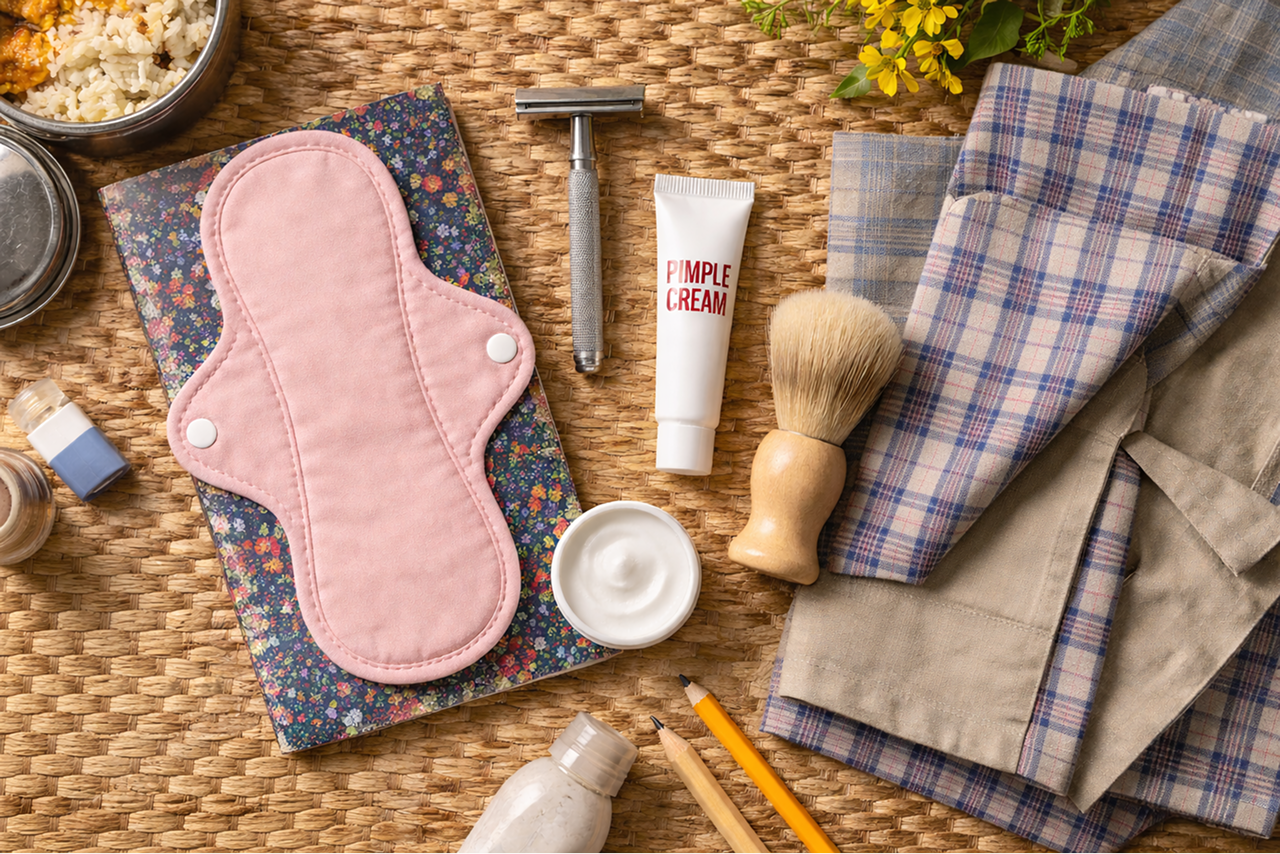
- Credits for the image (Adolescent hygiene) used in the background of the article title: Created for i wonder… using ChatGPT, under prompting by Chitra Ravi (Dec 2025). License: CC BY-NC-ND 4.0.
- This article includes three detachable classroom resources: Activity Sheet: Common Beliefs about Periods—Myths or Facts?, Student Handout I: Myths and Facts about Periods, and Student Handout II: Learning About Periods: A Guide for Boys.
- Teachers may find two books on Adolescence published by Ekalavya Pitara useful in their classroom instruction: My Body My Life (URL: https://eklavyapitara.in/products/my-body-my-life?) and Beta Kare Sawal (URL: https://eklavyapitara.in/products/beta-kare-sawal?). They may also find Dhanya K’s article ‘Teaching Human Reproduction’ in the June 2022 issue of i wonder… (URL: https://publications. azimpremjiuniversity.edu.in/4148/) useful.
References
- National Council of Educational Research and Training (2025). ‘Chapter 6: Adolescence: A Stage of Growth and Change’. Curiosity, Textbook of Science for Grade VII: 73–88. URL: https://ncert.nic.in/textbook/pdf/gecu106.pdf.
- Fiveable Content Team (2024). ‘1.1 Defining adolescence and its stages—Adolescent Development’. Fiveable. Last updated in Sep 2025. URL: https://fiveable.me/adolescent-development/unit-1/defining-adolescence-stages/study-guide/JNmXpy8kKnLRp1ka. Accessed on: Nov 10, 2025.
- Sampark Didi (2024). ‘किशोरावस्था एवं यौवनारम्भ’. YouTube. URL: https://www.youtube.com/watch?v=nu1igmJ81l8.
- National Council of Educational Research and Training (2025). ‘Chapter 3: The Mystery of Food’. Our Wondrous World, Textbook of EVS (The World Around Us) for Grade V: 40–54. URL: https://ncert.nic.in/textbook.php?eeev1=3-10.
- Ministry of Human Resource and Development, Government of India (2020). ‘National Education Policy 2020’. Ministry of Education. URL: https://www.education.gov.in/sites/upload_files/mhrd/files/NEP_Final_English_0.pdf.
- National Steering Committee for National Curriculum Frameworks (2023). ‘National Curriculum Framework for School Education 2023’. National Council of Educational Research and Training. URL: https://ncert.nic.in/pdf/NCFSE-2023-August_2023.pdf.
- Central Board of Secondary Education (2020). ‘Teachers’ Resource for Achieving Learning Outcomes, Classes 1 to 10’. URL: https://cbseacademic.nic.in/web_material/Manuals/TeachersResource_LODoc.pdf.