
Observing neighborhood birds: The meditating heron



I am a farmer. I live in Bumthang Valley, in the heart of Bhutan. Bumthang Valley is known for its scenic views and vast green forests. One could sit here for hours admiring the beauty of its mountains, river, birds, and endless spark of life.
I go fishing regularly. The fish I catch supports my livelihood. I choose quiet spots by the river, away from other anglers. This helps me get a good catch. I am also able to enjoy the natural surroundings in silence.
My favourite fishing spot is five kilometres from my village, south of the temple at the village square. I follow a path that leads into the forest and then opens out to the riverbed. Then I walk for about three kilometres along the riverbed.
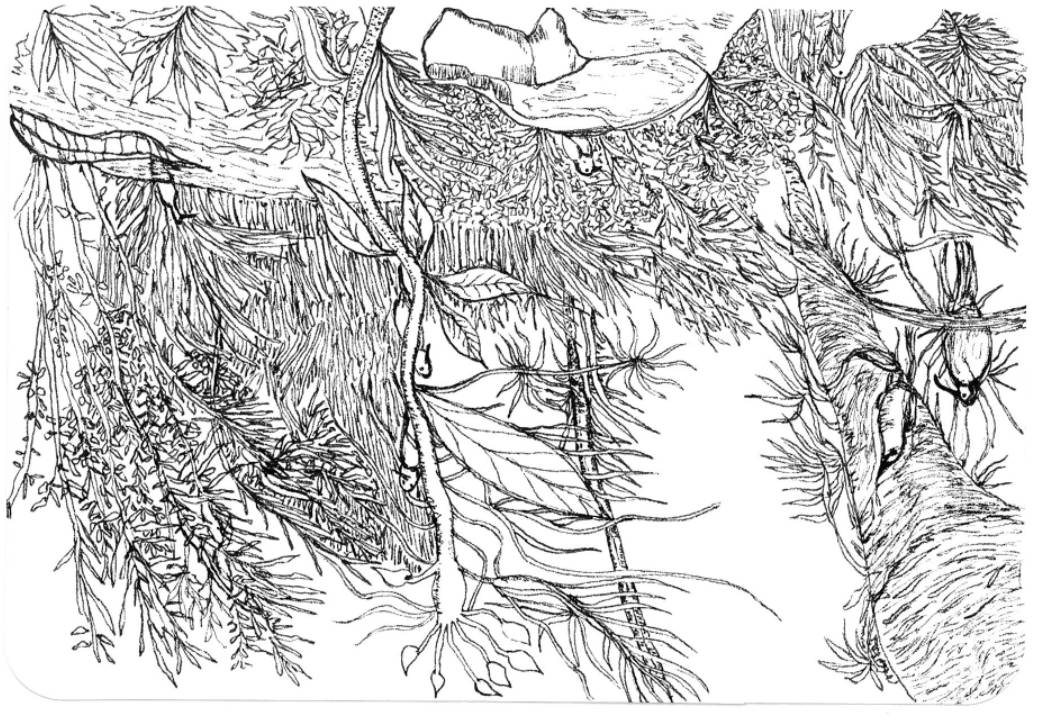
I know this spot by the pattern of its rocks. They make comfortable perches. I choose to sit on one that lies in the shade of a giant Ficus tree: My friend and protector from the sun and rain.
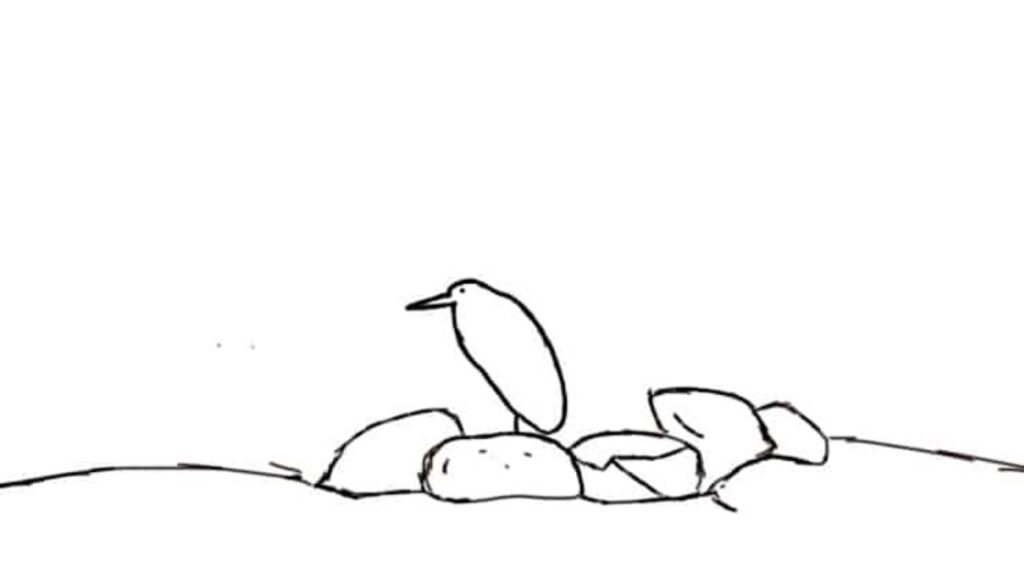
I am seldom alone when I fish. I share this spot with a stranger who fishes on the other side of the river. It is a heron. Whenever I come here, it is here as well. This may be a coincidence. We are aware of each other, but go about our own business. I never try to interact with or feed it. It has never approached me. I have seen the heron countless times. It stands for hours by the river, without moving. Without changing its position (see Fig. 1). Waiting for fish. Perhaps conserving its energy. In my head, I call it ‘The Meditating Heron.’ One day, I will tell my kids about it.
I admire its fishing routine. I can tell when it spots the movement of fish in the water. It becomes very alert and moves with precision towards its prey. Sometimes, it is very quick. I wonder how it appears to the fish it is after. Imagine a pair of giant chopsticks moving towards you at full speed!
At other times, I see it creeping in slow motion towards a particular spot in the river. Trying to get close enough to it without startling any fish that might be there. Once it is close enough, it moves quickly, using its beak to latch onto its thrashing prey.
But the heron is not always successful. Sometimes, it misses its mark and the fish escape. At other times, it does not spot any fish. It is not the only one to struggle. I too am finding it hard to get a good catch. The glaciers in the mountains are melting too rapidly. The flow of the river is getting much stronger than it has ever been. The fishing upstream has increased. The areas around the riverbank are changing. Often, we wait for hours for fish to appear. I watch how calmly and patiently the heron waits. I try to do the same. I wonder if the heron has other fishing spots (see Box 1).
Box 1. Connections to the curriculum:
This story can offer many ways of connecting what students learn about the living world in textbooks for Environmental Studies (EVS) in the preparatory stage (Grades III-V) and science in the middle stage (Grades VI-VIII) with their real worlds (see Activity Sheet I: Observe Fishing Birds, Activity Sheet II: Document Changes in Neighbourhood Birds, Teacher’s Guide: Activity Sheets I & II, Activity Sheet III: Invite Birds to a Bird Bath, and Teacher’s Guide: Activity Sheet III). It can also offer a gentle and non-prescriptive way of meeting what the National Education Policy (NEP) 2020 describes as the aim of school education: “The purpose of the education system is to develop good human beings capable of rational thought and action, possessing compassion and empathy, courage and resilience, scientific temper and creative imagination, with sound ethical moorings and values”.1 Teachers could use it to build what the National Curriculum Framework for School Education (NCF-SE) 2023 describes as a capacity for social engagement, including its affective aspects: “Empathy and compassion are not only values or dispositions; these are capacities that are developed through deliberate practice”.1 Specifically, activities and discussions around this story can be used to meet the following curricular goals listed in the NCF-SE 2023 for:
- The preparatory stage:
- CG-2: (The student) understands the interdependence in their environment through observation and experiences, developing the basis for appreciation of the idea of ‘Vasudhaiva Kutumbakam’. Specifically, it can help students develop the competency to: “Connect changes in the environment and the lives of their family and community, as communicated by elders and through local stories (changes in occupation, food habits, resources, celebrations, communication)”.
- CG-4: (The student) develops sensitivity towards the social and natural environment. Specifically, it can help students develop the competency to: “Identify needs of plants, birds, and animals, and how they can be supported (water, soil, food, care)”.1
- The middle stage: CG-3: Explores the living world in scientific terms. It can help students develop and exercise the following competencies:
- “Describe the diversity of living things observed in the natural surroundings (insects, earthworms, snails, birds, mammals, reptiles, spiders, diverse plants, and fungi)”.
- “Analyse patterns of relationships between living organisms and their environments in terms of dependence on and response to each other”.1
Eight years later…
After following the same routine for some years, I move on to other things. I start a business and get married. I have two kids: Tashi and Nuba. I tell my kids about my fishing days. They are eager to see my fishing spot. One day, I decide to revisit my favourite spot. I take Tashi and Nuba along. My old friends—the rocks and the Ficus—are still there. Unchanged and welcoming. But something does not seem right. I do not see the heron. We return home and I do not give it much thought.
I start visiting my spot again. Many days pass by. But I still do not see the heron. I wonder if the winter finally got to him. One day, my kids and I walk into a bookstore in the city of Thimpu. The store has a section of books on wildlife. I am curious about my missing companion.
In all these years, it has never occurred to me to read about it. I have seen it basking in the sun by the river many times. I know how it looks in summer and in winter. I remember how magnificent it looks in flight. And its cool composure during its hours of meditation by the river.
I search for it in a book called ‘Birds of Bhutan’. But I do not find it there. The book talks about the purple heron, the grey heron, egrets, the pond heron, and the night heron, but not the one I call the meditating heron.
I wonder if the bird is in some other section. I carefully search the index. There is a reference to an entry on rare species on page 339. I turn to this page and there it is! Finally! The milk-white belly and throat with grey upper parts. I read on… the habitat description and notes on behaviour match perfectly (see Fig. 2). They call it the ‘white-bellied heron’ or ‘imperial heron’. Its scientific name is Ardea insignis.2,3
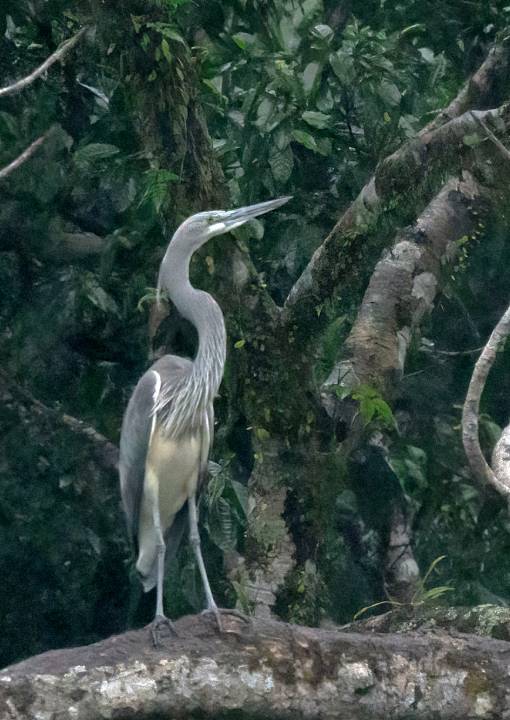
I show Tashi and Nuba the photo of the bird in the book. I tell them this is the fishing companion I have always talked about. This is the first time I have been able to show them how the bird looks. Nuba points out the * symbol near the entry of the bird. This leads us to a footnote:
* Last record of species in 2000s. Possibly extinct due to habitat loss and poaching.
Key takeaways
- This is the story of a farmer who supports his livelihood by fishing. He observes and begins to relate to a heron who shares his fishing spot. It could be used in class to invite students to think about other species in their environment and how they relate to them.
- The farmer in the story shares his observations of the features and feeding habits of the heron. Encouraging students to observe birds in their own neighbourhood can give them the opportunity to discover and appreciate the diversity of the living world for themselves.
- The farmer in the story shares how human activity impacts his and the heron’s ability to catch fish. We also learn how this heron species is disappearing from our world. This can be used to draw students into a discussion on the interdependence of species and the different kinds of roles we can play in the lives of the other humans and species in our environment.
Acknowledgements
The editors thank Raghavendra Gadagkar, honorary professor at the Centre for Ecological Sciences, Indian Institute of Sciences (IISc), Bengaluru, for introducing us to Hemal. We thank Vijeta Raghuram from Azim Premji University, Bengaluru, for facilitating initial conversations with the author.
Notes
- Credits for the image used in the background of the article title: The Meditating Heron, Hemal Naik. License: Copyright owned by Hemal Naik. Used here with his permission.
- This story was first published on Medium: https://hemalnaik.medium.com/the-meditating-heron-white-bellied-heron-an-emissary-from-the-past6100aa1cb2a7. The wording and structure of the version included in i wonder… has been modified to align with our readership of middle school science and elementary school EVS teachers. These changes have been made with the author’s permission.
- To read more of Hemal Naik’s writings, visit: https://hemalnaik.medium.com/.
- This article includes five detachable classroom resources: Activity Sheet I: Observe Fishing Birds, Activity Sheet II: Document Changes in Neighbourhood Birds, Activity Sheet III: Invite Birds to a Bird Bath, Teacher’s Guide: Activity Sheets I & II, and Teacher’s Guide: Activity Sheet III.
References
- National Steering Committee for National Curriculum Frameworks. ‘National Curriculum Framework for School Education 2023’. National Council of Educational Research and Training. URL: https://ncert.nic.in/pdf/NCFSE-2023-August_2023.pdf.
- Dawa Gyelmo. ‘World’s rarest heron on the brink in its last Himalayan stronghold’. Dialogue Earth (2021). URL: https://dialogue.earth/en/nature/white-bellied- heron-threatened-in-bhutan/.
- The IUCN-SCC Heron Specialist Group. ‘White-bellied Heron’. Heron Conservation. URL: https://www.heronconservation.org/herons-of-the-world/list-of- herons/white-bellied-heron/.