
Let there be night


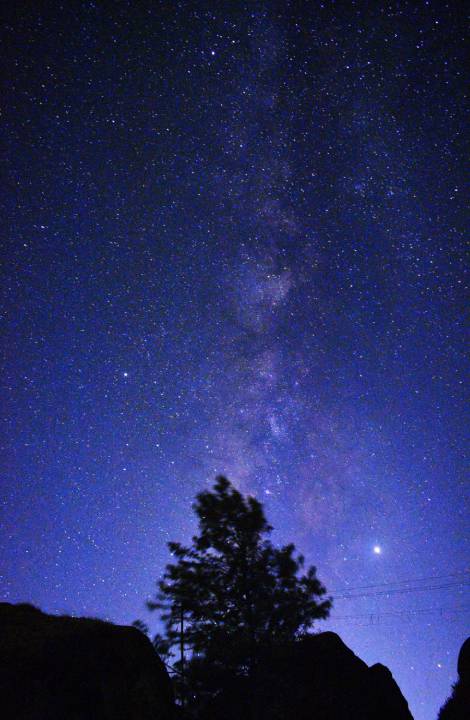
We were watching the night sky, when my friend exclaimed, “Look at that big illuminated cloud! Doesn’t it look amazing?!” Looking at what she was pointing at, I said, “That is the center of the Milky Way.” Stunned, she turned to me and said, “This is the first time I have seen such a wonderful sight.”
My friend grew up in Mumbai. Like many other people living in metropolitan cities flooded with artificial lights, she had never seen a sky full of stars. I grew up in Kalyan, a small town 40 kilometres from Mumbai. This was at a time when apartments were rare. Most settlements consisted of small houses that were quite far from each other. The night sky was not littered with artificial light. Many constellations were visible from my house. Even the fainter ones like Cancer, Cetus, and Camelopardalis. This is when I first observed and learnt to identify them. In the next few decades, this view changed. As Mumbai grew in size, the glow of its lights hid more of the horizon towards the west. Then, as our town grew, our own use of artificial lights increased. Many stars and constellations were no longer visible from my house. I would have to travel about 60-70 kilometers away from the town to get a good view of the night sky. Today, we can hardly see any stars from Kalyan.
I now live in Sirohi, a small town in south Rajasthan. When I moved here in 2011, I could see clear night skies from the roof of my house (see Fig. 1). But this joy was short-lived. In 2016, the Rajasthan government decided to adopt the Street Lighting National Program (SLNP) in all its urban local bodies. Five lakh conventional street lights were replaced with Light-Emitting Diode (LED) lamps. Compared to incandescent and fluorescent lamps, LED lamps are better at directing light to a targeted area and are more energy efficient.1 Since they provide the desired levels of illumination at much less cost, the Rajasthan government has been able to afford the installation of many new lighting units. People have welcomed this change because brighter streets seem safer. But not all of these lighting units are necessary and this well-intentioned effort has badly impacted our view of the night sky.2 The starry patch of the Milky Way has been erased by the bright glow of LED lights.
This is a growing challenge across the world. Estimates suggest that the number and radiance of artificial lights is increasing by about 2-6% every year.3 Rapid economic growth and urbanization play key roles in this increase.4 We rarely hear of the negative impacts of this increase because they have been harder to identify and study than those of other pollutants.
Impacts of light pollution
Any unwanted, excessive, intrusive, or inappropriate use of artificial lighting is called light pollution.5,6 According to the International Astronomical Union (IAU), an area is light polluted when the level of lighting from artificial sources is more than 10% of that from the natural background. A study in 2016 calculated that about 83% of humanity lived in light polluted areas and more than a third of the world’s population at the time could no longer see the Milky Way.7 But the night sky is not important for its beauty alone.
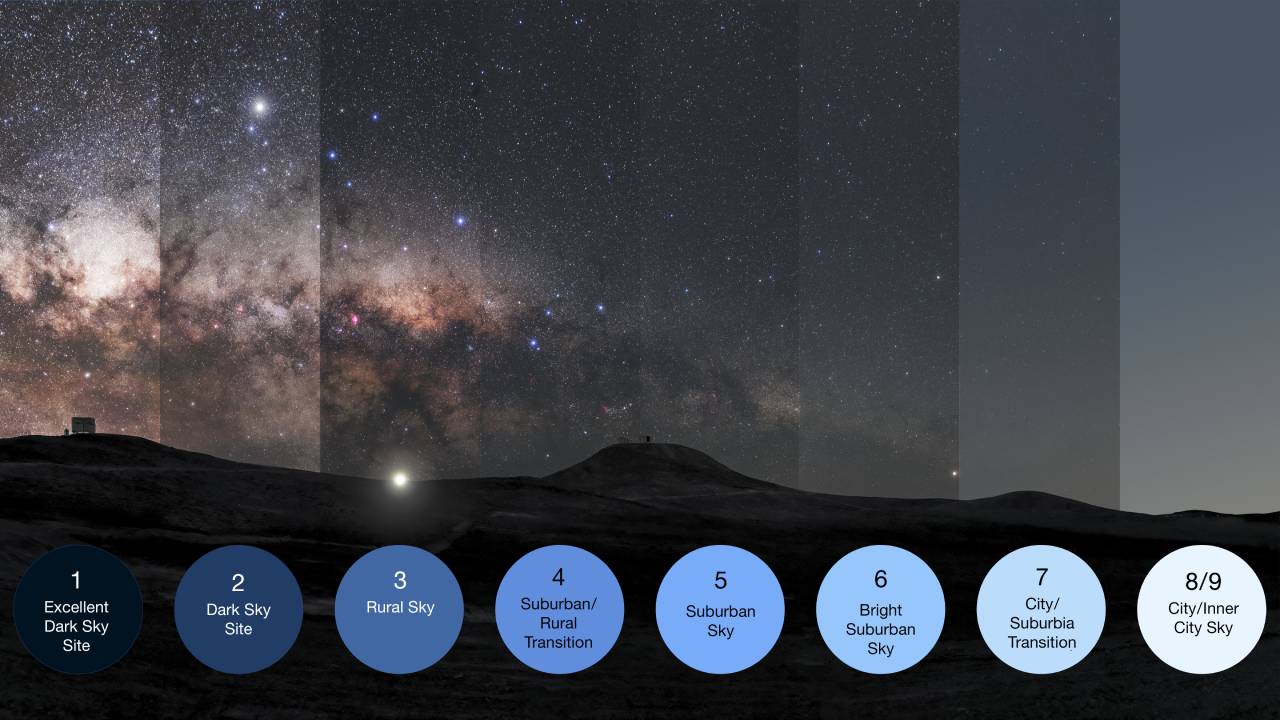
Across the ages, humans have turned to the night sky to find answers to some of our deepest questions and to develop an understanding of our place in the universe. It has influenced all dimensions of our survival on the planet—religion, philosophy, art, literature, and science. The history of scientific discoveries is tightly linked to our access to this universal laboratory. Children are introduced to it in Chapter 12 (‘Beyond Earth’) of the Grade VI science textbook (NCERT, 2024-2025). The section titled ‘Night Sky Watching’ invites children and teachers to try and spot some of the planetary bodies (planets, stars, and constellations) they learn about in this grade. But it also cautions them: “Light pollution is reducing our ability to enjoy and study objects in the night sky… If it is a clear cloudless night, a large number of stars may be visible in the sky. If you stay in a big city, you may find that the sky is rarely clear and only a few stars are seen in the night sky. In villages or areas where there is less light pollution, a larger number of stars can be seen”.8 Artificial lighting is cutting off their (and our) access to this shared heritage (see Fig. 2).
We are also learning of the many ways in which light pollution affects human health. For example, the day/night cycle influences our natural wake/sleep cycle (called circadian rhythm). Exposure to natural darkness triggers the pineal gland in our brain to produce a sleep-inducing hormone called melatonin. This hormone also boosts our immune system, lowers our cholesterol, and helps regulate the functions of other hormone producing glands in our body (like the thyroid, pancreas, adrenal glands, ovaries, and testes). Exposure to artificial light suppresses the production of melatonin, reducing the duration and quality of our sleep. All artificial light has this impact, but cold light sources (like white-light emitting LEDs) interfere more with our sleep than warm ones (like incandescent lamps). This is because the photoreceptors that suppress the production of melatonin are most sensitive to blue wavelengths and cold light sources produce more blue light than warm ones. Poor sleep can impair our ability to function well in the day. It can also increase the risk of high blood pressure, obesity, diabetes, cardiovascular diseases, anxiety, and depression. Some studies suggest that light pollution may be linked to a higher risk of breast cancer.9
The day/night cycle is important not only for humans but also many other plants and animals. For example, artificial lights attract many flying insects, which hover below them for so long that they die of exhaustion. This loss can affect all those species of plants and animals that depend on insects for food or pollination. Studies from across the world suggest that artificial lights cause the death of millions of sea turtles every year. These reptiles hatch from eggs laid on the beach and make their way to the sea by crawling away from the darkness of the dunes and towards the brighter horizon over the water. But bright lights from beach resorts, lit roads, and hoardings mislead them and draw them towards the city instead. Many die of dehydration and exhaustion. Others are eaten by predators or crushed by vehicles. The males of many species of tree frogs use nocturnal calls to signal their location to potential mates. By reducing the length and darkness of the night, artificial lights may interfere with their breeding cycle. Hunting at night allows owls and bats to avoid diurnal predators (like raptors) and competition from other insect- or rodent-eating birds. Light pollution reduces their hunting opportunities and increases the risk of attacks by other birds or animals. Artificial lights can cause migratory bird species to migrate too soon or too late, missing the conditions they need to nest and forage. The absence of a clear night sky can cause migratory birds to wander off course. Sometimes for so long that they drop dead due to exhaustion from these much longer flights.10
Parting thoughts
It is important to discuss the causes and impacts of light pollution with our students. To point out how it is no longer limited to big cities and has started affecting small towns and big villages too. It is also important to draw their attention to the fact that, unlike other forms of pollution, it does not accumulate in the environment and is reversible. Involve them in an exercise to examine what we need light for and how much of it we need. Their responses to this exercise can be used to explore and discuss how each of us can choose to: (a) Use warmer and more energy-efficient light sources, (b) Choose light sources with the minimum intensity needed to meet their purpose, (c) Ensure that lights are shielded and directed downwards to reduce scattering, (d) Reduce the amount of outdoor lighting to a minimum, and (e) Switch off lights (indoors and outdoors) when they are not needed. Let there be night again. Not only for us but for all life on Earth.
Key takeaways
- Any unwanted, excessive, intrusive, or inappropriate use of artificial lighting is called light pollution.
- Light pollution impacts our access to the night sky and interferes with our ability to observe celestial objects.
- Exposure to artificial light at night disrupts our circadian cycle and increases the risk of many physical and mental illnesses.
- Light pollution also impacts the survival of many other plants and animals that depend on the natural day/night cycle for hunting, navigation, sleep, protection from predators, breeding, or migration.
- Unlike other forms of pollution, light pollution is reversible. We can reduce our contribution to it by using artificial lights only when and where necessary and choosing less harmful and more energy efficient lighting units.
Notes
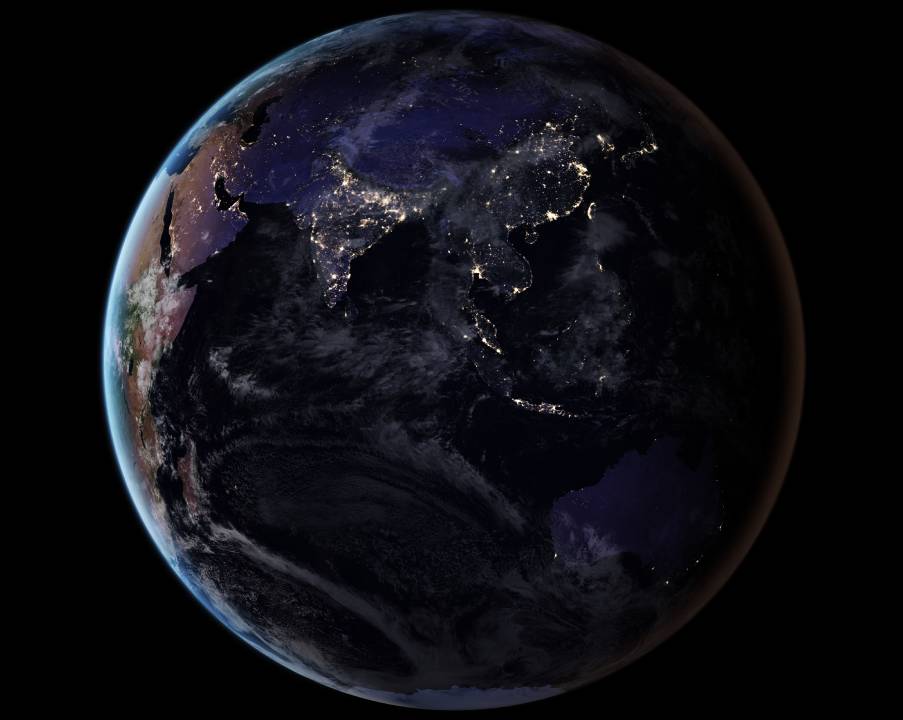
- Credits for the image used in the background of the article title: Earth at Night, NASA. URL: https://earthobservatory.nasa.gov/images/90008/night-light- maps-open-up-new-applications. License: CC BY.
References
- Wikimedia Foundation (2024). ‘LED lamp’. Wikipedia, The Free Encyclopedia. URL: https://en.wikipedia.org/wiki/LED_lamp. Accessed 24 November 2024.
- Shel Evergreen (2022). ‘Bright LEDs could spell the end of dark skies’. MIT Technology Review. URL: https://www.technologyreview.com/2022/08/17/1057652/ outdoor-led-lighting/. Accessed 24 November 2024.
- Staff (2017). ‘Five Years of Satellite Images Show Global Light Pollution Increasing at a Rate of Two Percent Per Year’. Dark Sky International. URL: https:// darksky.org/news/five-years-of-satellite-images-show-global-light-pollution-increasing-at-a-rate-of-two-percent-per-year/. Accessed 24 November 2024.
- Pavan Kumar et. al. (2019). ‘Analysing trend in artificial light pollution pattern in India using NTL sensor’s data’. Urban Climate, 27: 272-283. URL: https://doi. org/10.1016/j.uclim.2018.12.005. Accessed 24 November 2024.
- Wikimedia Foundation (2024). ‘Light pollution’. Wikipedia, The Free Encyclopedia. URL: https://en.wikipedia.org/wiki/Light_pollution. Accessed 24 November 2024.
- Keith T. Smith (2023). ‘Losing the darkness’. Science, 380 (6650): 1116-1117. URL: https://www.science.org/doi/10.1126/science.adi4552. Accessed 24 November 2024.
- Fabio Falchi (2016). ‘The new world atlas of artificial night sky brightness’. Science Advances, 2 (6). URL: https://www.science.org/doi/epdf/10.1126/ sciadv.1600377. Accessed 24 November 2024.
- National Council of Educational Research and Training (2006, 2022). ‘Chapter 12: Beyond Earth’. Science Textbook for Class VI (Rationalized 2023-24): 231- 252. URL: https://ncert.nic.in/textbook.php?fecu1=12-12. Accessed 24 November 2024.
- Staff (2014). ‘Light pollution affects human health’. Dark Sky International. URL: https://darksky.org/resources/what-is-light-pollution/effects/human-health/. Accessed 24 November 2024.
- Ed Yong (2022). ‘How Animals Perceive the World’. The Atlantic. URL: https://www.theatlantic.com/magazine/archive/2022/07/light-noise-pollution-animal- sensory-impact/638446/. Accessed 24 November 2024.