
Understanding GBS outbreaks

We have all been reading or hearing media reports of apparently large numbers of cases of a serious illness called Guillain-Barré Syndrome (GBS) in Pune over January-March 2025. (see Box 1). Since dozens of these cases began to be reported from nearabout one part of the city within a few days to weeks, researchers began to think of it as an ‘outbreak’ (see Box 2).
GBS is a serious illness. To date more than 200 people are reported to have become affected during this period, a number that is usually reported over an entire year. A few, perhaps a couple of handfuls, have died. The reliability of these numbers is subject to the reliability of our public health information systems. But it is clear that there have been many cases of a serious illness. So it makes sense for us to think about the disease (see Teacher’s Guide I).
Box 1. What does ‘Guillain-Barre syndrome’ actually mean?
The formal name of this disease is not terribly informative. It just uses the surnames of two French physicians who described it over a hundred years ago. Even the word ‘syndrome’ is simply an acknowledgement of a difficulty. We recognise patterns of illnesses first as combinations of particular ‘symptoms’ (what the ill person feels as unusual and uncomfortable) and ‘signs’ (what other people, such as physicians, see in the ill person or the ‘patient’). If some particular characteristic combination of symptoms and signs turns up again and again among ill people, it is a pattern of illness, a ‘syndrome’. The idea is useful, because it allows physicians to plan focused supportive efforts to reduce these particular symptoms and signs. But the trouble is that this remains just a description of the illness. It does not say anything about what may have caused it.
Box 2. When do we think of a disease as an ‘outbreak’?
An outbreak of any disease is a way to think about a number of cases of that disease occurring very close to each other ‘in space and time’. This means that there may be many cases of the disease reported in, for example, the same neighbourhood during just a few weeks. Clearly, for us to notice such a clustering of GBS cases, cases in the area before the ‘outbreak’ began must not have been as frequent. One reservation about this is: How sure are we that there were much fewer cases earlier? We can be sure only if our public health system of reporting and recording all diseases is robust and working well. All of us can think about how likely this is.
What is GBS?
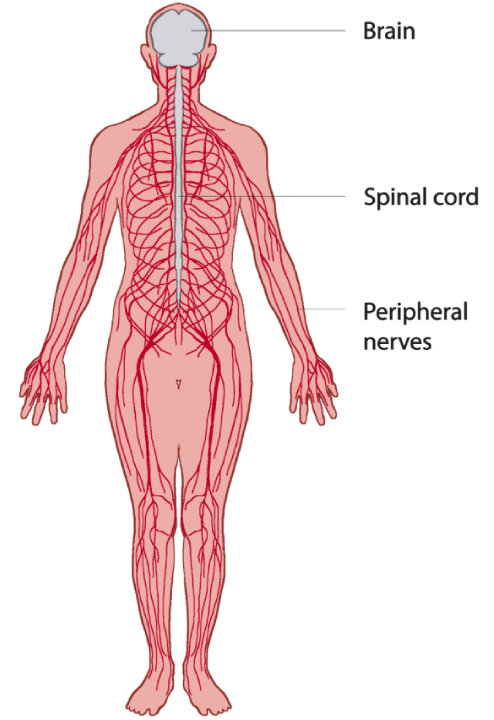
The symptoms and signs of GBS are primarily those resulting from damage and loss of normal function in the peripheral nerves (see Fig. 1). These are nerves outside the brain and spinal cord. All nerves, broadly, help us feel sensations and let us move muscles. So damage to and loss of function of nerves would mean loss of the ability to move muscles (or paralysis), loss of normal sensations, and feelings of odd ‘unreal’ sensations such as pain and tingling numbness (or feelings of ‘pins and needles’) instead.
For example, people commonly start reporting feeling as though they are wearing thick socks or gloves and having difficulties in walking or picking up teacups.
Since GBS involves nerve damage (‘neuropathy’), usually in the peripheral nerves, it is a ‘peripheral neuropathy’. But peripheral neuropathies are not unique to GBS. GBS is identified separately from other such neuropathies by three related findings. Firstly, it appears in most affected people a few days to weeks after they have recovered from an acute respiratory or gut infection. Secondly, affected people do not have symptoms (such as, say, fever) that might indicate another infection. This makes it unlikely that the neuropathy is the result of an ongoing microbial infection. Thirdly, the protein content of the cerebrospinal fluid (the fluid surrounding the brain and spinal cord) of affected people changes. This despite the fact that the symptoms and signs of this disease do not seem to involve the brain and spinal cord much. All of this appears, and indeed is, quite tentative. It provides no inkling of what may actually be causing GBS.
What do we know of the cause/s of GBS?
GBS appears to be ‘post-infectious’. This means that it is identified as occurring in people soon after they have had and recovered from an infection. These are mostly gut infections with, for example, the bacterium Campylobacter jejuni (C. jejuni), which seems to be involved in about a third of GBS cases, and Hepatitis E virus. Or respiratory infections, such as with Mycoplasma pneumoniae. GBS has also been associated with infections caused by Zika virus and Cytomegalovirus. There are also claims that GBS can sometimes occur after vaccination. But, such cases have only been reliably reported as very rare events that happen after receiving some recent highly effective adenovirus-based vaccines against COVID-19.
But while GBS is a rare consequence, infections (especially gut and respiratory infections) are quite common. All of us get them quite often. This means that there are some cases of GBS in all communities at all times. In fact, it is not easy to find any differences between the people who do get affected by GBS and those who do not. Everyone seems to be at some low level of GBS risk. If there is an outbreak of an infection, GBS numbers may also go up. So if there is an outbreak of GBS cases, the most obvious explanation to look for is an outbreak of infection. This could be an outbreak of a respiratory infection, like COVID-19, or a gut infection associated with, say, a contaminated water supply (see Teacher’s Guide II).
But it is not as if everyone who has had a respiratory or gut infection will get GBS. Estimates are that only about one in a few thousand people recovering from infection are affected with GBS. So, the really puzzling question is: What happens differently in the rare GBS-affected people to cause this neuropathy after infection? While we do not yet understand this very well, it seems to be an ‘autoimmune’ disorder. What does this mean? Usually, the immune mechanisms in the body recognise potentially dangerous ‘targets’ coming into the body, such as microbes, and make responses that help get rid of them. These immune mechanisms do not usually recognise components of the body itself as targets. If they did, such ‘auto’-immune mechanisms would try to get rid of parts of the body itself. This is clearly a recipe for some trouble and, perhaps, even serious disease. But, sometimes, some such autoimmune responses do come up. If they escape the regulatory mechanisms that can keep them in check, such responses can cause illness. In more than half of all people affected with GBS, there is evidence that such autoimmune mechanisms are activated. These mechanisms identify some parts of the peripheral nerves as targets. Immune activity against these nerves leads to nerve damage and the symptoms and signs of GBS.
All of this tentative understanding is limited by uncertainties. There are people, huge numbers of them, who get microbial infections and do not develop GBS. There are also people who get GBS without any history of microbial infections. Did they simply forget that they had a recent infection? Or was the infection in them so mild that they did not notice it? Or can GBS occur without prior infections? We do not know yet. If this sort of autoimmunity is the way that GBS can be caused, what is its connection with respiratory or gut infections? The link seems to be a situation of mimicry. When we have a microbial infection, such as with the gut infecting bacterium C. jejuni, immune mechanisms against targets in C. jejuni are activated. These help get rid of the infection. But, in some rare situations, for reasons we still do not understand, these microbial targets look like nerve ‘auto’-targets to the immune mechanisms. So, for example, some people make antibodies against C. jejuni that also recognise nerve components. We do not know how this difference arises. Also, GBS does not commonly occur in the same person again and again. So it is not clear if and how they made mimicking autoimmune responses just that one time.
There are puzzles here too. This mimicking autoimmune response would be quite strong during the infection that causes it. How does the nerve damage not start during infection? Why do these symptoms occur a few days to weeks ‘after’ symptoms of infection have subsided? We do not know yet. This, as far as we understand it, seems to be how GBS comes about.
How is GBS treated?
Since we do not understand the cause very well, treatment of GBS is mostly limited to treating symptoms and signs. If the affected person cannot move their muscles and feel sensations in certain parts of their body, they will be bedridden and will need proper intensive and skilled nursing care. In about one in four or five cases, people will begin to have difficulty in breathing because their breathing muscles cannot move. At this point, ventilator support in intensive care units in hospitals will be needed. Even so, people in such dire situations can and do die. As many as one in twenty affected people die. Recovery is usually complete in seven out of ten people. But this can take many months. In others, some muscle weakness can remain for much longer.
In addition to the much-needed invalid care, ill people are commonly treated with immunoglobulin from the blood of a healthy person (a donor). Immunoglobulin is a pool of all the antibodies that the body of the healthy person is making (see Box 3). Antibodies are proteins that the immune system makes against specific targets that activate it.
So the antibodies in pooled immunoglobulin could be against any of the microbes, vaccines, etc., that the donor may have encountered. This brings up the next GBS puzzle: How does this treatment help relieve the illness of autoimmune nerve damage? There are any number of speculations, but the reality is that we do not know. It does seem to work, though not completely nor reliably. And it is relatively cheap, unlike the more targeted therapies (such as those that remove nerve-specific antibodies) being investigated.
Box 3. What are antibodies?
Chapter 2 (‘Microorganisms: Friend and Foe’) of the Grade VIII science textbook (NCERT, 2024-2025) offers this introduction: “When a disease-carrying microbe enters our body, the body produces antibodies to fight the invader. The body also remembers how to fight the microbe if it enters again. If dead or weakened microbes are introduced into a healthy body, the body fights and kills the invading bacteria by producing suitable antibodies. The antibodies remain in the body and we are protected.”1
Box 4. Curricular connections:
Activities and discussions around this theme can help meet the following curricular goals outlined in the National Curriculum Framework for School Education (NCF-SE) 2023 for:
- Middle-stage science:
- CG-3: [The student] explores the living world in scientific terms. Specifically, it can support students in developing the following competency: C-3.1: “Describe the diversity of living things observed in the natural surroundings (insects, earthworms, snails, birds, mammals, reptiles, spiders, diverse plants, and fungi), including at a smaller scale (microscopic organisms)”.2
- CG-7: [The student] communicates questions, observations, and conclusions related to science. Specifically, it can support students in developing the following competency: C-7.1: “Use scientific vocabulary to communicate science accurately in oral and written form, and through visual representation”.2
- CG-9: [The student] develops awareness of the most current discoveries, ideas, and frontiers in all areas of scientific knowledge in order to appreciate that science is ever evolving and that there are still many unanswered questions. Specifically, it can support students in developing the following competency: C-9.1: “State concepts that represent the most current understanding of the matter being studied—ranging from mere familiarity to conceptual understanding of the matter as appropriate to the developmental stage of the students”.2
- Preparatory-stage Environmental Studies (EVS):
- CG-2: [The student] understands the interdependence in their environment through observation and experiences, developing the basis for appreciation of the idea of ‘Vasudhaiva Kutumbakam’. Specifically, it can support students in developing the following competency: C-2.1: “Identify natural and human-made systems that support their lives (water supply, water cycle, river flow systems, seasons, life cycle of plants and animals, food, household items, transport, communication, electricity in the home)”.2
- CG-3: [The student] explains how to ensure the safety of self and others in different (normal as well as emergency) situations. Specifically, it can support students in developing the following competency: C-3.1: “Describe the basic safety needs and protection (health and hygiene, food, water, shelter, precautions, awareness of emergency situations, abuse, and unsafe situations) of humans, birds, and animals”.2
Discussions around this theme can also help meet the following learning objectives for Grade VIII science:
- Define pathogens to list the class of harmful microorganisms.
- List examples of diseases in humans, plants, and animals caused by microorganisms in order to explain the harmful effects of microorganisms.3
Parting thoughts
GBS as an illness by and large goes away on its own in a few weeks, provided we keep the affected people alive and functioning till then. This is the next part of the GBS puzzle that we do not quite understand yet. If an immune response against certain microbes also happens to affect human nerve components and causes illness, how does it stop? This disease-causing immune response is initially triggered by microbes. So it is possible that it simply runs down and disappears when the microbe is no longer present.
All in all, there is a lot we do not know about GBS (see Box 4). We do, however, know that it can result from gut infections. Therefore, being careful about hygiene in the food and water we eat and drink is a commonsense precaution to take.
Key takeaways

- A rise in GBS cases is being reported from Pune, Maharashtra, since early January 2025. This rare autoimmune disorder occurs in people soon after they have had and recovered from a respiratory or gut infection. Its symptoms and signs are mainly those resulting from damage and loss of normal function of the peripheral nerves.
- Since GBS is in the news and is a matter of strong public concern, it can be used as an example of science in action. Students can be invited to use newspaper clippings (including ones in local languages) to investigate what is known about its causes, symptoms, diagnosis, treatment, and preventive measures.
- Since this spike in GBS cases is linked to contaminated water, it can be used as a real-world example of the relevance of what students learn in the EVS and science curricula about access to clean drinking water. Students can be invited to find out where the water in their school and homes comes from as well as how it is stored and treated to reduce the risk of disease.
Acknowledgements
The editors thank Hridaykant Dewan for his help in inviting Satyajit Rath to write this article for i wonder…
Notes
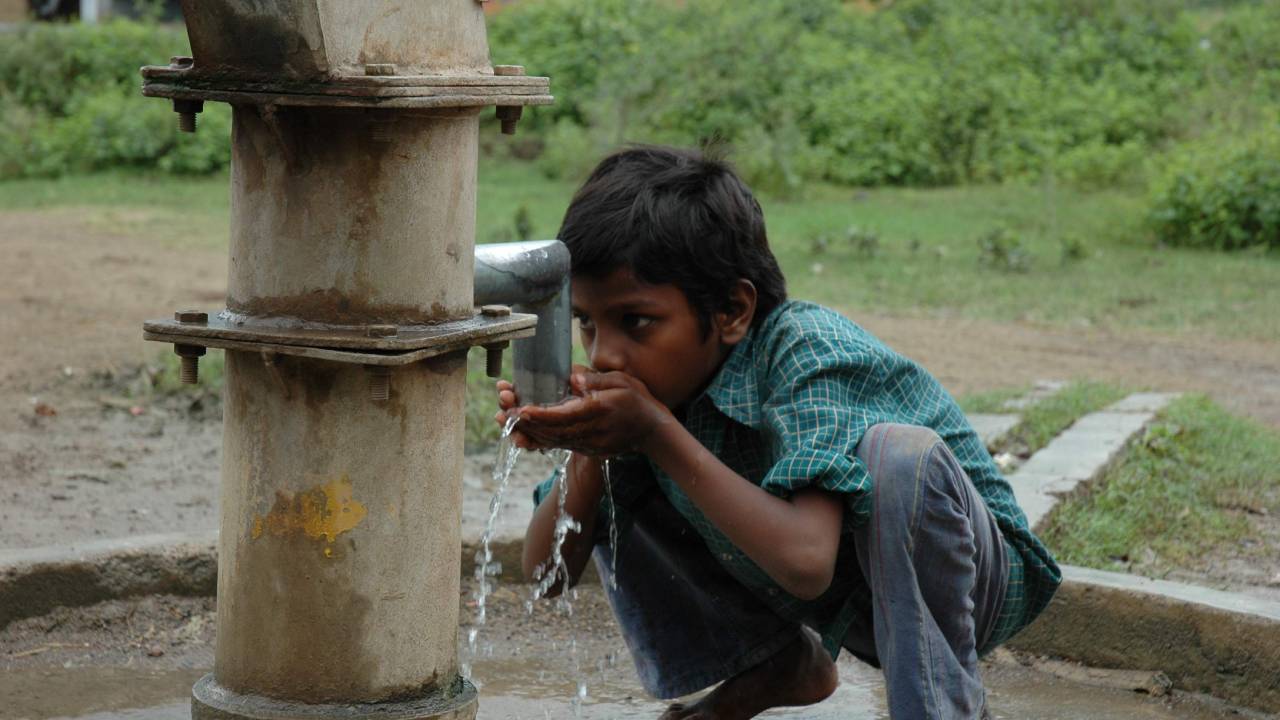
- Credits for the image (Child Drinking Water) used in the background of the article title: Anil Gulati, India Water Portal. URL: https://www.flickr.com/photos/indiawaterportal/4483915884. License: CC BY-NC-SA 2.0 Generic Deed.
- This article includes two detachable classroom resources: Teacher’s Guide I: GBS as a Theme for Student Investigation and Teacher’s Guide II: GBS and Contaminated Water.
References
- National Council of Educational Research and Training (2024). ‘Chapter 2: Microorganisms: Friend and Foe’. Science Textbook for Grade VIII: 17-31. URL: https://ncert.nic.in/textbook.php?hesc1=2-13.
- National Steering Committee for National Curriculum Frameworks (2023). ‘National Curriculum Framework for School Education 2023’. National Council of Educational Research and Training. URL: https://ncert.nic.in/pdf/NCFSE-2023-August_2023.pdf.
- Central Board of Secondary Education (2020). ‘Teachers’ Resource for Achieving Learning Outcomes, Classes 1 to 10’. URL: https://cbseacademic.nic.in/web_material/Manuals/TeachersResource_LODoc.pdf.