
The disappearing vultures

In Chapter 12 (‘Forests: Our Lifeline’) of the Grade VII science textbook (NCERT, 2024-2025), students read how the different living components (plants, animals, and microorganisms) of an ecosystem are interdependent: “You have learnt how green plants produce food. All animals, whether herbivores or carnivores, depend ultimately on plants for food. Organisms which feed on plants often get eaten by other organisms, and so on. For example, grass is eaten by insects, which in turn, is taken by the frog. The frog is consumed by snakes. This is said to form a food chain: Grass→ insects→ frog→ snake→ eagle. Many food chains can be found in the forest. All food chains are linked. If any food chain is disturbed, it affects other food chains“.1 This is emphasized in Chapter 13 (‘Our Home: Earth, a Unique Life Sustaining Planet’) of the Grade VIII science textbook (NCERT, 2025-2026): ‘’…if grasses vanish, animals that feed on them, like deer or grasshoppers, struggle to survive. And, without herbivores, predators like tigers or foxes lose their food too. Every type of living thing has a role, and losing even a few weakens nature’s ability to support life.“2 In Chapter 5 (‘Conservation of Plants and Animals’) of the Grade VIII science textbook (NCERT, 2024-2025), students read that: “At times, we kill snakes, frogs, lizards, bats, and owls ruthlessly without realising their importance in the ecosystem. By killing them we are harming ourselves. They might be small in size, but their role in the ecosystem cannot be ignored. They form part of food chains and food webs.”3 One example of these textbook ‘facts’ can be seen in the case of the disappearing vultures.
The case of the disappearing vultures
What role do vultures play in an ecosystem? In Chapter 12 (‘Forests: Our Lifeline’) of the Grade VII science textbook (NCERT, 2024- 2025), students read this discussion between two children: “What happens if an animal dies in the forest?” Sheila asked. Tibu replied: “The dead animals become food for vultures, crows, jackals, and insects.” In this way, the nutrients are cycled. So, nothing goes waste in a forest.”1 Animals that feed on the decaying flesh of dead animals (or carrion) are called scavengers. Among the examples of scavengers listed in the textbook, vultures are the only animals that are known to rely primarily on carrion for food. Because they are apex predators, Chapter 12 (‘How Nature Works in Harmony’) of the Grade VIII science textbook (NCERT, 2025- 2026) groups these big birds and tigers under the category of ‘large carnivores.’4
At one time, India was home to millions of vultures.5 It was common to see these birds gathering in large groups, in open fields and near garbage dumps in cities and villages, around the bodies of dead animals (or carcasses), including those of cattle (see Fig. 1). Here is how Jamal Ara (India’s first ‘birdwoman’) describes them in ‘Watching Birds’ (1970), a book she wrote for children: “With his large heavy body, bald head, and bare scraggy neck, he is not a pretty sight, but he is unrivalled in the perfection of flight. He soars and wheels high up in the air, surveying the world below. With his allies, the kites, he patrols the streets, villages, and burning-ghats, clearing away refuse from garbage dumps and removing dead animals left lying on the ground.“6 Yet, it is unlikely that our students may have spotted one of these birds.

This is because vultures started disappearing from our villages and cities a little over 25 years ago. This disappearance was so rapid and severe that it is referred to as a ‘collapse’. Vultures became endangered animals in the Indian subcontinent. As described in Chapter 5 of the Grade VIII science textbook (NCERT, 2024-2025), this meant that their numbers had diminished “… to a level that they might face extinction.“3
Villagers first noticed the disappearance of these birds when carcasses of dead cattle began to pile up outside villages. This was concerning because many pathogens proliferate in carcasses. With their sharp beaks, talons, and grooved tongues, vultures are known to be very efficient at disposing dead bodies. A flock of vultures can pick a cattle carcass clean in less than an hour!7 In their absence, the rotting meat attracted rodents and feral dogs. Their numbers increased, increasing the transmission of diseases (like rabies) from these animals to the human population, particularly in villages where there were large numbers of cattle, sheep, goats, and fowl. Farmers started using chemicals to dispose carcasses. Tanks, ponds, and lakes became polluted with the pathogens from animal carcasses as well as the chemicals that farmers used to dispose them.8,9 These impacts highlighted the critical role that vultures had played in keeping our communities healthy.
Scientists started investigating the reason for the collapse in the numbers of these birds. But this remained a mystery for close to eight years. Then, as students read in Chapter 2 (‘Land, Soil, Water, Natural Vegetation and Wildlife Resources’) of the Grade VIII geography textbook (NCERT, 2024-2025), scientists found that: “Vultures in the Indian subcontinent were dying of kidney failure shortly after scavenging livestock treated with diclofenac, a painkiller that is similar to aspirin or
ibuprofen.”10 Since it was cheap and easily available, diclofenac was widely used by veterinarians (often called animal doctors) to treat cattle across India. When these cattle died, their bodies, like that of other dead animals, would be left at the outskirts of the village or in a garbage dump. If they had been treated with diclofenac anytime in the week before their death, some of this medicine would remain in the carcass. When vultures feasted on them, the medicine entered the bodies of the birds. Even a small amount of diclofenac caused the birds’ kidneys to fail.8,11
In 2006, the Government of India banned the manufacture, sale, and use of diclofenac for veterinary use.12 Slowly, through many conservation efforts across the country, vulture populations have started recovering. Scientists have been monitoring the numbers of these birds. Their estimates suggest that only a few thousand vultures survive today and even their survival is at risk.12,13 Why is it taking so long for these birds to recover? After all, some of these birds did survive the collapse. Surely, they would have reproduced over time. You would think 18 years is long enough for these birds to return to their earlier numbers.
Scientists found that the slow recovery of vultures is linked to their breeding cycle. Many kinds of vultures breed only once a year. Like other birds, vultures are oviparous. In Chapter 6 (‘Reproduction in Animals’) of the Grade VIII science textbook (NCERT, 2024-2025), students read that fish and frogs can lay many eggs at one time while hens lay only one egg at a time.14 Many kinds of female vultures lay only one egg per breeding season. And it takes 4-5 years for a chick to grow old enough to lay eggs of its own!15 Many eggs and chicks are eaten by predators. So you can see how long it may take for vulture numbers to return to what they were once! Then, just as these numbers seemed to be rising, scientists found six other drugs that are toxic to these birds. All of these medicines are used to treat cattle that have fever or are in pain. Their effect on vultures is similar to diclofenac—traces of each can cause death due to kidney failure.16 In January this year, the Government of India banned the manufacture, sale, and use of one of these drugs, known as nimesulide, for veterinary use. Also, scientists are developing other cattle medicines that are safer for vultures. These are now being recommended for use in veterinary medicine.17
Box 1. Curricular connections:
Discussions around this article and related activities (see Activity Sheet I and II and the Teachers’ Guide) can help teachers meet the following curricular goals recommended by the National Curriculum Framework for School Education (NCF-SE) 2023 for:
- Middle-stage science:
- CG-3: [The student] explores the living world in scientific terms. Specifically, students can develop the competency to:
- (C-3.1): “Describe the diversity of living things observed in the natural surroundings (… birds…), including at a smaller scale…”
- (C-3.3): “Analyse patterns of relationships between living organisms and their environments in terms of dependence on and response to each other.”
- CG-5: [The student] understands the interface of science, technology, and society. Specifically, students can develop the competency (C5.2) to: “Share views on news and articles related to the impact that Science/Technology and society have on each other.”
- Preparatory-stage Environmental Studies (EVS):
- CG-2: [The student] understands the interdependence in their environment through observation and experiences, developing the basis for appreciation of the idea of ‘Vasudhaiva Kutumbakam’. Specifically, students can develop the competency to:
- (C-2.1): “Identify natural and human made systems that support their lives (water supply… river flow systems… life cycle of plants and animals, food…).”
- (C-2.3): “Connect changes in the environment and the lives of their family and community, as communicated by elders and through local stories…”
- CG-4: [The student] develops sensitivity towards social and natural environment. Specifically, students can develop the competency (C-4.5) to: “Identify needs of plants, birds, and animals, and how they can be supported (water, soil, food, care).”18
Parting thoughts
Vultures have existed on Earth for almost 15 million years before humans. Yet, their vulnerability to a medicine that humans have developed brought them close to being wiped out from the Indian subcontinent!8,11 The impact their disappearance had on humans can make us (students and teachers) pause, look around, and think of how closely our lives are intertwined with those of other living beings (see Box 1).
Through this story, students may begin to appreciate the importance of this fearsome-looking bird that Chapter 2 of the Grade VIII geography textbook (NCERT, 2024-2025) describes as: “…a vital cleanser of the environment.”10 But this story also offers something else for us to think about. It is through the process of science that medicines were developed to treat sick cattle. It is through the same process that we know of seven such medicines, including diclofenac and nimesulide, that can cause the death of vultures. Banning the veterinary use of diclofenac and nimesulide, developing vulture-safe medicines to treat cattle, and protecting these birds through a variety of conservation efforts are our seeds of hope.19 They allow us to coexist with a new understanding.
Key takeaways
- The case of the disappearing vultures gives preparatory-stage EVS and middle-stage science students the opportunity to understand the interdependence of living organisms.
- Learning about the impacts that the disappearance of these fearsome-looking birds has had on human communities can help middle-stage science students appreciate the critical role that scavengers play in maintaining healthy ecosystems.
- Exploring the cause of the sudden collapse of these bird populations and the reasons for their gradual recovery can help students see the importance of conservation-related textbook concepts in the real world.
- The role of scientists in developing medicines to treat sick cattle, discovering their impacts on vultures, and protecting these birds through conservation efforts allows middle-stage students to examine the role of science in society.
Notes
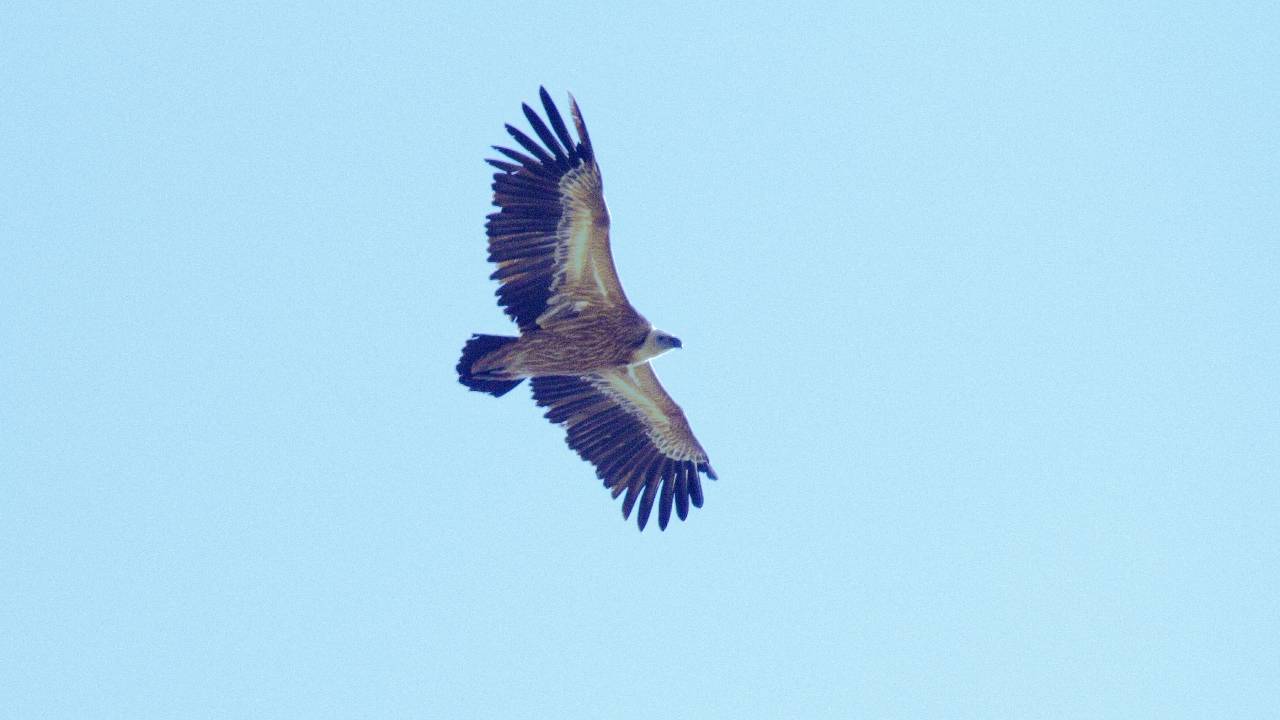
- Credits for the image (Indian Long-billed Vulture in Flight) used in the background of the article title: Chinmayisk, Wikimedia Commons. URL: https://commons.wikimedia.org/wiki/File:Indian_long_billed_vulture_bottom_view_in_flight.jpeg. License: CC BY-SA 3.0 Unported Deed.
- This article includes three detachable classroom resources: Activity Sheet I: Where are the Vultures?, Activity Sheet II: Ask about Vultures, and Teacher’s Guide: Activity Sheets I & II.
References
- National Council of Educational Research and Training (2024). ‘Chapter 12: Forests: Our Lifeline’. Science Textbook for Grade VII: 142-155. URL: https://ncert.nic.in/textbook.php?gesc1=12-13.
- National Council of Educational Research and Training (2025-2026). ‘Chapter 13: Our Home: Earth, a Unique Life Sustaining Planet’. Curiosity, Textbook of Science for Grade VIII: 223. URL: https://ncert.nic.in/textbook.php?hecu1=13-13.
- National Council of Educational Research and Training (2024). ‘Chapter 5: Conservation of Plants and Animals’. Science Textbook for Grade VIII: 53-65. URL: https://ncert.nic.in/textbook/pdf/hesc105.pdf.
- National Council of Educational Research and Training (2025-2026). ‘Chapter 12: How Nature Works in Harmony’. Curiosity, Textbook of Science for Grade VIII: 200. URL: https://ncert.nic.in/textbook.php?hecu1=12-13.
- Srivastava, Abhishek (2025). ‘The Status of Vultures in India: A Story of Decline and Recovery’. EcoNE. URL: https://www.econe.in/post/ vulture-conservation. Accessed on Aug 6, 2025.
- Ara, J. (1970). ‘Craftsmen’. Watching Birds: 11. National Book Trust.
- SAVE Advisor. ‘Vulture carcass disposal’. Saving Asia’s Vultures from Extinction (SAVE). URL: https://save-vultures.org/the-consequences/. Accessed on Aug 6, 2025.
- Kuta, S. (2024). ‘When Vultures Nearly Disappeared in India, Half a Million People Died, Too, Study Finds’. Smithsonian Magazine. URL: https://www.smithsonianmag.com/smart-news/when-vultures-nearly-disappeared-in-india-half-a-million-people-died-too-studyfinds-180984837/. Accessed on Dec 18, 2024.
- Bindra, P. S. (2018). ‘Declining vulture population can cause a health crisis’. Mongabay. URL: https://india.mongabay.com/2018/02/decliningvulture-population-can-cause-a-health-crisis/. Accessed on Dec 18, 2024.
- National Council of Educational Research and Training (2024). ‘Chapter 2: Land, Soil, Water, Natural Vegetation and Wildlife Resources’. Resources and Development, Geography Textbook for Grade VIII: 7-21. URL: https://ncert.nic.in/textbook.php?hess4=2-5.
- Dooren, T. V. (2011). ‘Vultures and their People in India: Equity and Entanglement in a Time of Extinctions’. Australian Humanities Review, 50: 45-61. URL: https://press-files.anu.edu.au/downloads/press/p111121/pdf/ch039.pdf. Accessed on Dec 18, 2024.
- Ministry of Environment, Forests and Climate Change, Government of India (2020). ‘Action Plan for Vulture Conservation in India’. URL: https://save-vultures.org/wp-content/uploads/2020/11/20-11-India-National-Vulture-Action-Plan-2020-25.pdf. Accessed on Dec 18, 2024.
- Vaidyanath, S. (2021). ‘A Complete Guide to the Vultures of India’. Nature in Focus. URL: https://www.natureinfocus.in/animals/a-completeguide-to-the-vultures-of-india. Accessed on Dec 18, 2024.
- National Council of Educational Research and Training (2024). ‘Chapter 6: Reproduction in Animals’. Science Textbook for Grade VIII: 68-72. URL: https://ncert.nic.in/textbook/pdf/hesc106.pdf.
- Ayyar, K (2021). ‘Born to be wild: India’s first captive-bred endangered vultures set free’. The Guardian. URL: https://www.theguardian.com/ environment/2021/aug/19/india-critically-endangered-vultures-wild-release-aoe. Accessed on Jul 31, 2025.
- Prakash, V., et al. (2024). ‘Evidence for the toxicity to vultures of NSAIDs other than diclofenac’. Saving Asia’s Vultures from Extinction (SAVE). URL: https://save-vultures.org/alerts/. Accessed on Dec 18, 2024.
- ET Online (2025). ‘Government bans popular painkiller to save vultures’. Economic Times, January 4, 2025. URL: https://economictimes. indiatimes.com/news/india/government-bans-popular-painkiller-to-save-vultures/printarticle/116904108.cms. Accessed on Jun 27, 2025.
- National Steering Committee for National Curriculum Frameworks (2023). ‘National Curriculum Framework for School Education 2023’. National Council of Educational Research and Training. URL: https://ncert.nic.in/pdf/NCFSE-2023-August_2023.pdf.
- John, S. and Majgaonkar, I. (2023). ‘Dizzying Decline of the Indian Vulture’. RoundGlass Sustain. URL: https://roundglasssustain.com/species/ indian-vultures-decline. Accessed on Dec 18, 2024.