
Classifying everyday materials as metals and nonmetals
April 6, 2026


Children are formally introduced to ‘Materials Around Us’ in the Grade VI science textbook (NCERT, Reprint 2025-2026). While they may not immediately think of it, one of these materials is ‘air’. We live our entire lives at the bottom of an ‘ocean of air’ that is the Earth’s atmosphere. This is a material that children are naturally interested in and have their own interesting ideas about. But this curiosity is not limited to children.
Humans, over millennia, have wondered about the nature of air, often drawing from their everyday experiences and expectations. Most cultures and civilizations of antiquity considered air as one of the elements that make up the material world. Almost 2500 years back, the Greek philosopher Empedocles demonstrated that air is not just empty space or a void. He took an empty bowl with a small hole at the bottom (which he covered with his finger) and placed it upside down in a water container. He observed that a pocket of air did not allow water to immediately rush in to fill the bowl. This led him to conclude that air is a substance that can push back water. If children were to try this, and removed the finger from the opening of the hole, they would be able to sense the air emerging from it. Another breakthrough came about four centuries ago. The Italian physicist Gasparo Berti showed that the air that surrounds us does have weight. This is what we call atmospheric pressure. Around 250 years back, through careful experiments and measurements, the French chemist Antoine Lavoisier (and other contemporary chemists) found that a component of air, which he named oxygen, is involved in burning or combustion. He also found that when we account for the mass of oxygen in the air (the experiments were done in closed containers), the mass of the substances involved in combustion is the same before and after the reaction. Among other ideas and techniques, this law of conservation of mass allowed for the further development of chemistry.
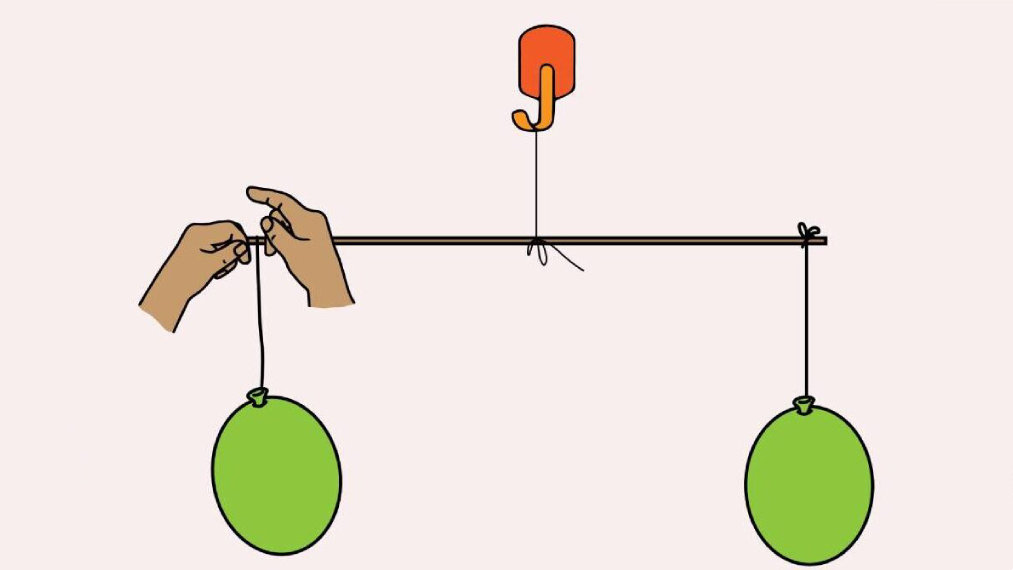
But, even today, children as well as grown-ups find it difficult to accept that air is made of matter or has mass. This is not surprising, given that it has taken us millennia to reach a nuanced understanding of the nature and properties of air. How do we help students develop a good understanding of what is air? How can we help them arrive at notions that are scientifically accurate? These questions are the focus of two of the articles in this issue of i wonder… In the article, ‘Does an ‘Empty’ Tumbler contain Air?’, Vipin Kumar shares his experience of sustaining a dialogue with students about their ideas regarding the properties of air. Drawing on his extensive experience in working with children, he shows how experimental evidence can nudge children to gradually refine, revise, and sharpen their understanding. In the second article, ‘Does Air add Weight to an Inflated Balloon?’, Saurav Shome and Vijeta Raghuram present an idea for a simple activity with everyday materials that can lead students to a sophisticated scientific understanding of the mass of air. As the founder director of the National Centre for Biological Sciences (NCBS), Bengaluru, Obaid Siddiqui once said, “Sophistication should be in the mind, not in fancy gadgets or laboratory spaces.” The ideas from both these articles could also be developed to explore a broader theme around air across topics and grades.
We hope that these articles and the related resources prove useful to you in your classrooms with your students. We are sure you will find ways to adapt and extend these pedagogical ideas further. As always, we look forward to hearing from you about your teaching experiences!
Anish Mokashi
Editorial Team Member