
How are thunder and lightning related?



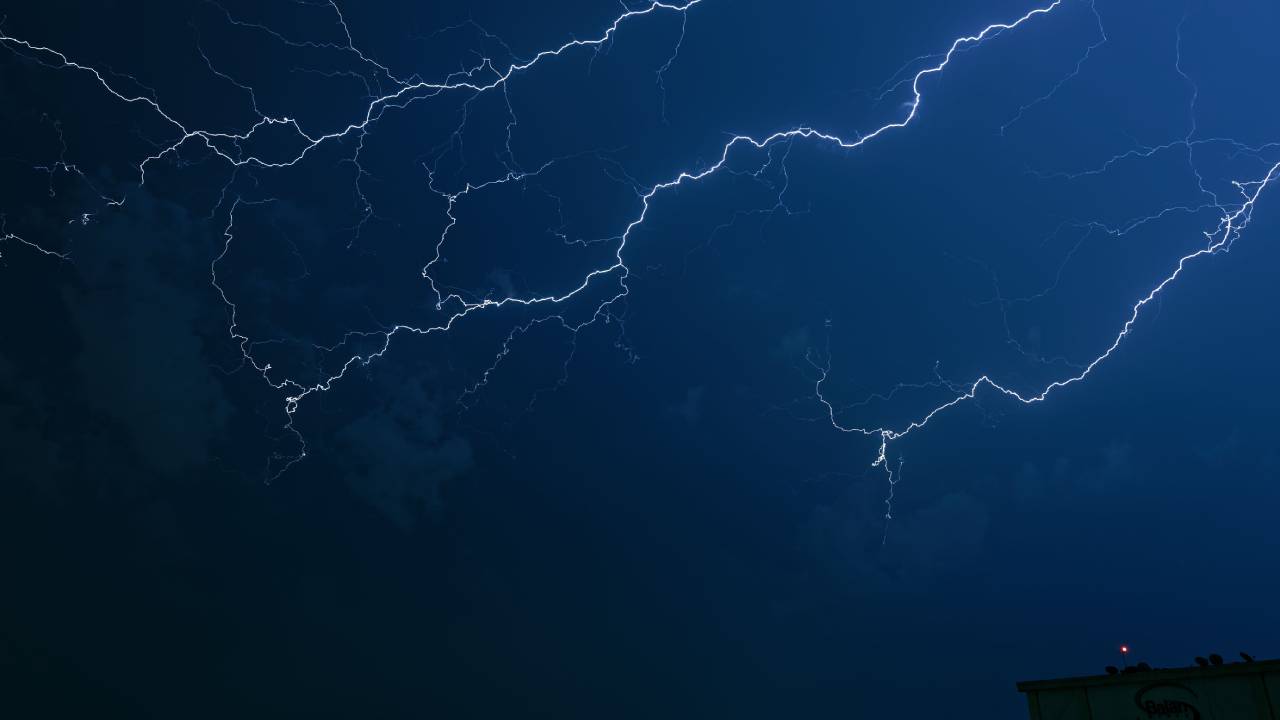
Chapter 6 (‘Pressure, Winds, Storms, and Cyclones’) of the Grade VIII science textbook (NCERT, 2025-2026) tells students how lightning and thunder are caused: “When land gets heated, the warm and moist air, being lighter, rises… As the rising air expands, it cools and moisture in it condenses to form water droplets, creating clouds. Under certain conditions, warm air rises to such great heights that the low temperature there converts water droplets into ice particles… Strong winds blowing upwards and downwards facilitate rubbing between water droplets and ice particles. You have learnt in the chapter ‘Exploring Forces’ that when two objects are rubbed against each other, they get charged. In this case, strong winds blowing upwards and downwards and rubbing against each other cause static electric charges to develop within the clouds. The positively charged lighter ice particles move upwards and occupy the upper part of the clouds. The negatively charged heavier water droplets occupy the lower part of the clouds. Thus, a charge separation within the cloud takes place. Also, when the negatively charged lower part of the cloud moves closer to the ground, it causes the ground and nearby objects, such as trees or buildings, to become positively charged. Normally, air acts as an electrical insulator and does not let opposite charges meet. But when the build-up of charges becomes very large, the insulating property of air breaks down. A sudden flow of charges takes place, producing a bright flash of light called lightning. Lightning can occur as opposite charges collide within a cloud, between clouds, or between clouds and the ground. Lightning rapidly heats up the air around it, causing the air to expand and produce a loud sound known as thunder.”1 But teachers may wonder: How are these facts useful to students in their everyday world? And students often ask questions that are not addressed in the textbook. For example: Why is lightning followed by a big booming sound? Why is thunder sometimes loud and sometimes soft?
A conversation on thunder
Thunderstorms are a common feature during the monsoon season in the hilly regions of Uttarakhand, especially in districts like Tehri and Chamoli, where the weather can change rapidly.
The teacher was in a Grade VIII classroom of a government school in this region. They started a discussion on thunderstorms with a question: “Have you experienced a thunderstorm recently? What do you remember seeing or hearing?” Students said that thunderstorms were common in July and August. They had observed flashes of lightning in the sky. This was followed by the sound of loud thunder.
The teacher asked: “Does the sound of thunder always follow the flash of lightning?” A student replied: “Yes! I saw lightning in the sky. It lit up the whole sky. The thunder came a little later.” Other students expressed agreement with this observation. They had always heard thunder after they saw the flash of lightning. The teacher asked: “Why does this happen? Why do we not hear thunder while seeing lightning?” A student replied: “Maybe lightning happens first. Thunder happens later. So we hear it later.” Another student remarked, “But isn’t thunder the sound of lightning?” The first student looked up from the open textbook on her desk, “Here it says that lightning happens first. It heats up the air. The air expands and causes a loud sound.”1
Another student asked: “Why does lightning heat up air? Is lightning hot?” The teacher replied: “Lightning is not hot. It is an electric discharge. So it releases a huge amount of energy. Some sources say that it releases so much energy that it can power more than 850,000 homes or a small town for a day.”2,3
One of the students said, “But the textbook says that air is an insulator. So how does it get heated up?” The teacher asked, “Why do we call air an insulator?” The student replied, “It is like clay. It will not let heat pass through it.”4 Another student said, “No, current will not pass through it.”5 The teacher replied, “Air is a poor conductor of both electricity and heat. Yet, during a lightning strike, a large amount of charge flows through the air in a very small amount of time. How this happens is a mystery. As this charge flows through the air, the air in contact with it gets very hot.”2,6
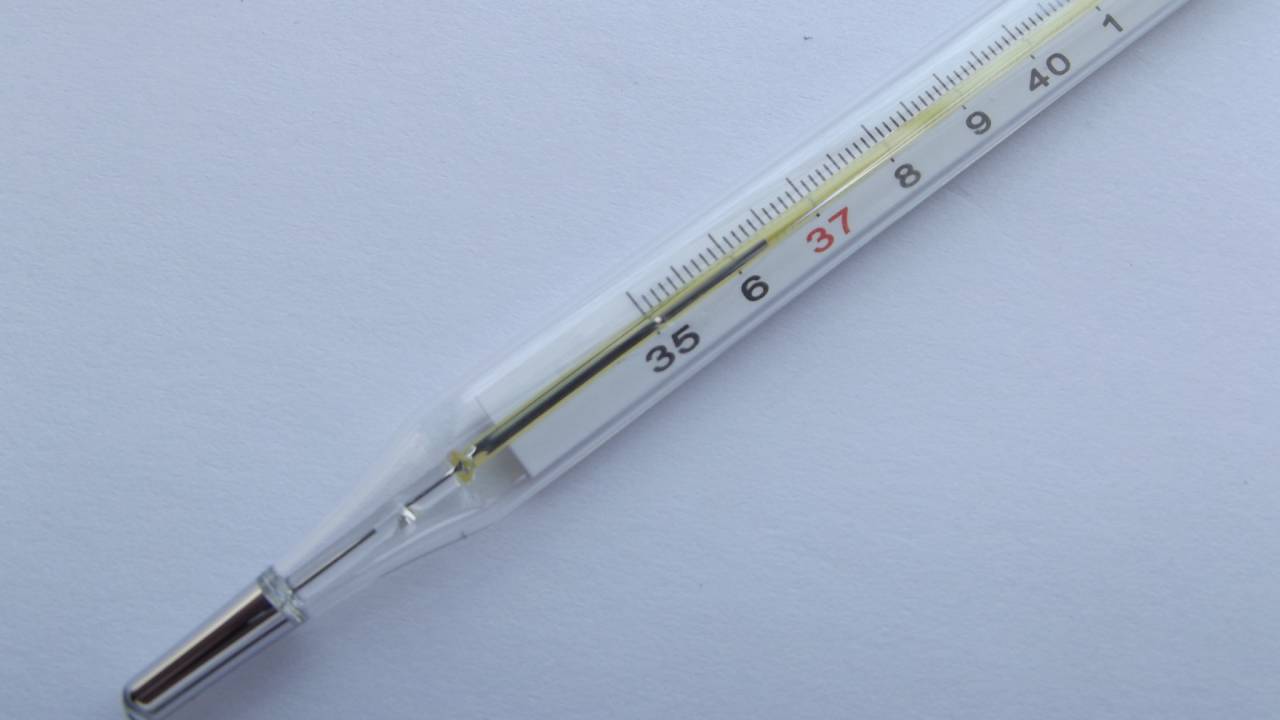
One of the students asked, “How hot?” The teacher replied, “A single lightning bolt can heat air to a temperature close to 30,000°C!”7 The student said, “How hot is that?” The teacher was thoughtful for a few minutes. They were thinking of an answer that would be relatable to the student. Then, they asked, “Do you remember what our normal body temperature is on the Celsius scale?” The student shook their head. Another student hesitantly said, “37 degrees?”8 The teacher said, “Correct. So imagine, you have a high fever. Your body temperature is 40°C. Wait. Let me write that on the board.”
The teacher wrote:
Lightning causes air to heat up to: ~ 30,000°C
Fever causes our body temperature to rise to: 40°C
The teacher asked: “Can someone tell me how much hotter the air near a lightning bolt is than our body when we have a high fever?” One of the students said, “Thousand times more.” The teacher nodded, “Close. It is actually about 750 times more. Lots of books will tell you that this is also about 5 times hotter than the surface of the Sun.”7
One of the students said, “But hot air does not make sound.” The teacher said, “You have not seen hot air make sound. Have you seen it change in any other way?” Many of the students replied: “It will expand.” The teacher asked, “How do we know this?” One of the students said, “If you keep a balloon in the sun, it will get bigger.”4 The teacher nodded: “Like the air in the balloon, the air in contact with the electric discharge of lightning heats up and expands. This happens in a fraction of a second. The particulate matter in hot air collides against that in the surrounding air very quickly and forcefully.”9 Then, they asked: “What do you hear when two materials collide against each other with a lot of force?” The teacher could hear answers like “loud sound” and “bang”.10 Smiling, the teacher said, “Yes, that loud sound is thunder.”
The class was quiet as students thought about this. Then, one of the students asked, “If things happen so fast, why don’t we hear thunder when we see lightning?” The teacher smiled. “Good question. Lightning produces light. And light travels incredibly fast—so fast that we see it almost instantly. Thunder is sound, and sound moves much slower.”
The teacher saw that some of the students had not understood. “Imagine two students traveling from school to the stationery store in the market area. They start off at the same time. One of them is riding a bike. The other walks. Neither stops anywhere on the way. Who do you think will arrive at the stationery store first?” The class replied, “The student on the bike!” The teacher said, “Yes, light is like the bike. It zips ahead.”
One of the students asked, “So we see lightning first because light travels faster than sound?” The teacher confirmed this. “How much faster?” another student asked. The teacher replied, “Light zooms through the sky at about 300,000 kilometres per second. Sound only moves at around 343 meters per second. Let me write this on the board.”
The teacher wrote:
In one second:
Light travels 300,000 kilometres.
Sound travels 0.343 kilometres.
After giving the students a few minutes to look at the two numbers on the board, the teacher asked: “Can someone tell me how much faster light is than sound? Let us round the speed of sound to 0.300 kilometres in a second.” The class was quiet. Then, a student volunteered to write their answer on the board. They came to the board and wrote: 1000000. Turning to the class, the teacher said, “So light travels almost a million times faster than sound.”
The teacher changed the conversation. They asked students: “How do thunderstorms affect us?” The students spoke of how these storms have damaged electricity lines or disrupted school schedules. Some students confessed that they feel anxious or scared of lightning and thunder. The teacher drew students’ attention to these lines in Chapter 6 of their Grade VIII science textbook (2025-2026): “Lightning can be dangerous! It can ignite fires, damage buildings, and cause severe burns or death in humans and animals. We must take necessary precautions and protect ourselves from lightning.”1 They waited for the students to read this part of the textbook chapter themselves.
Seeing the students look up from their books, the teacher said, “Here is the fun part about thunder! All of you have observed a short gap between seeing lightning and hearing thunder. How long is this gap?” The students shared their guesses. Some said one second. Others said, a few seconds. The teacher waited. Once the students had shared their guesses, they asked, “Does the length of the gap remain the same during a thunderstorm or does it change?” Many students said it remained the same.
The teacher said, “The gap changes based on the distance between the lightning and you. And we can use this gap to figure out how far away lightning is from us.” The students looked at the teacher expectantly.
The teacher turned to the board and wrote:
Speed = Total distance covered/ Total time taken.
Turning back towards the students, the teacher asked: “Do you remember the formula on the board?”11 Some students nodded their heads. Some said yes. Some remained quiet. The teacher explained: “We know the speed of sound is 0.343 kilometres per second.” The teacher repeated, “This means that sound travels 0.343 kilometres in 1 second. So if it reaches us a second after we see lightning, how far is the lightning from us?” Some students said, “0.343 kilometres.” The teacher replied, “Correct. Say lightning strikes 1 kilometre away from us. How long would it take for the sound of thunder to reach us?” The class remained quiet.
The teacher turned to the board and wrote:
The sound of thunder travels:
0.343 kilometres = in 1 second
1.000 kilometre = in ? seconds
One of the students replied, “1 divided by 0.343.” The teacher replied, “Correct. This is about 3 seconds.”
They rubbed out the question mark in the last line and replaced it with this number. This is what students could see on the board:
The sound of thunder travels:
0.343 kilometres = in 1 second
1.000 kilometre = in 3 seconds
Turning to the students, the teacher asked: “If you hear thunder 6 seconds after the flash, how far away has lightning struck?” Some of the students said 2 kilometres. “Correct,” the teacher replied and invited one of them to write this on the board (see Fig. 1).

One of the students asked, “But how will we know how many seconds if we are outside?” The teacher replied, “You do not have to be exact. The next time you see a flash of lightning, start counting. One… two… three… This is close to the number of seconds. Some people suggest counting one hundred and one, one hundred and two, one hundred and three… The idea is that using more words will ensure we do not count too fast. Keep counting until you hear thunder. Then, what do you do?” One of the students replied, “Divide the number of seconds by 3.” The teacher nodded, “Yes. This will tell you how far the lightning is from you in kilometres. If the thunder comes just a second or two after the flash, it means the lightning is very close. You should head indoors immediately.”
The teacher ended the discussion by sharing precautions that students needed to take to keep themselves safe during a thunderstorm.
Box 1. Curricular connections:
This classroom conversation and estimation activity can encourage students to:
- Observe natural phenomena and ask scientific questions.
- Apply concepts like speed, motion, and energy to real situations.
- Use estimation and reasoning to make predictions.
- Develop scientific literacy that helps them stay safe and make informed decisions.
It can also help teachers meet the following curricular goals for middle- stage science:
- CG-1: [The student] explores the world of matter and its constituents, properties, and behaviour. Specifically, it can help students develop the competencies to:
- (C-1.2): “Describe changes in matter (physical and chemical) and use particulate nature to represent the properties of matter and the changes”.
- (C-1.4): “Observe and explain the phenomena caused due to the differences in pressure, temperature, and density.”
- CG-2: [The student] explores the physical world in scientific and mathematical terms. Specifically, it can help students develop the competency (C-2.1) to: “Describe one-dimensional motion (uniform, nonuniform, horizontal, vertical) using physical measurements (position, speed, and changes in speed) through mathematical and diagrammatic representations.”
- CG-6: [The student] explores the nature and processes of science through engaging with the evolution of scientific knowledge and conducting scientific inquiry. Specifically, it can help students develop the competency (C-6.2) to: “Formulate questions using scientific terminology (to identify possible causes for an event, patterns, or behaviour of objects) and collect data as evidence (through observation of the natural environment, design of simple experiments, or use of simple scientific instruments).”12
They can also help meet the following learning outcomes for middle-stage science:
Parting thoughts
This conversation is based on our interactions with Grade VIII students (see Box 1). To engage meaningfully in these interactions, students are encouraged to draw on their prior knowledge from many chapters and concepts in the middle-stage science curriculum. These include electricity, temperature, heat transfer, the particulate nature of matter, sound, and linear motion. The exercise to estimate the distance between us and a lightning strike can give students the opportunity to understand and explore the relationship between light and sound (see the Teacher’s Guide). It also allows students to see the practical relevance of these scientific concepts in ensuring their safety. This can be particularly useful in regions where thunderstorms are a seasonal reality.
Our conversations on this theme have happened on sunny days. So while students were curious, we could not try this exercise out practically. Our students assured us that they would try this exercise during the next thunderstorm. On our next visit, some students shared their observations of how long the gap between lightning and thunder was. A few of them also shared their estimates of the distance between them and the lightning strikes. If students struggle with this estimation, teachers can simulate this experience with audiovisual (AV) aids. We are yet to try this ourselves.
Key takeaways
- Students observe that thunder follows lightning. The Grade VIII science textbook tells students what we know about how lightning is caused. But their questions about thunder and its relationship with lightning may remain unaddressed.
- Discussions on how thunder is produced and why we hear it after we see lightning can be used to connect students’ real-world observations and experiences with concepts on electricity, temperature, heat transfer, the particulate nature of matter, sound, and linear motion.
- An exercise on using the sound of thunder to estimate how far we are from a lightning strike equips students with knowledge that can help keep them safe during a thunderstorm.
Notes
- Credits for the image (Big Lightning Strike) used in the background of the article title: Sunilvirus, Wikimedia Commons. URL: https://commons.wikimedia.org/wiki/File:Big_Lightning_Strike.jpg. License: CC BY-SA 4.0 International Deed.
- This article includes one detachable classroom resource: Teacher’s Guide: Visualising Sound and Light as Waves and Comparing their Speeds.
References
- National Council of Educational Research and Training (2025-2026). ‘Chapter 6: Pressure, Winds, Storms, and Cyclones’. Curiosity, Textbook of Science for Grade VIII: 90-92. URL: https://ncert.nic.in/textbook.php?hecu1=6-12.
- US Dept of Commerce. ‘How Hot Is Lightning?’ National Weather Service. URL: https://www.weather.gov/safety/lightning-temperature. Accessed on: Jul 25, 2025.
- Lightning, James. ‘How Much Electricity Does a Lightning Bolt Contain?’. Energy Professionals. URL: https://www.energyprofessionals.com/how-much-electricity-does-a-lightning-bolt-contain/. Accessed on: Aug 9, 2025.
- National Council of Educational Research and Training (2025-2026). ‘Chapter 7: Heat Transfer in Nature’. Curiosity, Textbook of Science for Grade VII: 89-104. URL: https://ncert.nic.in/textbook.php?gecu1=7-12.
- National Council of Educational Research and Training (2025-2026). ‘Chapter 3: Electricity: Circuits and their Components’. Curiosity, Textbook of Science for Grade VII: 23-40. URL: https://ncert.nic.in/textbook.php?gecu1=3-12.
- Karl Tate (2012). ‘Infographic: How Lightning Works’. Live Science. URL: https://www.livescience.com/34246-infographic-how-lightning-works.html. Accessed on: Jul 25, 2025.
- The Editors of Encyclopaedia Britannica (2025-2026). ‘How Hot Can Lightning Get?’. Encyclopaedia Britannica, Inc. URL: https://www.britannica.com/science/How-Hot-Can-Lightning-Get. Accessed on: Jul 25, 2025.
- National Council of Educational Research and Training (Reprint 2025-2026). ‘Chapter 7: Temperature and its Measurement’. Curiosity, Textbook of Science for Grade VI: 123-141. URL: https://ncert.nic.in/textbook.php?fecu1=7-12.
- National Council of Educational Research and Training (2025-2026). ‘Chapter 7: Particulate Nature of Matter’. Curiosity, Textbook of Science for Grade VIII: 98-115. URL: https://ncert.nic.in/textbook.php?hecu1=7-12.
- National Council of Educational Research and Training (Rationalised, 2024-2025). ‘Chapter 10: Sound’. Textbook of Science for Grade VIII: 123-137. URL: https://ncert.nic.in/textbook/pdf/hesc110.pdf.
- National Council of Educational Research and Training (2025-2026). ‘Chapter 8: Measurement of Time and Motion’. Curiosity, Textbook of Science for Grade VII: 105-120. URL: https://ncert.nic.in/textbook.php?gecu1=8-12.
- National Steering Committee for National Curriculum Frameworks (2023). ‘National Curriculum Framework for School Education 2023’. National Council of Educational Research and Training. URL: https://ncert.nic.in/pdf/NCFSE-2023-August_2023.pdf.
- National Council of Educational Research and Training (2017). ‘Learning Outcomes at the Elementary Stage’. National Council of Educational Research and Training. URL: https://ncert.nic.in/pdf/publication/otherpublications/tilops101.pdf.
- Central Board of Secondary Education (2020). ‘Teachers’ Resource for Achieving Learning Outcomes, Classes 1 to 10’. URL: https://cbseacademic.nic.in/web_material/Manuals/TeachersResource_LODoc.pdf.