
Why introduce students to birdwatching?


The preparatory-stage environmental studies (EVS) and middle-stage science textbooks include many references to birds and their role in our lives. They also include ideas for simple activities that require students to observe neighbourhood birds and document their observations (see Table I).1-4 But birds are some of the most well-documented animal groups in the world. So what can our students discover from observing them firsthand in their own surroundings?
Developing science skills
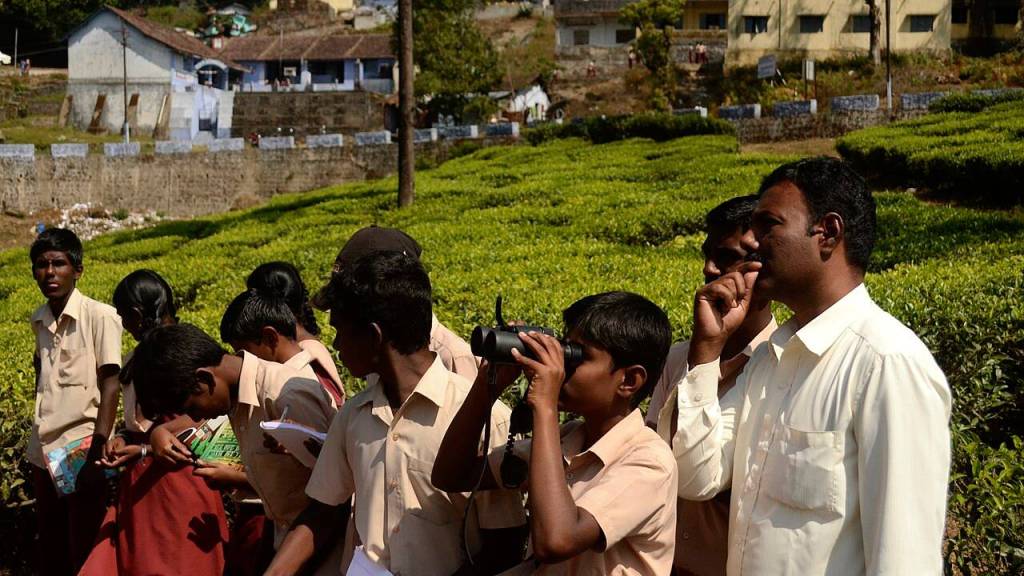
Birdwatching is a simple way of giving students practical experience of the process of science (see Box 1).5 Students learn to make detailed observations, record data meticulously, write scientific descriptions, and draw scientifically supported inferences. Since birds are found almost everywhere—including gardens and schoolyards— they are ideal subjects for such explorations.
Box 1. Curricular connections:
Discussions and activities around birdwatching can help teachers meet the following curricular goals for:
- Preparatory-stage EVS:
- CG-1: [The student] explores and engages with the natural and socio-cultural environment in their surroundings. Specifically, it can help students develop the competency (C-1.1) to: “Observe and identify the natural (insects, plants, birds, animals, geographical features, …natural resources) and social (houses, relationships) components in their immediate environment.”
- CG-4: [The student] develops sensitivity towards the social and natural environment. Specifically, it can help students develop the competency to:
- (C-4.1): “Observe and describe diversity among plants, birds, and animals in their immediate environment (shape, sounds, food habits, growth, habitat),”
- (C-4.5): “Identify needs of plants, birds, and animals, and how they can be supported (water, soil, food, care).“
- CG-6: [The student] uses data and information from various sources to investigate questions related to their immediate environment. Specifically, it can help students develop the competency to:
- (C-6.1): “Perform simple inquiry related to specific questions independently or in groups,”
- (C-6.2): “Present observations and findings through different creative modes (drawing, diagram, poem, play, skit, oral and written expression).”
- Middle-stage science:
- CG-3: [The student] explores the living world in scientific terms. Specifically, it can help students develop the competency to:
- (C-3.1): “Describe the diversity of living things observed in the natural surroundings (insects, earthworms, snails, birds, mammals, reptiles, spiders, diverse plants, and fungi), including at a smaller scale (microscopic organisms),”
- (C-3.3): “Analyse patterns of relationships between living organisms and their environments in terms of dependence on and response to each other.”
- CG-7: [The student] communicates questions, observations, and conclusions related to science. Specifically, it can help students develop the competency (C-7.1) to: “Use scientific vocabulary to communicate science accurately in oral and written form, and through visual representation.”5
For students in the preparatory and middle stages, the most important of these skills is observation. One of the main reasons to have students watch neighbourhood birds is to help them develop and refine their observational skills.6 It is worth noting that many fields of science, such as natural history and astronomy, have historically depended on long-term, systematic, and meticulous observations of the natural world. More specifically, research questions in fields like ethology continue to be shaped by observations of animals in their natural settings.
| S. No. | Activity idea | Textbook chapter |
|---|---|---|
| 1 | “Close your eyes and try to listen to the sounds of birds. Do you hear any bird sounds? Can you see which birds are making these sounds? Cup your ears with your hands… and point your face towards the direction of the bird sound. Can you hear the sound more clearly? Recall the bird sounds you have listened to. Try to produce the sounds that different birds make. Now, try to write down… the sound of any birds you have heard (name of the bird, sound made). If you do not hear any sounds of birds, what do you think is the reason? Do you hear more bird sounds: (a) In the early morning? (b) In the afternoon? (c) In the evening?” | Chapter 5 (‘Plants and Animals Live Together’) of the Grade III EVS textbook (NCERT, 2025–2026) |
| 2 | “Take different food items like (a) grains, (b) berries, (c) nuts, and (d) pieces of fruit, etc., on a plate. Try to pick these food items using a spoon, a toothpick, or a pair of sticks… [Record the] appropriate tool(s) for picking each of these food items. It is interesting to know that birds have beaks and claws, which help them in eating and other activities. An eagle has a sharp, curved beak and sharp claws to catch its prey, while a sunbird has a long beak to drink nectar from flowers. We can guess the eating habits of a bird by observing its beak and claws.” | Chapter 3 (‘Nature Trail’) of the Grade IV EVS textbook (NCERT, 2025) |
| 3 | “Make a poster of 5 birds that visit your place in winter. Try to find out where they come from. Using a string, trace the journey on a globe showing the paths rosy starlings take (Russia/Mongolia → India). Imagine you are a bird traveling the world. Write a short postcard or note about what you see and what helps you on your journey (wind, ocean currents, warm weather). Share it with your classmates.” | Chapter 10 (‘Earth—Our Shared Home’) of the Grade V EVS textbook (NCERT, 2025) |
| 4 | “What would happen if the habitat of a plant or an animal is damaged? What would happen if a goat does not get grass to eat? Can a fish survive without water? Check with your parents, grandparents, and neighbours to know about the plants, birds, insects, or any other animal they used to see frequently in their childhood, but do not see as often now. These changes often happen when habitats are damaged. The damage to the habitats of plants and animals results in loss of their homes, food, and other resources. This leads to the loss of biodiversity.” | Chapter 2 (‘Diversity in the Living World’) of the Grade VI Science textbook (NCERT, Reprint 2025–2026) |
To observe birds effectively, students need to pay close attention to minute details and be perceptive about the complex environments birds inhabit (see Box 2).7,8 Teachers can support this by asking questions such as: Do birds of the same species look different? How do they differ from each other? Can you distinguish their songs or calls? How many birds did you see? Were they at different heights or in different trees? What might these observations suggest?
Box 2. Questions that teachers frequently ask:
- What if a student asks me the name of a bird I do not know? It is perfectly fine not to know the name of a bird. Invite the student to describe the bird in detail—its size, shape, colour, beak, and any behaviours they observed—and record these observations. If you know the bird’s name in any language (local, regional, or otherwise), share it. If you do not, explain that India is home to more than a thousand bird species, and it is difficult for anyone to know all their names. Point students to books that can help with identification, and suggest that you and the student look it up together. If needed, you could also approach a local bird expert.
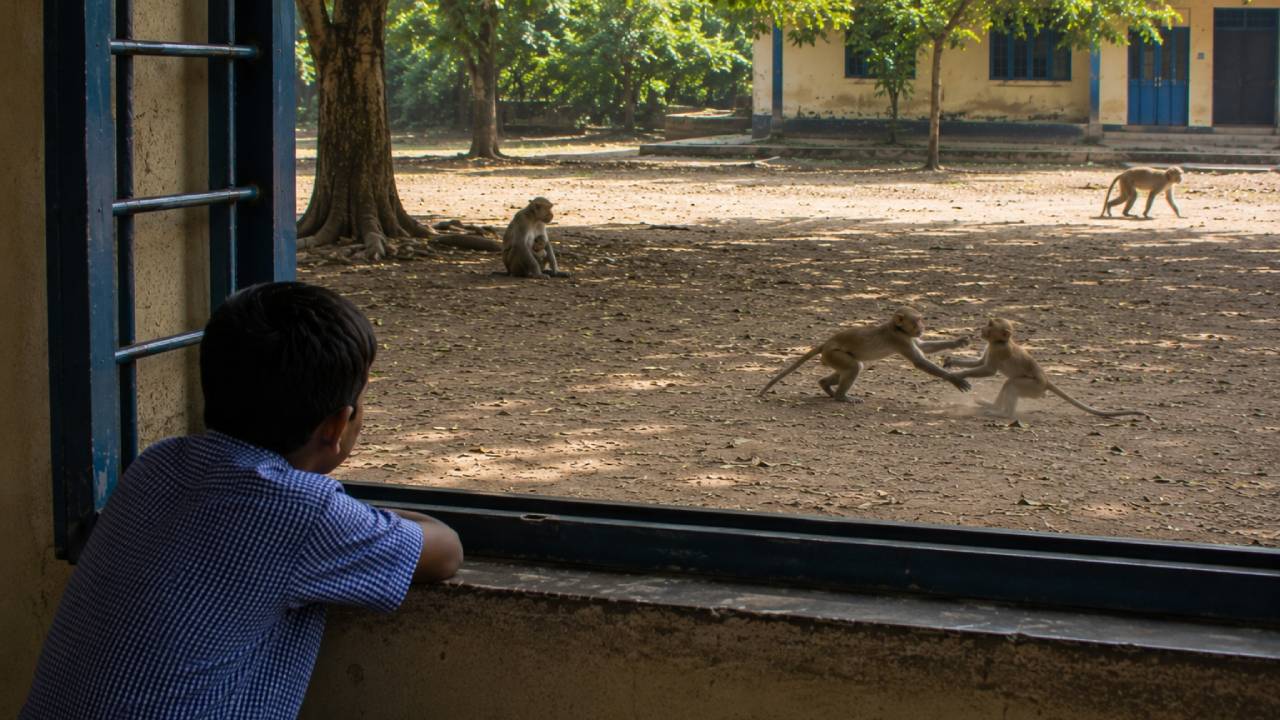
- Is there a way to ‘teach’ students to observe more carefully? Observation skills develop gradually through practice. You can support students by preparing them for their first birdwatching experience with simple, engaging activities that focus on observing and describing bird features (see the Teacher’s Guide). You could also conduct a trial birdwatching exercise in which students quietly observe a bird from the classroom window or school grounds for at least five minutes. Ask them to record their observations in as much detail as possible. Individual reflection followed by group discussion (see the Activity Sheet) allows students to refine and deepen their observations. This trial exercise helps students learn how to make detailed observations independently.
- What if students say they cannot observe details because the bird is too far away? Explain that long before binoculars and telescopes were available, people made careful observations using only their naked eye by learning where and how to watch birds (see the Student Handout). This practice trains the eyes to become effective tools of observation. Encourage students to begin with common birds that are easier to observe. If a student chooses to observe a distant or uncommon bird, encourage them to record whatever details they can. They may need to observe the bird for longer, but even a few observations are valuable.
- What if students ask questions about a bird’s behaviour that I cannot explain? You could convert this into a learning opportunity. Encourage students to check whether they can answer these questions through their own observations. Emphasise the importance of doing this before consulting books or the Internet. Explain that prior reading may influence what they notice and report. If their questions remain unanswered by observation (for example, answering ‘why’ questions often requires going beyond observation), and students are keen, guide them to books and other reliable sources, including the Internet. Emphasise the importance of verifying sources. You can also research alongside students or consider setting up an informal ‘Ask an Expert’ platform where students’ questions are shared with practitioners or experts willing to attend to these queries.
- What if students want to take photographs of the birds they observe? This is fine. But clarify that photographs should not replace drawings. Drawing helps students develop sharper observation skills. Also, not all students may have access to cameras or phones, so photographs should not be mandatory. Publicly acknowledge and encourage students who use simple tools for their work, and reinforce the idea that expensive equipment is not necessary for meaningful scientific study.
- What if students feel their drawings are not ‘beautiful’? Reassure students that the purpose of drawing is not to create beautiful images, but to record important details clearly. Any drawing that serves this purpose is valuable. Share that many naturalists often make quick, rough sketches— sometimes even simple stick figures—because they focus on capturing key features. Emphasise that more attractive drawings are not necessarily more useful, nor will they receive more marks or points.
- Is there a way to informally assess whether students’ observation skills have improved? One simple approach is to repeat the trial observation task (described in Question 2 of this box) after three to four weeks. Ask students to observe the same kind of bird from the classroom window for five minutes and record their observations. Compare these records with their earlier ones to see whether the descriptions have become richer and more detailed.
- Can you suggest additional birdwatching activities? You could compile images of common birds—such as the Red-whiskered Bulbul, Red-vented Bulbul, Common Tailorbird, and Oriental Magpie Robin—and ask students to describe their body parts. Another activity could involve distinguishing between similar-looking species, such as the Black Drongo and Ashy Drongo. You could also show short videos of common birds in class and ask students to record their observations. These activities further strengthen observation and description skills.7,8
Appreciation of diversity
Class discussions about the different birds students observe can help foster an awareness of the diversity of living beings. Teachers can support this by pointing out how even a small group of birds can show extraordinary variety in the shapes, sizes, and colours of individual features, such as their beaks. Remarkably, the diversity of forms that bird beaks show is achieved using only bone and keratin (the same material as our fingernails)! Teachers can also highlight the variety of functions that beaks serve: probing, crushing, catching insects, boring into wood, and more. For example, in Chapter 9 (‘Staying Happy and Healthy’) of the Grade III EVS textbook (NCERT, 2025-2026), students read how birds use “their beaks to clean their feathers.“9 Similarly, in Chapter 8 (‘Clothes—How Things are Made’) of the Grade V EVS textbook (NCERT, 2025), students learn about the tailorbird: “With its beak, it sews the edges of a big leaf together using plant fibres or spider silk. It pokes holes along the edge of the leaf and pulls the thread through its beak, like a tailor sewing cloth, to make a soft and safe nest to lay eggs and raise its babies.“10
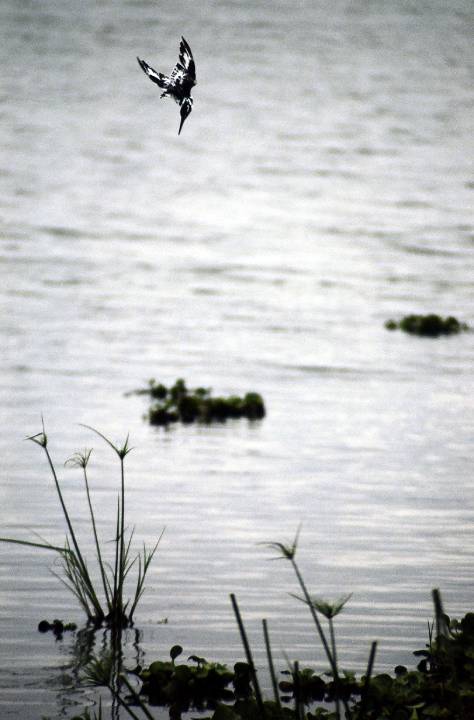
Using observable examples helps teachers illustrate the many survival mechanisms birds have evolved over millions of years. Teachers can also show how these adaptations have inspired human inventions and innovations—and may continue to do so. For instance, Japanese engineers designing the Shinkansen bullet train initially faced complaints about the sonic boom produced as the train exited tunnels. Eiji Nakatsu, one of the engineers and an avid birdwatcher, noticed how quietly a kingfisher dives beak-first into water (see Fig. 1). Inspired, he redesigned the train’s nose to mimic the bird’s conical beak, resulting in a quieter, faster, and more energy-efficient train.11,12
Recognising the ecological role of birds
Students often hear that birds are pests or eat crops. Such beliefs can be explored through discussion prompts, like those in Chapter 6 (‘Living in Harmony’) of the Grade III EVS textbook (NCERT, 2025-2026): “Have students spotted any birds living in or around their house? Are there uninvited birds? Why do they come? How do you feel about their presence? Which do you like, and what do you do when you do not?“13
Birdwatching helps students appreciate birds as valuable members of many habitats. Many birds maintain forest ecosystems by eating fruits and dispersing seeds.14 Some, such as sunbirds, leafbirds, and white-eyes, assist in pollination, while many fruit-eating birds disperse seeds.15,16 Others act as biological pest controllers, eating harmful insects and protecting crops. For example, in Chapter 10 of the Grade V EVS textbook (NCERT, 2025), students read how every winter, Rosy Starlings “…fly thousands of kilometres from southern Russia, Mongolia, and nearby countries to India. These birds enjoy the warm weather and feed on locusts and grasshoppers, helping farmers by controlling pests.“3
In Chapter 12 (‘How Nature Works in Harmony’) of the Grade VIII science textbook (NCERT, 2025), students learn that the impacts of many human activities—pollution, deforestation, habitat loss, climate change, invasive species, and overexploitation—threaten ecosystems.17 Excessive pesticide use, for example, poisons farm birds, causing them to disappear from their habitats. Students can be encouraged to discuss questions such as: How can we protect birds on farms and how would this benefit people?
Seeing birds as indicators of environmental change
Observing where and when birds appear can encourage students to become more curious about their local environment and factors threatening it. In Chapter 13 (‘Our Home: Earth, a Unique Life-Sustaining Planet’) of the Grade VIII science textbook (NCERT, 2025), students read that “… life on Earth depends on a delicate balance of living and non-living things working together… Even small changes in global temperature, oxygen levels, or the ozone layer can put life at risk.“18 Human actions, however, are “disturbing this balance” and severely impacting biodiversity.18
One way to understand the effects of these actions is through indicator species—specific plants or animals whose presence, absence, abundance, or health provides valuable insights into local environmental conditions. Indicator species are often common, easily recognisable, and respond strongly to particular environmental changes, often in ways detectable without specialised training or instruments.19 Birds offer many such examples:
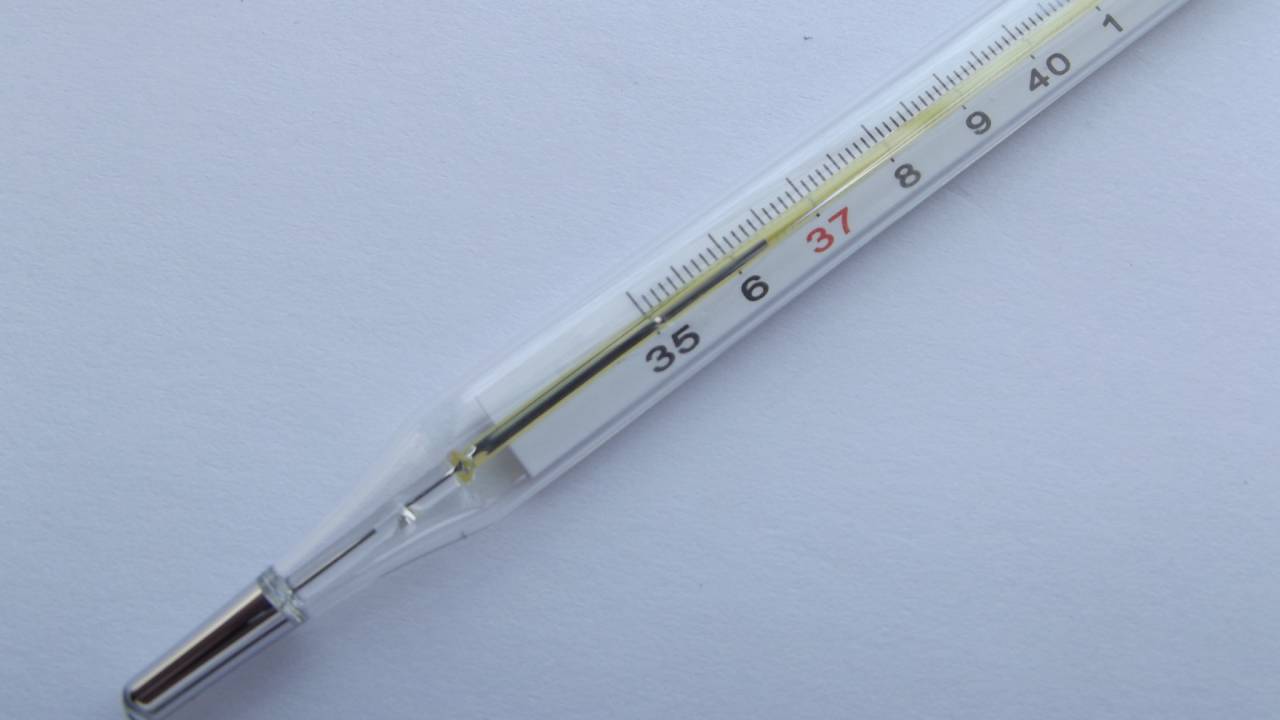
- Immediate sensitivity to harmful substances: In Chapter 11 (‘Nature’s Treasures’) of the Grade VI science textbook (NCERT, Reprint 2025- 2026), students read how coal is “found in several parts of India,” and is mined “… for the production of electricity.“20 Coal mining releases poisonous gases like methane, carbon monoxide, sulphur dioxide, and nitrogen.21 Exposure to these gases can cause serious respiratory diseases (like asthma and bronchitis) in humans, and can even be fatal. Until the 1960s, miners in many parts of the world took caged canaries into underground mines with them (see Fig. 2). These small, yellow birds are highly sensitive to toxic gases. If the bird showed any signs of distress—stopping singing or falling off their perch—miners would be alerted to the presence of a toxic gas, even when the gas was undetectable by sight or smell. The mine would be evacuated—a practice that saved countless lives.22
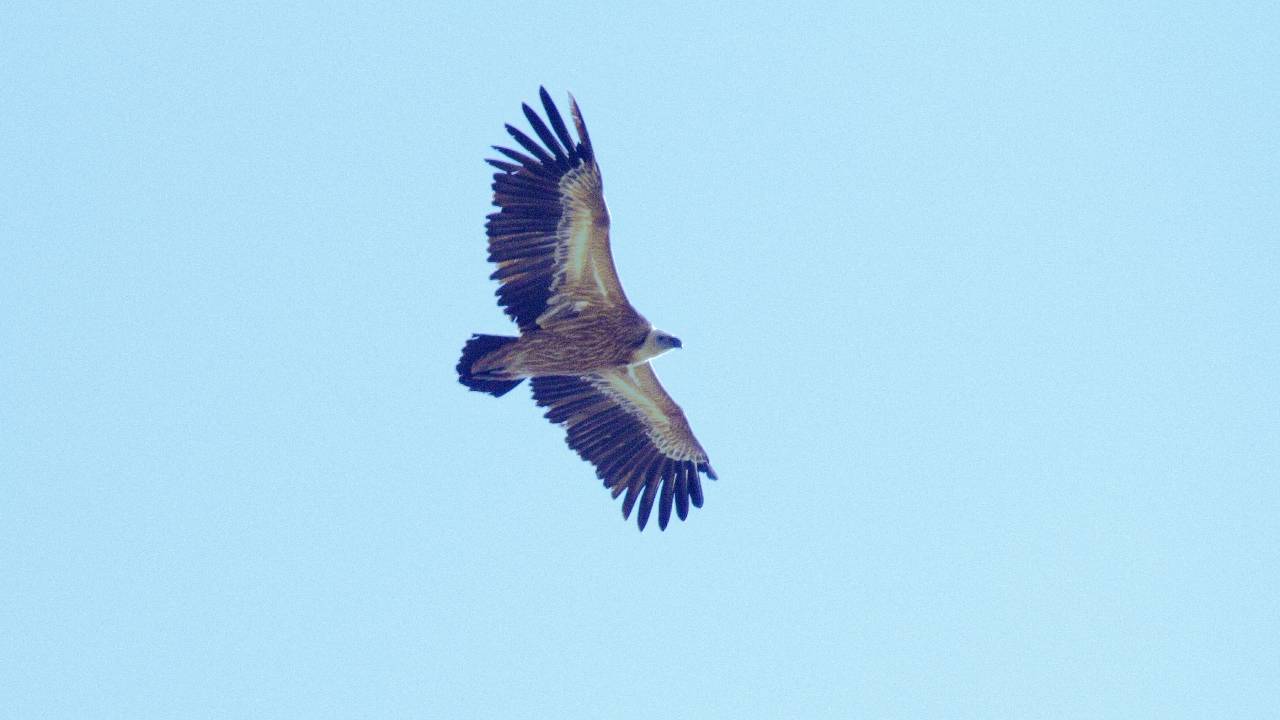
- Declines indicating chemical pollutants: The dramatic drop in vulture populations in India since the 1990s indicated the presence of harmful chemical pollutants in the food chain.23,24. As students read in Chapter 2 (‘Land, Soil, Water, Natural Vegetation and Wildlife Resources’) of the Grade VIII geography textbook (NCERT, 2024-2025), scientists found that: “Vultures in the Indian subcontinent were dying of kidney failure shortly after scavenging livestock treated with Diclofenac, a painkiller that is similar to aspirin or ibuprofen.“25 Vultures play a vital role in keeping ecosystems clean. Their decline has been linked to an increase in stray dog populations, which feed on carcasses that vultures would otherwise consume, and to a rise in rabies cases across India.26,27
- Variations revealing ecological history: Changes in bird characteristics can indicate the environmental history of their habitats. Chapter 2 of the Grade VI science textbook (NCERT, 2024) highlights how habitats shape the survival traits of plants and animals.4 Darwin’s finches provide a striking example: Over many generations, populations of these small, sparrow-like birds diverged into around 18 species with different beak shapes and sizes, adapted to exploiting different food sources—tough seeds, insects, cacti, and buds—across the Galápagos Islands.28 Studying this diversity offers insights into environmental change on the Galapagos Islands.

Connection with the natural world
Birdwatching can also help re-establish our fading connection with the natural world. Many philosophers and scientists have suggested the presence of an aesthetic (beauty) dimension in the way humans relate to the natural world. We are often filled with wonder by its physical beauty, and derive a sense of fulfilment and satisfaction when amidst it. Studies suggest that such experiences can benefit the health and well-being of children.29
Parting thoughts
Birdwatching can be an accessible and inexpensive activity for students from a range of sociocultural and natural environments. It can help them see links between birds (their presence, behaviour, and any variations they show) and their immediate environment (abiotic, biotic, natural, or artificial). It can also help students develop skills of observation, attention to detail, and documentation—all integral to the scientific process.6
Key takeaways
- Preparatory-stage EVS and middle-stage science textbooks offer many simple activities to encourage students to observe neighbourhood birds.
- Birdwatching provides practical experience of the scientific process, helping students develop key skills such as making detailed observations, recording data meticulously, writing scientific descriptions, and drawing scientifically supported inferences.
- Long-term observation of different birds fosters appreciation of their diversity and ecological roles, while also nurturing students’ connection with the natural world.
Acknowledgements
This article and the related classroom resources were first developed as part of the ‘Rediscover, Describe, and Draw Birds’ learning unit of the Vigyan Pratibha Project at the Homi Bhabha Centre for Science Education (HBCSE), TIFR, Mumbai. URL: https://vigyanpratibha.in/index.php/ rediscover-describe-and-draw-birds-2/. These were published as a four-part series in Teacher Plus magazine: (a) Muralidhar A & Krishnan, A (2018). ‘Why study birds?’ Teacher Plus, 16(7): 48–50. URL: https://teacherplus.org/2018/2018/august-2018/why-study-birds/. (b) Muralidhar, A (2018). ‘Discover, Describe and Draw Birds.’ Teacher Plus, 16(9): 32–35. URL: https://teacherplus.org/2018/2018/october-2018/discover-describeand-draw-birds/. (c) Muralidhar, A (2019). ‘Discover, Describe and Draw birds: Handouts and Resource List for the Activity on Observing Birds.’ Teacher Plus, 17(1): 52–56. URL: https://teacherplus.org/2019/ecowatch/discover-describe-and-draw-birds-2/. (d) Muralidhar, A (2019). ‘A fancy for flight’. Teacher Plus, 17(2): 52–56. URL: https://teacherplus.org/2019/ecowatch/a-fancy-for-flight/. They have also been printed as: Muralidhar, A, & Krishnan, A (2021). ‘Rediscover, describe, and draw birds’. In Choksi, B, Date, G, Gupta, A, Mani, R & Subramaniam, K (Eds.), Exploring Science and Mathematics with Vigyan Pratibha Learning Units, Class 8: Teacher Version: 105-136. Mumbai: HBCSE. The version of the article published here has been restructured and modified by Chitra Ravi to include new details that connect the ideas in the original article with the preparatorystage EVS and middle-stage science curricula. The resource versions published here have minor changes in wording and structure. The i wonder… team thanks the authors for their permission to publish these versions.
Notes
- Credits for the image (School kids birdwatching at Annamalai Hills, Tamil Nadu) used in the background of the article title are: PJeganathan, Wikimedia Commons. URL: https://commons.wikimedia.org/wiki/File:Birdwatching_in_India_JEG0901.jpg. License: CC BY-SA 4.0 International Deed.
- This article includes three detachable classroom resources: Activity Sheet: Observe a Bird in your Neighbourhood, Student Handout: Guidelines for Birdwatching, and Teacher’s Guide: Observe a Bird in your Neighbourhood.
- This digital version was last updated on Aug 6, 2026.
References
- National Council of Educational Research and Training (2025-2026). ‘Chapter 5: Plants and Animals Live Together’. Our Wondrous World, Textbook of EVS (The World Around Us) for Grade III: 62-71. URL: https://ncert.nic.in/textbook.php?ceev1=5-12.
- National Council of Educational Research and Training (2025). ‘Chapter 3: Nature Trail’. Our Wondrous World, Textbook of EVS (The World Around Us) for Grade IV: 35-56. URL: https://ncert.nic.in/textbook.php?deev1=3-10.
- National Council of Educational Research and Training (2025). ‘Chapter 10: Earth—Our Shared Home’. Our Wondrous World, Textbook of EVS (The World Around Us) for Grade V: 161-182. URL: https://ncert.nic.in/textbook.php?eeev1=10-10.
- National Council of Educational Research and Training (Reprint 2025-2026). ‘Chapter 2: Diversity in the Living World’. Curiosity, Textbook of Science for Grade VI: 9-34. URL: https://ncert.nic.in/textbook.php?fecu1=2-12.
- National Steering Committee for National Curriculum Frameworks (2023). ‘National Curriculum Framework for School Education 2023’. National Council of Educational Research and Training. URL: https://ncert.nic.in/pdf/NCFSE-2023-August_2023.pdf.
- Dvornich, K, Petersen, D, & Clarkson, K (2011). ‘Fostering outdoor observation skills: Preparing children for outdoor science and recreation’. Washington, DC: Association of Fish and Wildlife Agencies’ North American Conservation Education Strategy.
- Muralidhar, A & Krishnan, A (2023). ‘Rediscover, describe, and draw birds’. Vigyan Pratibha Learning Unit. URL: https://vigyanpratibha.in/index. php/rediscover-describe-and-draw-birds-2/. Accessed on: Dec 1, 2025.
- Muralidhar, A (2019). ‘A fancy for flight’. Teacher Plus, 17(2): 52–56. URL: https://dnte.hbcse.tifr.res.in/wp-content/uploads/2020/01/2019- Am-P4-Scaling-and-FAQs-TeacherPlus.pdf. Accessed on: Dec 1, 2025.
- National Council of Educational Research and Training (2025-2026). ‘Chapter 9: Staying Happy and Healthy’. Our Wondrous World, Textbook of EVS (The World Around Us) for Grade III: 109-120. URL: https://ncert.nic.in/textbook.php?ceev1=9-12.
- National Council of Educational Research and Training (2025). ‘Chapter 8: Clothes—How Things are Made’. Our Wondrous World, Textbook of EVS (The World Around Us) for Grade V: 131-144. URL: https://ncert.nic.in/textbook.php?eeev1=8-10.
- Birds Connect Seattle (2023). ‘It’s a Bird. It’s a Plane.: Aviation Designs Inspired by Birds | EarthCare Northwest’. URL: https://birdsconnectsea. org/2023/09/21/its-a-bird-its-a-plane-aviation-designs-inspired-by-birds-earthcare-northwest/. Accessed on: Dec 12, 2025.
- Baker, J (2025). ‘From bullet trains to green buildings: Innovators take cue from nature through biomimicry’. The Ray C. Anderson Foundation. URL: https://www.raycandersonfoundation.org/articles/from-bullet-trains-to-green-buildings-innovators-take-cue-from-nature-throughbiomimicry. Accessed on: Dec 12, 2025.
- National Council of Educational Research and Training (2025-2026). ‘Chapter 6: Living in Harmony’. Our Wondrous World, Textbook of EVS (The World Around Us) for Grade III: 72-83. URL: https://ncert.nic.in/textbook.php?ceev1=6-12.
- McCoy, MK (2024). ‘New study links birds’ diets to forest health’. Conservation International. URL: https://www.conservation.org/news/newstudy-links-birds-diets-to-forest-health. Accessed on: Dec 12, 2025.
- Subramanya, S, & Radhamani, TR (1993). ‘Pollination by birds and bats’. Current Science, 65(3): 201-209. URL: https://www.currentscience. ac.in/Volumes/65/03/0201.pdf.
- Cirino, E (2016). ‘What Do the Birds and the Bees Have to Do With Global Food Supply?’ Audubon. URL: https://www.audubon.org/news/ what-do-birds-and-bees-have-do-global-food-supply. Accessed on: Dec 12, 2025.
- National Council of Educational Research and Training (2025). ‘Chapter 12: How Nature Works in Harmony’. Curiosity, Textbook of Science for Grade VIII: 190-209. URL: https://ncert.nic.in/textbook.php?hecu1=12-13.
- National Council of Educational Research and Training (2025). ‘Chapter 13: Our Home: Earth, a Unique Life Sustaining Planet’. Curiosity, Textbook of Science for Grade VIII: 210-227. URL: https://ncert.nic.in/textbook.php?hecu1=13-13.
- Sherwood, MA (2024). ‘Indicator species’. EBSCO Knowledge Advantage. URL: https://www.ebsco.com/research-starters/science/indicatorspecies. Accessed on: Dec 12, 2025.
- National Council of Educational Research and Training (Reprint 2025-2026). ‘Chapter 11: Nature’s Treasures’. Curiosity, Textbook of Science for Grade VI: 207-230. URL: https://ncert.nic.in/textbook.php?fecu1=11-12.
- Chart Industries (2023). ‘The Most Dangerous Gases in Mining’. URL: https://www.chartindustries.com/Articles/The-Most-Dangerous-Gases-InMining. Accessed on: Dec 1, 2025.
- Bonney, A (2020). ‘Canaries in the Coal Mine’. The Gale Review. URL: https://review.gale.com/2020/09/08/canaries-in-the-coal-mine/. Accessed on: Dec 1, 2025.
- Srivastava, A (2025). ‘The Status of Vultures in India: A Story of Decline and Recovery’. EcoNE. URL: https://www.econe.in/post/vultureconservation. Accessed on: Dec 1, 2025.
- Gopalan, R (2025). ‘The Disappearing Vultures’. i wonder…, 13: 21-25. ISSN 2582-1636. URL: https://publications.azimpremjiuniversity.edu. in/6316/. Accessed on: Dec 1, 2025.
- National Council of Educational Research and Training (2024-2025). ‘Chapter 2: Land, Soil, Water, Natural Vegetation and Wildlife Resources’. Resources and Development, Textbook for Grade VIII for Geography: 7-21. URL: https://ncert.nic.in/textbook.php?hess4=2-5.
- Vulture Conservation Foundation (2024). ‘Vulture decline in India linked to death of 500,000 people, study suggests’. URL: https://4vultures. org/blog/vulture-decline-in-india-linked-to-death-of-500000-people-study-suggests/. Accessed on: Dec 1, 2025.
- Markandya, A, Taylor, T, Longo, A, Murty, MN, Murty, S, & Dhavala, K (2008). ‘Counting the cost of vulture decline—an appraisal of the human health and other benefits of vultures in India’. Ecol. Econ., 67: 194-204. URL: https://www.sciencedirect.com/science/article/abs/pii/ S092180090800178X. Accessed on: Dec 1, 2025.
- Cowie, G (2024). ‘Icons of Evolution: Why are there so many Darwin’s finches?’ The Linnean Society. URL: https://www.linnean.org/ news/2024/10/23/icons-of-evolution-why-are-there-so-many-darwins-finches. Accessed on: Dec 1, 2025.
- Children & Nature Network and IUCN-CEC (2012). ‘Children & Nature Worldwide: An exploration of children’s experiences of the outdoors and nature with associated risks and benefits’. URL: https://static.spacecrafted.com/a60a6756a1124f3b8aa05f622e7ba46e/r/ ad128d0cb61e49de836c0ab46715578d/1/d19248adc8ab4bf182a7e448fb72001b.pdf. Accessed on: Dec 12, 2025